Showing posts with label vaginismus. Show all posts

Wednesday, February 25, 2026

Blogaround

Links not related to the antichrist:

1. On “Asexual” as umbrella term (February 22) "Sometimes I hear newbies propose that there should be a separate asexual community that is *not* inclusive of gray/demi/etc. folks. I would go so far as to say that this idea is totally pointless."

2. Eliminating the Impossible (February 20) Very good point from xkcd.

3. Fix Your Hearts or Die (February 22, via) "Meanwhile men are finding out that they'd rather suffer loneliness than learn how to treat women as human beings instead of possessions, because treating a woman as a possession is domination, which means that it is seen as not just masculine, but core to masculinity. Treating a woman as a human being is gay, which is the least masculine thing of all."

4. Gaza death toll for first 16 months of war far higher than reported, says peer-reviewed study (February 18) "'The combined evidence suggests that, as of 5 January 2025, 3-4% of the population of the Gaza Strip had been killed violently and there have been a substantial number of non-violent deaths caused indirectly by the conflict,' the authors of the study, a team including an economist, demographer, epidemiologist and survey specialists, wrote in the Lancet Global Health."

5. Does Waiting for Marriage for Sex Increase the Chance for Painful Sex? (February 23) "Because for so many women, the first sexual encounter doesn’t happen because her body wanted it—it happened because 'time’s up.'"

---


Image source.

Links related to the antichrist:

1. Former top general calls military's removal of trans troops a costly mistake (February 21) "I'm completely qualified to serve. I'm good at my job. The Navy has paid for me to be good at this. If we really are preparing for deployment or combat, why can't we just focus on doing our jobs and doing them to the best of our abilities?"

2. The Battle Of Minneapolis (February 22) "Think about that: You now live in a country where volunteers deliver babies at home, in secret, off the books, because mothers fear that if they go to the hospital, they will be abducted by masked, armed agents of the state while giving birth."

3. In Crackdown On Worst Of Worst Children, ICE Raids Kids Who Wrote Letters, Deports Sick Two-Month-Old (February 20) "Besides, before going on to whatever job she’ll have at a right-wing think tank, or in Hell itself, departing DHS propaganda minister Tricia McLaughlin explained to the Independent that it’s perfectly normal to dump sick infants across the border in the middle of the night, especially if you can do it before an interfering federal judge can stop you."

4. I posted a link about this same story last time, but this one is also worth reading: A Presidents' Day lesson from Philadelphia (February 17) "Instead, she wrote, 'It is not disputed that President Washington owned slaves.'"

5. I Love Illinois. I Love America. I Refuse to Stop. (February 19, via) "I am begging my fellow politicians, my fellow Illinoisans, my fellow Americans to realize that right now in this country we are not fighting over policy or political party. We are fighting over whether we are going to be a civilization rooted in empathy and kindness — or one rooted in cruelty and rage." From Governor JB Pritzker.

6. UN experts condemn US executive order imposing fuel blockade on Cuba (February 12) "They expressed deep concern about the foreseeable humanitarian consequences of restricting fuel supplies to Cuba through the coercion of third States. 'Cuba is already experiencing severe energy shortages, due to previous U.S. sanctions, with blackouts lasting up to 20 hours in many areas, affecting refrigeration for food and medication, and contributing to public health crises.'"

7. Maine immigration observers sue over Trump admin "domestic terrorist watchlist" threats (February 24) "Addressing their interactions, the lawsuit put it bluntly, '[T]he message of intimidation was express and clear: Plaintiff Hilton’s lawfully protected First Amendment activity, and that of her fellow observer, would result in them having their personal data captured and being placed on a ‘domestic terrorist watchlist.’'"

8. ICE Whistle Blower (February 24) "'Never in my career had I ever received such a blatant unlawful order, nor one conveyed in such a troubling manner,' he said. 'Incredibly, I was being shown this memo in secret by my supervisor, who made sure that I understood that disobedience would cost me my job.'"

9. We Can Beat Gavin Newsom (February 18) "If you are committed to progressive policy, Newsom is shit. If you want a Democratic leader who will relentlessly fight the right, then Gavin 'I want to praise Charlie Kirk at every opportunity' Newsom is also shit."

10. A U.S. veteran adopted an orphan from Iran. Decades later, ICE is trying to deport her (February 24) "But in the eyes of the U.S. government, the woman, who's now in her 50s and lives in California, is not American. Instead, she's an immigrant who overstayed her visa since she was a toddler and therefore, subject to deportation. She spoke to NPR on condition of anonymity because she fears speaking publicly will complicate her immigration case."

Friday, February 6, 2026

My thoughts have changed on aces "pleasing their partners"

Asexual flag. Image source.

This post is part of the January/February 2026 Carnival of Aces. The topic is "second glance."

---

[content note: it's about consenting to sex you don't like]

It's a common piece of info I've often seen in "asexuality 101" resources. "Some aces do choose to have sex, for various reasons. Like, curiosity. Or, because it feels good. Or, to please their partner." 

And way back when, that was also a reason for me. But now my thinking has changed on this. Having sex just because your partner wants to is much more complicated than the breezy way it's presented in Asexuality 101. It is, quite possibly, a bad idea

Wednesday, May 14, 2025

Blogaround

Links not related to the antichrist:

1. 9 different density layers (April 18) 44-second video. Wow this is really cool! It's a science experiment about liquids with different densities, settling in layers on top of each other, and then you drop objects into it to see how far they sink.

2. Failed Soviet Venus lander Kosmos 482 crashes to Earth after 53 years in orbit (May 10) "Kosmos 482 launched toward Earth's hellishly hot sister planet in 1972, but a problem with its rocket stranded the spacecraft in an elliptical orbit around Earth. For the next 53 years, atmospheric drag pulled the probe down slowly but surely, leading to today's dramatic denouement."

3. Sell All You Have and Give to the Poor (May 3) "When Jesus then tells them that, effectively, none of the other rich and powerful are going to be persuaded to join them either, what is perplexing the disciples is how the Jesus movement can now possibly succeed."

4. Should A Woman Be Forced To Carry A Dead Fetus For Weeks? South Carolina Says 'Yes!' (May 9) "In an update, Weber explained that she was told both by the doctors and by a lawyer that the way the South Carolina law works is that, if she were to have gone to an appointment where the doctor detected a “heartbeat” (not a heartbeat), and then gone to a second appointment where they didn’t detect one, she would have been able to get the D&C or abortion pills right away. However, if you go to your first appointment and they tell you there’s no heartbeat and the fetus has been dead for three weeks, as happened with her, you have to wait two weeks to get one. If you go to the emergency room and get a more comprehensive diagnosis, they’ll shorten the waiting period to 11 days. Does this make sense? No, of course not. But it’s what happens when you have people with no medical background, who don’t know what they’re talking about, writing laws based on their own personal feelings."

5. Why Hospital Policies Matter in States That Ban Abortion (May 7) "ProPublica has documented widespread differences in how hospitals across the country have translated abortion bans into policy. Some have supported doctors in treating active miscarriages and high-risk cases with procedures technically considered abortions; others have forbidden physicians from doing so, or left them on their own to decide, with no legal backing in case of arrest."

6. The FDA approves first U.S. at-home tool as a Pap-smear alternative (May 10) !!!!!! This is great news! Instead of going to a gynecologist to have a pap smear, you can use this tool to collect your own sample and send it off to get screened for cervical cancer. Very excited to hear this, as a person who used to have vaginismus and has had a lot of problems and trauma related to gynecological exams.

(But also, I had complicated feelings reading this article, when it describes pap smears as "a procedure generations of women have dreaded and often found painful." Really? Generations of women? Since when? Then why did everyone act like *I* was the one being unreasonable when I found it to be painful and traumatic? ... I guess this is sort of a #metoo thing- it turns out that a lot of us have experienced this trauma, and we were all pressured to downplay it, and treated like something was wrong with us if we weren't able to pretend everything was fine. But it turns out that this is actually a widespread problem, and it's time to speak up about it.)

7. Pascal's Law (May 9)

8. The Moderate Case Against Transgender Sports Bans (May 12) Good article. I think for a lot of people, when they hear about the debate over trans women playing in women's sports, they imagine that the pro-trans side is saying that any man can just decide "I identify as a woman" and then immediately compete in any women's sport- and that seems really wrong. Well, no, fortunately, it doesn't work that way. That is NOT what trans people are arguing for. 

The guidelines should be different for different sports, and different for different levels (professional sports, high school teams, little kids just running around on a soccer field, etc). The sports organizations should be making their own rules based on what's reasonable and fair for their specific sport. That's not what these political trans bans are doing at all- they're just about hating trans people.

---

Links related to the antichrist:

1. Zero ships from China are bound for California’s top ports. Officials haven’t seen that since the pandemic (May 10)

But here's an update about that: US and China agree to slash tariffs for 90 days (May 12)

2. MAGA melts down over ‘WOKE MARXIST POPE’ who is a ‘Never Trumper liberal’ (May 8) A reminder that normal human decency will have MAGAs shrieking that you are a "WOKE MARXIST"- so like, don't try to contort yourself in an effort to present yourself in a way that will not lead to them saying that- it's not possible, they're going to say that anyway.

3. Rümeysa Öztürk, Tufts student held by Ice, vows to continue legal action after jail release (May 11)

4. First, do no harm—unless you're intersex or trans (May 6, via) "Lurie, however, kept its “pause” in place even then. New York Presbyterian/Weill Cornell removed references to gender-affirming care from its website—even striking puberty-pausing medication from its list of services—but still promotes surgery to reduce “enlarged” clitorises on intersex six-month-olds."

5. Alliance Defending Freedom: Last Week Tonight with John Oliver (HBO) (May 12) !!!! Really glad to see John Oliver doing an episode on ADF. I grew up evangelical- my family got the newsletters from Focus on the Family and ADF (back when its name was Alliance Defense Fund). I read them all. They sent us the book "The Homosexual Agenda" and I read it. I really believed all their bullshit back then.

ADF wasn't just about opposing the legalization of same-sex marriage. They opposed any kind of legal protections for LGBT people at all. Seriously. It is not just about same-sex marriage. It's about queer people existing at all.

When I was in high school in the 2000's, there was this thing called "Day of Silence" when some students who were LGBT/allies would not talk for the entire day, as a way to call attention to the struggles that LGBT people face. ADF came up with a competing event called "Day of Truth," where students could go to their school and hand out literature about how gay people need to just repress themselves and follow God's law, and God will help free them from that "lifestyle" and become straight. That's the sort of thing ADF was into.

This is why I'm so angry, whenever I talk about what evangelicals think about queer issues- because I really did believe all their bullshit propaganda back then. Gay people are one-dimensional villains twirling their mustaches and plotting to destroy marriage because they hate God and they are into disgusting obscene sex stuff. Then eventually- because of the internet- I started reading what actual gay Christians had to say, and it turns out none of that was true.

I had believed ADF because... we were Christians, right? The leaders of ADF were good Christian role models, working so hard to follow God, to live the way God wanted us to live, to fight for what was right. Just like little teenage Perfect Number. And then to find out that all of it was bullshit, that their entire schtick is spreading hateful lies about a group of people. They know it's lies. They know. Is that what Jesus would want? This is why I'm so angry, as a queer Christian.

So yeah, nowadays, every lawsuit that Republicans are involved in, trying to ban abortion or be mean to queer people or generally force Christian symbols on all parts of government/schools/society- yeah, it's ADF lawyers doing it. Of course it is.

(One thing I will say about John Oliver's take, though- about the part where the conservative cake shop guy says he won't make a cake for a gay wedding, just like he won't make a pedophile cake- and John Oliver is astonished at how bizarre of a concept it is, a pedophile cake. Uh, that's one of the huge talking points from evangelical anti-gay groups- that homosexuality is adjacent to pedophilia. That gay people are more likely to be pedophiles and therefore shouldn't be allowed near kids. That if same-sex marriage is legal, there's no reason it shouldn't also be legal to sexually abuse children- there's no actual meaningful difference that would lead society to allow same-sex marriage but draw the line at child sexual abuse. This is an extremely common anti-gay talking point. I am 0% surprised this cake guy talks about being asked to make a pedophile cake as if that's the natural thing that would happen next if he made a cake for a gay wedding.)

Oh, and in case it's not obvious: They also believe trans people don't really exist.

6. “They’re Trying to Kidnap Someone” (May 10, via) "Surrounding them are a few dozen community members who were tipped off about the ICE raid and got to it before the police did. Before I arrived, they demanded to see a warrant. The ICE agents refused to provide one, so they created a human chain, which the ICE officers eventually broke through."

7. Episcopal Church leader says helping Afrikaners over other refugees is 'unfathomable' (May 13) "And the idea that we would be somehow resettling Afrikaners at this point over other refugees, who have been vetted and waiting in camps for months or even years, is unfathomable to us."

8. Rabbi and Cantor Alums of Brown Write To the University: (April 17) "President Trump’s attack on Brown and other universities has nothing whatsoever to do with combatting antisemitism. It weaponizes antisemitism and could, ironically, evoke classical sentiments of resentment toward the Jewish community, whose name is being scapegoated as a conduit for an ulterior motive."

9. Trump administration's universal flu vaccine project puzzles scientists (May 13) At first I was like, "a universal flu vaccine? Hey, if it works, that would be great!" But then I read the whole article and now I'm like, "this sounds like a bad idea."

"'We're going back to technology that was used 40, 50 years ago or more. So this is a little surprising to me why you would go backwards to this technology? It's a very old technology,' Poland says. 'This is what influenza vaccines in the 40s, 50s and 60s looked like.'"

10. A matchmaking service with a twist: Connecting big givers to programs cut by USAID (May 13) "'I think it's clear that private philanthropy is not going to be able to fill all the gaps,' says Weiss. 'But what we can do is staunch the bleeding, keep projects functioning so that it's possible for local organizations or local governments to take them over.'"


Sunday, May 4, 2025

"Pure": A Book About the Aftermath of Purity Culture

Book cover for "Pure" by Linda Kay Klein.

The book Pure: Inside the Evangelical Movement That Shamed a Generation of Young Women and How I Broke Free, by Linda Kay Klein, is about adult women who grew up in purity culture. It's about the aftermath of purity culture, how people try to move on from it as adults, how it continues to affect them. The book contains stories from the author's personal life, and interviews with many people who grew up in purity culture.

I have a few quotes and observations I want to share here:

---

Ignorance about sex (p 77)

We weren't allowed to know anything about what sex actually was, but at the same time, we had to make sure we strictly followed the rules about what we weren't allowed to do. Kind of difficult to know what the rules are, though, when you're not allowed to know what sex is.

The cornerstone of the purity myth is the expectation that girls and women, in particular, will be utterly and absolutely nonsexual until the day they marry a man, at which point they will naturally and easily become his sexual satisfier, ensuring the couple will have children and never divorce: one man, one woman, in marriage, forever.

For this formula to work, my girlfriends and I knew we had to follow a slew of rules. Unfortunately, none of us knew what they were. Sex was such a shameful topic that we never got real talk on what we were and were not allowed to do. It was assumed that if no one ever talked to us about sex, it would just sort of go away until we needed it. So our "sex talks" were all generic metaphors and warnings about what would happen to us if we crossed a line, which was defined differently by so many people that we were left guessing all the same. Meanwhile, we knew we would be shamed if we asked sexual questions; shamed if we discussed sexual decisions; shamed if we shared our confusing sexual feelings and thoughts; and shamed worst of all if we admitted we had already done anything sexual. So each of us guessed at what the rules might be, hoped we were right, and didn't tell anyone about our sexual lives just in case we weren't.

This is SPOT ON.

Also, purity culture makes people so ashamed of completely normal things, it causes people to hide what they're doing rather than having healthy conversations with friends about what a healthy relationship looks like. If something is wrong in your relationship, you won't be able to get useful advice from your friends about it, because you're ashamed of the fact that you're dating someone in the first place.

---

The couple who couldn't figure out how to have sex (p 135-137)

Klein interviews a woman named Muriel:

Desperate to have sex, Muriel and Dmitri's engagement was short.

"We got married at 9:30 in the morning so that we could have sex early. No lie, that's why we got married early! I was excited about sex! I thought, 'I don't want to wait all day,' because sex was this huge thing! It was what everybody talked about, in the negative. But then supposedly once it was in marriage it was supposed to be this amazing celebration. This was the flip side, right? Supposedly. But during the ceremony up there, the pastor says 'you may kiss the bride,' and we kiss. Our teeth clanked. I was like, 'What is going on?' We, like, sort of used tongue. It was the weirdest thing in the world. [Note: they 'saved their first kiss for the wedding.']

"There had been this whole promise: If you wait, then this kiss will be magical and divine. But oh my gosh, total opposite. I whispered in Dmitri's ear, 'Let's not do that again until we're alone.'

"There was a small reception and by noon we're in a hotel room. So we start stripping off. I see a naked man for the first time. I hadn't even seen naked pictures. I'd never seen any pornography or anything. So, naked man. And then I got to strip off. And now we're naked and this is weird and we start kissing or whatever and then I just bust up crying because this has all been way too much and I hadn't slept much the night before.

"So I take a nap. We take a nap. Then we wake up and we start trying it again. And I have no idea what hole or where anything is. We try that and Dmitri tries touching and he doesn't know. At this point I've read about the clitoris in The Act of Marriage. I know it exists, but I have no idea where it is, neither does Dmitri, and so he's, 'Does this feel good?' I have no idea. I've never let anything down there try to feel good before. So he keeps trying and I'm like, 'Is that an orgasm? I don't know.' So then he starts trying to stick it in. Again, I have no idea where. He's trying to direct. We don't get it in and then he's like, 'Well I'm kind of moved all the way here. Can you help me out?' So I start to do that, and then I'm just, like, left there. Not having done 'the sex.'

"We don't figure out sex for four months. We don't actually get it in. We keep trying. I mean, we're discouraged, but he does keep trying. Sometimes it hurts. We didn't get the idea about wetness or lubrication or any of that. I eventually figured out I had to stretch out beforehand, manually. I figured out where the hole was and I would stretch it out manually and then he would go in. It never felt sexy. Sex was never sexy. I never got off while he was in there, and even on his end, it was more like, if we did it, good, that's something we're supposed to do. But it was never 'this is so sexy, I want you.' It was just a check mark for us. I'm not sure when he gave up on trying as often."

"Did you ever talk about what you were experiencing with anybody?"

"No! Because it's embarrassing! I mean, that's just something you just don't talk about. We're married now. It's supposed to be a slippery, slippery, easy-to-fall-off-of slope. 'Where's the easiness? How's anybody accidentally having sex? How are teenagers accidentally getting pregnant? I don't know. How are they even getting it in?!'"

!!!!!! This! Oh my goodness, this. This is SO MUCH like my experience trying to have sex for the first time. I totally bought into this ideology that once you are no longer constantly holding yourself back from having sex, once you step over the purity guardrails and allow yourself to do whatever you want, you'll just naturally fall into this powerful vortex of the amazingness of sex, it will feel so good, it will change your whole life, you don't even have to think or do anything, it just happens and it's so amazing (but ill-advised if you're not married, because it is so powerful and life-changing).

And then... what actually happens, if you're like me and you're asexual af, is you decide "okay we are gonna have sex" and then you think, well in the movies the first step seems to be kissing, so let's do that, and then you do that and then you're not sure what's supposed to happen next, should be something about putting our genitals together, but... that's so weird...? And everything slows to a stop and you're just extremely confused instead of having this mind-blowing, life-changing experience.

Like Muriel, I also was genuinely confused about how teenagers get pregnant. Just could not make heads or tails of anything- how my experience of sex was in a different universe from the way everybody else talked about sex. I even asked doctors for help but they were useless. When I discovered asexuality, that was the first time I found people talking about sex in a way that actually felt real. Same for when I heard about vaginismus- finally people talking about what sex is really like, how difficult and confusing it is. (Based on what Muriel said, it sounds like she had vaginismus.)

I'm lucky- I did not have that experience on my wedding night, I had that experience long before we got married. I'm so glad we didn't wait till marriage. And I'm so glad I slowly broke the purity rules little-by-little, rather than trying to go from zero to PIV [penis in vagina] sex immediately, like Muriel did.

The thing about manually stretching the vagina, to prepare for PIV sex, yeah I also discovered that. That was the method I used, when I had vaginismus. (I no longer have vaginismus- let me tell you, wow it makes a world of difference not having vaginismus. It *actually is* easy to have sex now that I don't have vaginismus. Unbelievable.)

What really strikes me about this excerpt from the book is, Muriel and Dmitri had this mindset like there's some specific thing they're supposed to do, as a married couple, and they're trying as hard as they can to figure out how to do it, and feeling ashamed for having trouble with it. They weren't viewing sex as something that was for them, that they could figure out in their own way, based on what felt good for them.

Like it was a specific series of steps, which no one explains to you because it's supposedly "natural", and then when you're confused about what the steps are supposed to be, you feel like something is wrong with you.

I'm queer now- which means I view sex as something that people can choose for themselves. People can make an informed choice about which parts of it they want or don't want. Make it something that makes sense for you.

---

"Freaking out" when attempting to have sex

Klein talks about how, when she tried to have sex with her boyfriend Sebastian, she would panic and "freak out." For people who are trying to leave purity culture, the psychological effects are so strong- the fear is engrained so deep- if you have sex, horrible things will happen. (I also experienced that fear- I eventually decided that I no longer believed it was a sin to have unmarried sex... but actually doing it was an entirely different thing- I was still terrified. Eventually I decided to "face my fear"- after we finally had PIV sex, and it didn't ruin my life, and didn't change me into a completely different kind of person, wow I felt so much better. No fear any more.)

Here's a quote from p 198:

Sebastian and I did eventually have sex, though it was, in his words, "a brief and bungling affair." Both virgins, neither of us wanted to call this our sexual debut. In time, Sebastian and I broke up. In the years that followed, he got a new girlfriend and says he was shocked by how easily sexual intimacy came with someone who wasn't religious. ("Thanks man," I rolled my eyes at him.)

OH my goodness, this is so real. He "was shocked by how easily sexual intimacy came with someone who wasn't religious."

SO REAL.

People who date people who grew up in purity culture are taking on a very hard task. I have "freaked out" many times about extremely mundane aspects of dating, and how I was so terrified that I was "bad" and "impure" because of what I had done. As an example, 17 years ago, I was dating a guy, and one time I called him "my wonderful dear" and then I had a whole emotional crisis about that because I didn't think I was going to marry him, and then what would my "future husband" think about the fact that I had actually said out loud that a guy who wasn't him was "wonderful"? What would my future husband think about me having expressed my feelings for another guy? Was I going to regret this forever?

(Please note, that was 17 years ago, and it has no effect on my life now. I am married, and my husband cares 0% about what I did or did not do with some other guy 17 years ago. Purity culture really had me believing that whatever silly misadventures I had in dating in college were going to haunt me for the rest of my life. I cannot express strongly enough how NOT TRUE that is.)

And on and on. Every guy I have dated, I have burdened with this emotional baggage about how I fear I'm being so bad and impure and sinful. 

"he was shocked by how easily sexual intimacy came with someone who wasn't religious." I feel that so much.

---

People who want casual sex

Here's something I learned from this book: There are people who genuinely want to have casual sex without a relationship. This can include men, women, people of whatever gender. They actually legitimately want that. They look at their current life situation and think about what they want out of sex/relationships, and they feel that what they really want is to have casual sex.

I really never thought about that before.

I knew that many people are having casual sex, but I never knew that could be, like... like an intentional choice. I thought it was like, "I wish I could be in a real relationship, but I have to settle for casual sex instead" or "I met this very hot person and I don't know what came over me, everything moved so fast and we had sex." I really never knew it could be a clear-eyed rational choice that made sense with one's current priorities and life circumstances.

Some of the people interviewed in this book talk about how their vision for their sex life is to have casual sex, but they have such a hard time getting there because of all the psychological hangups they have from purity culture.

Fascinating!

---

Respecting everyone's journey

Klein interviews a huge range of people, who all have difference experiences in terms of what happened to them after growing up in purity culture. Some of them got married, some didn't. Some had unmarried sex, some didn't. Some are still Christian, some aren't. Some are queer. One interviewee said something about "sometimes I wonder if I'm a lesbian." One interviewee is a trans man. 

And the book never makes any judgments about if their choices and identities are right or wrong. The book simply respects everyone and lets them tell their own stories. (Klein even says she tried to include some people who benefitted from purity ideology, but she couldn't find any who were willing to be included in the book, so MAKE OF THAT WHAT YOU WILL.)

Let me tell you, it was SO REFRESHING to read this after reading "The Great Sex Rescue." Oh MY GOODNESS. The way that "Pure" simply acknowledges the existence of queer people, because it makes sense to mention queer people in a book about the effects of purity culture- just talking about being queer like it's a normal part of the range of human experience. SO DIFFERENT from "The Great Sex Rescue", which so glaringly refused to mention anything about queer people existing. The way that "Pure" is totally fine with people being Christian or not. So different from "The Great Sex Rescue", whose main point was "conservative Christians teach that God wants us to do sex and marriage in this way, but actually, that's wrong and harmful, actually God wants us to do sex and marriage in this other way."

---

Conclusion

"Pure" is a book about the practical effects of purity culture on people's adult lives. Klein interviews many people who grew up in purity culture, and they talk about how they felt about it, the choices they made since then, and the ways that purity culture still affects them.

---

Related:

I’m Really Really REALLY Glad I Had Sex Before Marriage

Sunday, March 16, 2025

Why do we only talk about transvaginal ultrasounds when we talk about abortion?

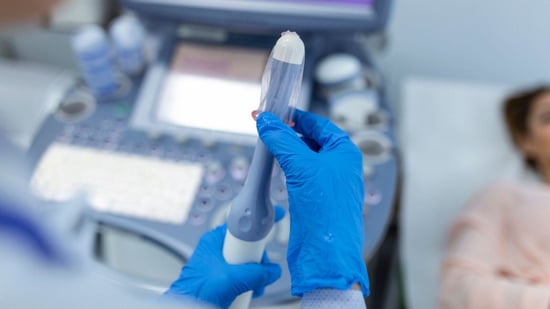
Transvaginal ultrasound wand. Image source.

One strategy that "pro-life" lawmakers use, to make it more difficult to get an abortion, is to require that patients get a transvaginal ultrasound before they can get an abortion. For example: Wyoming governor vetoes 'invasive' transvaginal ultrasound mandate for medical abortions (the veto was then overridden).

People who speak out against these laws say that transvaginal ultrasounds can be invasive and traumatizing, especially for victims of rape. There's this paper from 2013 which includes quotes that say requiring patients to have a transvaginal ultrasound is rape.

Here's what I want to know, as a woman who used to have vaginismus and has had bad experiences with transvaginal ultrasounds because of it: Why is this the only time I'm seeing people concerned about the potential trauma of transvaginal ultrasounds? Why have I been subjected to transvaginal ultrasounds, without anybody making sure I understood what it was and that I consented to it, and I was just expected to be fine with it- but then suddenly when there's a "pro-life" law about it, people come out of the woodwork exclaiming that we can't do this because transvaginal ultrasounds are potentially such a terrible thing?

Why is it only here, in the context of talking about abortion, that people understand that it's valid to have trauma about this?

I mean, I know why. It's because these "pro-life" laws are about making transvaginal ultrasounds actually legally required, whereas in my case, I wasn't required by law to do anything. My situation was more about lack of sex ed, and about medical staff not prioritizing the idea of informed consent. I didn't need anybody to go ask congress members to change a law- I needed to know how to speak up for myself. So, I think the pro-choice people who speak out the loudest against these "requiring abortion patients to have a transvaginal ultrasound" laws would also strongly advocate for all patients to be fully informed about what's going on, and have the option to say no, when they're told they need a transvaginal ultrasound (in all situations, not just when it's related to abortion). But the average pro-choice person, who is repeating this talking point "oh no, we can't require transvaginal ultrasounds because that's traumatizing for rape victims"- well, it feels kinda fake to me. If the average pro-choice person really felt that way, I think people would have cared more about my problems with vaginismus.

Let me give you some background info about transvaginal ultrasounds: 

There are 2 different kinds of ultrasounds performed during pregnancy: transvaginal and transabdominal. Most people have seen images of pregnant women getting transabdominal ultrasounds- this is the kind where you have a huge baby bump, and the doctor moves the ultrasound tool around on your belly to see what the baby looks like in there. But, in early pregnancy, the unborn baby is so small that you won't be able to find it with a transabdominal ultrasound. In early pregnancy (maybe around 6-8 weeks), you need to have a transvaginal ultrasound instead. 

In a transvaginal ultrasound, the doctor uses a long ultrasound wand, puts a condom and lube on it, and it is inserted in the vagina. In this way, they are able to see if the embryo has implanted in the uterus correctly, and they can measure the size. They also look at the ovaries and they tell you which ovary the egg came out of, though I remember being a bit confused about what I was meant to do with that information, when I was pregnant.

Yeah, if we're not talking about abortion, if we're talking about people who want to continue their pregnancy, a transvaginal ultrasound is basically required. It's not required in the sense of being required by law, like those "pro-life" laws, but doctors will tell you it's medically necessary. And, yeah, there are important medical reasons why they need to do it:

  • Check if the embryo is implanted in the uterus- this is important, because in some rare cases it implants somewhere else- this is an ectopic pregnancy and is life-threatening for the pregnant person.
  • Measure the size of the embryo- this is important for dating the pregnancy and calculating the due date.
  • You can see the baby's heartbeat. I know, I know, the fact that there's a "heartbeat" at 6 weeks has been massively politicized by the "pro-life" movement, and then the pro-choice side pushes back and says it's not really a heartbeat because the heart hasn't developed yet at that point, etc... so I don't really know how to talk about this... But my experience was, in the early stages of pregnancy I was so worried about everything. I really wanted a baby, and I had gotten a positive pregnancy test, but I knew there is a pretty high rate of miscarriage in those early stages- and seeing the ultrasound, seeing that little white blob with a little heartbeat, it made it feel real. (And I'm sure this is the reason why "pro-life" people want to require ultrasounds.) It made me feel less worried.

I've heard that sometimes it's medically necessary for abortion patients to have a transvaginal ultrasound, and sometimes it's not. I bet for people who want to continue their pregnancy, it's even more medically necessary, and therefore we should be even more thoughtful about how to balance the concerns of people who have trauma related to vaginal penetration, vs the benefits to the pregnant person's health and the baby's health.

(To be clear: For most people, a transvaginal ultrasound is NOT painful or traumatic. But if vaginal penetration *in general* is painful or traumatic for you, then yes, a transvaginal ultrasound will be like that too.)

If you really really can't tolerate a transvaginal ultrasound, and you have a doctor who says it's required and isn't willing to be reasonable and work with you on it, then I think you just have to completely refuse, then come back a month later when the unborn baby is big enough that they can do a transabdominal ultrasound instead. (If you're keeping the pregnancy, you have this option, whereas if you need an abortion and you're in a state that passed one of these invasive laws, well, this won't help.) But, if you do go without the transvaginal ultrasound and wait a month, you're running the risk that it might be an ectopic pregnancy and you wouldn't know it. It's a pretty small risk- and before ultrasounds were invented, every pregnant person had that risk- but yeah, it's not ideal to skip the early-pregnancy transvaginal ultrasound.

Best-case scenario is, you can talk to your doctor about your concerns with vaginal penetration, and work together to figure out a way to do the transvaginal ultrasound. One important thing I would recommend is self-insertion- ie, the patient inserts the ultrasound tool into their own vagina, rather than letting the doctor insert it. And then once it's in, and the patient consents, then the doctor can move it around to get the ultrasound images they need.

Seriously, self-insertion is incredibly important. I would advise anyone who has vaginismus to absolutely refuse, if a doctor says you can't insert it yourself and they have to do it. There is no reason why you, the actual person whose vagina it is, can't be the one to stick things in there. I can't believe I used to let doctors do that to me. Sure, you don't know how to move it around to get the right images, but if you have vaginismus, the doctor likely doesn't know how to insert it without hurting you.

Maybe it's easier to take a stand against these "pro-life" laws because there's an easy fix there. Just don't make a law requiring medically-unnecessary ultrasounds. But what if someone *does* need a transvaginal ultrasound- like a pregnant person who is *not* getting an abortion- and they have problems with vaginal penetration, maybe because of vaginismus or maybe because they are a victim of rape or abuse. What then? See, then it's more complicated. Then it's about sex ed and consent within a medical context, training doctors to be understanding about those kinds of issues, training patients that it's right to stand up for themselves.

I mean, forgive me if I find this sudden concern for people who can't tolerate transvaginal ultrasounds a bit fake. When I was pregnant, and I read all about pregnancy, I never came across anything giving advice on what to do at the early pregnancy ultrasound if vaginal penetration is difficult. Never. (I bet if you used the keyword "vaginismus" when searching, you could probably find useful information- but if you don't know that word, LOL GOOD LUCK.) And now it's a political talking point that, oh no, transvaginal ultrasounds are BAD and TRAUMATIC for rape victims who want an abortion. Okay, where was all this outrage when I was having my own problems with transvaginal ultrasounds?

Well... I know it's because what I'm asking for is more complicated. Everybody can understand that it's a bad idea to make a law requiring unnecessary medical procedures, just to inconvenience people who want to get abortions. Everyone can see the obvious solution: just don't make laws like that. But in a situation where a transvaginal ultrasound is medically necessary, and the patient finds it difficult or painful, well, what then? That's a harder problem. The people who oppose these "pro-life" laws probably also want everyone to have good sex ed, and doctors to care about informed consent- but how do you actually go about pushing for those cultural changes?

Maybe I'm being a little too harsh here, and instead I should say that opposing these "pro-life" laws is a good first step. We should take a stand against laws which require medically-unnecessary ultrasounds, and at the same time, we should take a stand for better sex ed and better training about consent for doctors.

---

Related:

Sea Monsters on Land, and My Life With Vaginismus 

A Comprehensive Pro-Choice Ethic

On Gynecologists and Angry Turtles 

Don't You Think If It Was Possible To Re-Implant Ectopic Pregnancies, We Would Already Be Doing That?

That happened to me too

Friday, December 27, 2024

Blogaround

1. Carnival of Aces Round-Up: Sexual Healthcare (December 18) "As an adolescent and young adult, the messaging I heard was that these tests are very important, but that messaging seemed to take it for granted that all women are sexually active.  The messaging also claimed that the tests might be uncomfortable but wouldn’t be painful.  However, lots of women, especially in the asexual community, have never had sex.  And (as can be seen from the various posts about vaginismus), many women do find pelvic exams very painful."

2. Our Wedding, From The Woman Who Loves Zooey Zephyr (December 18) Congrats to Erin Reed and Zooey Zephyr!

3. Even if Voters ‘Get What They Asked For’ it’s More Likely to Cause a Fascist Death Spiral Than a Lesson Learned (November 18, via) Yeah... there's this narrative in response to the election, that in some sense it's right that people who voted for such a bad president will now have to live under such a bad president. And, some forms of this narrative go so far as to say they'll see how bad it is, and they'll see how wrong they were. 

I personally found this a little bit comforting at first, but I shouldn't have, because if you think about it for a few seconds, it totally falls apart. The ones who will suffer the most from the orange antichrist's presidency are NOT the people who voted for him. And yeah many of his voters will be worse off too, because he doesn't actually have any good plans for how to decrease the price of groceries, but they're not going to suddenly realize "oh we were so wrong to vote for him." 

January 6 happened, you guys. I really thought that would be the end of his popularity. I really thought that when he took a stand against the peaceful transfer of power- which, I learned in school, was one of the key things that makes America great- when he tried to overthrow the US government, for no real reason, just that he wanted to be president... I really thought he would be done after that. I really thought everyone would realize how bad he was right then. But no, here we are 4 years later. Did everybody forget about January 6? "They got what they wanted" isn't going to show these people how wrong they were, if January 6 couldn't do it.

4. Donald Trump and His Allies Don’t Really Care What Kind of Leftist You Are (December 11, via) "Being 'the right kind' of progressive or feminist or socialist can easily become its own goal, rather than winning concrete victories that match the values and goals behind these labels."

Yeah... after the election, I received so many emails from every liberal/social-justice organization I've ever donated to, and overall it made me really uncomfortable. The emails were all like "We're going to do everything we can to FIGHT against Trump" and yeah if that's true, then it's great, I want to support that- but is it really true? Are they just using this moment to get more donations and collect more names for their email lists? *I* don't know how to fight him, but suddenly every single organization is confidently assuring me that they're going to do a stellar job of it, if I just send them money? 

I'm really unhappy with this situation because we need to all work together to fight against the orange antichrist, but I can't trust that all these organizations "on our side" are really doing that- they might see it as an opportunity for themselves to profit off their donors who are scared and therefore more willing to give money.

And, I mean, if they're "just using this moment to get more donations" that's not necessarily a bad thing. If they are truly committed to fighting him, then they will need money, and now is a good opportunity to fundraise. That's not a bad thing.

I guess the issue is, different people have different opinions on what strategy to use to fight him, and just because some organization emails me to say "we're going to do everything we can to fight him" doesn't necessarily mean that their strategies are ones that I think will be effective and I would want to support.

Personally, the kinds of strategies I want to support are: 

  • Directly working with people "on the ground" who are in danger because of conservative policies- ie, helping trans people in red states get health care, providing resources for immigrants to help them get housing and jobs, etc. I like this because it's local organizations who really understand people's needs and how to help them in practical ways.
  • Lawyers challenging those policies in court. I like this because during the orange antichrist's first term, we did have a lot of success in the courts delaying or blocking his anti-human policies.

That's my thinking right now, but I am interested in learning about other strategies that might be effective- leave a comment if you have an opinion on this.

5. Protecting the Rights of Syrian Refugees (December 19) "Within twenty-four hours of the regime’s overthrow, nine European countries suspended asylum applications from Syrians."

6. Exposing the Honey Influencer Scam (December 22) [23-minute video] I remember seeing some youtube videos where Honey was advertised, a while ago- apparently a LOT of youtubers have done ads for this. They described it as a browser extension which finds coupon codes for you when you shop online- and it's free, there's no catch, you get free money. I remember thinking it sounded suspicious that it just gives you free money and there's no catch, but I couldn't figure out what was actually going on.

So, it turns out, here's what's shady about Honey:

  • The way they make money is by getting the affiliate commission from the sale. (If you don't know what "affiliate commission" is: If you're a blogger or youtuber or whatever, and you share a link where someone can buy something, it could be an affiliate link, which means that if people click it and buy the thing, *you* get a cut of the money. [I do this here on the blog.] So what Honey is doing is replacing a cookie with its own cookie, so it will get the commission- possibly taking the affiliate commission away from whoever posted the affiliate link in the first place.)
  • Also, Honey claims that it will always find the BEST coupon code for the buyer, but this is NOT true. Turns out, Honey makes deals with online stores about which coupon codes Honey will give to customers. In this way, it discourages the customers from searching for better coupon codes- Honey assures them that they're already getting the best price. Extremely shady!

(And I haven't used Honey, but my browser has a built-in tool that finds coupon codes, so now I'm wondering if that one that I use is equally shady.)

6. Biden commutes most federal death row sentences to life in prison before Trump takes office (December 23) 

Monday, September 16, 2024

Blogaround + Happy Mid-Autumn Festival!

A tree that has fallen down on a road because of the typhoon. Image source.

Happy Mid-Autumn Festival! 中秋节快乐!

Here in Shanghai, we just had a typhoon, so we couldn't really do much for the holiday. (Typhoon Bebinca. Chinese name is 贝碧嘉.) Sixth Tone has an article on that: Typhoon Bebinca Slams Shanghai, Strongest Storm Since 1949. I was surprised to read it was the most powerful typhoon since 1949. In the area where I live, we had very strong winds and heavy rain for most of the day yesterday. Definitely bad enough that no one should go outside. I saw some large tree branches that had blown off the trees. But no flooding or power outages. It felt like an average typhoon to me, not "the worst typhoon since 1949." I guess it was worse in other parts of Shanghai.

---

If you are a US citizen living abroad, you need to use the FPCA (Federal Post Card Application) to register to vote. VoteFromAbroad.org walks you through how to do that. 

If you have registered, then Ballot Drop Day is September 21. Check your email, fill out your ballot, and send it in!

If you live in a state that requires you to mail in your ballot, US consulates are able to mail them for you. Here are the deadlines to bring your ballot to one of the US consulates in China so it gets mailed on time:

Beijing: Friday, September 27
Guangzhou: Friday, September 27
Shanghai: Wednesday, September 25
Shenyang: Friday, September 27
Wuhan: Friday, September 27

If you miss the deadline, and you live in a state that requires you to send your ballot by mail (some states allow email or fax) then you should mail it yourself.

VOTE VOTE VOTE!

---

1. Study: You Should Watch this Video to the End (September 9) "So for Study 5, they gave a new group of students the ability to go on YouTube and pick any video they want and watch it for ten minutes without interruption. After another unrelated task, the students were allowed to skip around YouTube all they wanted for ten minutes. And yep, once again, the students reported being more bored in the switching condition."

2. Taylor Swift endorses Kamala Harris for president (September 11) Yessssss.

3. HRC and the Fight for Gender Justice. (September 10) A post from Crip Dyke about the Human Rights Campaign (HRC). Hey, anybody remember that trend 10-15 years ago when everybody was changing their Facebook profile picture to the yellow and blue equals sign that was the HRC logo? And then there was a second trend when people changed their Facebook profile picture to a red and pink equals sign because, I can't remember why? I think because people decided the yellow and blue one was problematic in some way?

That was right around the time I changed from opposing marriage equality to supporting it. I remember feeling like it was a bit odd that they called themselves the "Human Rights Campaign" but they were basically *only* about marriage equality for same-sex marriages. Seems like "human rights" should include way more things than that?

Anyway this is a good post from Crip Dyke, from a trans perspective, about what kinds of issues HRC prioritizes, and the strategies they use, and where that fits into the queer community overall.

4. School Lunch: Last Week Tonight with John Oliver (HBO) (September 12) 26-minute video.

5. Ace in the Gyno Space (September 12) "The thing that none of these people said (because they couldn’t have, because they weren’t like me, because they couldn’t have known) was how being an asexual at the gynecologist would be."

Tuesday, April 9, 2024

The Great Sex Rescue: Pain

Image text: "El Roi, The God Who Sees." Image source.

Links to all posts in this series can be found here: Blog series on "The Great Sex Rescue"

---

[content note: sexual coercion, pain, spiritual abuse]

We are still in chapter 10 of The Great Sex Rescue: The Lies You've Been Taught and How to Recover What God Intended [affiliate link]. I've decided to divide this chapter into 3 parts. This post will cover the second part, pages 187-196. 

We're still in the chapter on being coerced into sex. This section is about when women experience pain during sex (typically from vaginismus) but feel they are forced to have sex anyway. (Usually it's not their husbands forcing them- usually the husband doesn't realize how bad it is for his wife. It's the ideology that these women were taught about Christianity and marriage, which is forcing them to have painful sex.) This is really bad, because as a woman continues to have sex despite the pain, psychologically she will associate pain with sex, and that will make her body even more resistant to having sex, which will make it more painful, and so on. 

Here are the statistics that "The Great Sex Rescue" presents about women's sexual pain:

And we found that sexual pain is very widespread in the Christian community. As we first discussed in chapter 3, 32.3% of women have experienced sexual pain. When we break it down,

  • 26.7% of women have experienced postpartum sexual pain.
  • 22.6% of women have experienced vaginismus or some other form of primary sexual dysfunction that makes penetration painful.
  • Overall, 6.8% of women have had such bad sexual pain that penetration was impossible.

As we have stated before, but we must reiterate, it's long been known that sexual pain rates (unrelated to childbirth) are higher in the Christian community.

Yeah. I used to have vaginismus. And what "The Great Sex Rescue" is saying in this section is very true- Christian marriage resources tell wives they need to have sex anyway, and so, that's what Christian women do, despite being in terrible pain. Which just makes the situation worse.

And then there's this comparison with abuse:

When women believe before they are married the message that a wife is obligated to give her husband sex when he wants it, vaginismus/dyspareunia rates go up by 37%. To understand the gravity of this, 37% is only barely statistically different from the effect we found of abuse on vaginismus/dyspareunia. Our bodies interpret the obligation-sex message in similar ways to trauma, likely because obligation sex and trauma have so much in common. Both say, "What you need doesn't matter." Both say, "Others can use you without your consent." Both say, "You are unimportant." What often makes this even worse for Christian women is that we feel like God condones our pain because we're told the Bible says we can't say no. When we feel unseen, unimportant, and used, not just by our husbands but also by God, that causes trauma. It feels threatening on a subconscious level, so the body freezes in order to protect itself-- in a way that says, "Keep out!"

I'm not sure their conclusion about the statistics is right- the footnote says the odds ratio for abuse is 1.60 (ie, women who have been abused are 1.60 times more likely to have vaginismus/dyspareunia) with a confidence interval of 1.49-1.72, and the odds ratio for obligation sex is 1.37 (ie, women who believe that wives are obligated to have unwanted sex with their husbands are 1.37 times more likely to have vaginismus/dyspareunia) with a confidence interval of 1.26-1.48. The book says that because these confidence intervals overlap, they are "only barely statistically different." But I'm looking at these numbers and, uh, these don't overlap??? 1.48 is smaller than 1.49........ right......? Is this a mistake in how the authors are analyzing their data, or is this something I'm not understanding about confidence intervals?

So I *don't* think the effect of the obligation-sex message is as bad as abuse (in terms of how likely it is to lead to vaginismus and other sexual pain problems), but I do agree that there are similarities. The idea that someone else can use your body, and what you want doesn't matter. That's... yeah that's more or less what Christian marriage resources tell women. It fits right in with evangelical Christian anti-self ideology, where it's "selfish" and sinful to want things, or to expect that people should treat you right.

Continuing on in "The Great Sex Rescue":

Think of the implications of this for a moment: believing this obligation-sex message makes women more vulnerable to sexual pain, but if they believe this message, they're also more likely to force themselves to muscle through. Forcing themselves to have frequent, painful sex makes treatment so much more difficult because it strengthens the association between sex and pain. Indeed, the group most likely to suffer from vaginismus is women who are pushing themselves to have sex despite not ever orgasming and not feeling close to their husbands. These women are twice (2.02 times) as likely to have vaginismus than other women who are married and are actively having sex. 

This is spot-on.

Next, the book mentions Deborah Feldman's autobiography "Unorthodox", which is about her background as a Jewish woman, her arranged marriage, and experiencing incredibly painful vaginismus when trying to have sex with her husband:

The Netflix series based on the book depicts the heartbreaking scene when they finally manage penetration. Covering her mouth with her hand, she grits her teeth and cries through the ordeal. Afterward, he rolls over and declares how amazing it felt. 

No one should ever take pleasure in something that causes another pain. That causes trauma, and it reinforces trauma already present. 

Yeah... I have to say, based on my background being a good Christian girl who read all those books on marriage, I wouldn't have known this "gritting your teeth through the pain while having sex" was a sign that something was wrong. I definitely didn't know that "No one should ever take pleasure in something that causes another pain." No, Christian marriage resources teach the EXACT OPPOSITE: They teach that love means sacrificing yourself for your husband. They teach that life/ marriage/ the Christian lifestyle is full of situations where you don't want to do something, but you have to do it anyway because it's the right thing to do. (Doing laundry! Waking up in the middle of the night to take care of your baby! Going to work!) And yes, they directly say that sex is one of those situations.

Those books also said that even if sex is painful, wives have to do it anyway. They said it's not that bad, it doesn't take that long. They said it's so important for men, surely you can endure a few minutes of pain for your husband's sake. And I believed that, and that's the perspective I was coming from when I started having sex.

It's good that "The Great Sex Rescue" is calling out how harmful this is.

Here's another thing "The Great Sex Rescue" says in this section:

While the go-to treatment for sexual pain is pelvic floor physiotherapy-- which we highly recommend-- what our survey results tell us is that it's not only pelvic floor physiotherapy that we need. If rates of sexual pain are higher when people believe certain things, then part of the treatment has to be challenging those beliefs.

This is a good point! I have written before about how I'm glad I didn't get treatment from a doctor for vaginismus, because the doctor would have been coming from the perspective of "I need to change my body to fit my heteronormative role and be good enough for my husband" and that was really NOT what I needed. What I needed was information about asexuality and queerness, so I'm glad that's what I found, instead of going to a doctor for treatment. (But if your situation is different, and you *do* know what you need, and you feel that treatment from a doctor could be a useful resource for you in accomplishing your goals, then yeah go ahead and do that.)

The authors of "The Great Sex Rescue" are saying that pelvic floor therapy by itself isn't enough- women also need to challenge and reject the ideology they've internalized about being obligated to have unwanted sex. Yes! I agree with this! However, I kind of side-eye it, because "The Great Sex Rescue" said in chapter 8 that if you have vaginismus, you are obligated to get treatment for it, and you are obligated to fix the problem so that you can have PIV [penis-in-vagina] sex with your husband like you're supposed to. So, even though they say that wives shouldn't be forced to have painful sex, they still say that in the long run, you can't just not consent to PIV forever. I very much disagree with this.

So... authors of "The Great Sex Rescue" are talking about changing from the belief "I have to have PIV sex with my husband whenever he wants it" to "in the long-term, I need to get to a place where I'm able to have PIV sex with my husband (not 'whenever he wants it'- I can say no sometimes- but it should at least be fairly frequent), but right now since it's painful I don't have to consent to it."

Or, okay let me frame this in a more charitable way, maybe it's more like, changing from the belief "my husband has the right to use me for sex whenever he wants, even if it's painful for me and I don't want it" to "my husband genuinely cares about how I feel, and he definitely doesn't want to push me into having sex which I don't want."

And, okay, that still is a meaningful change, so maybe I shouldn't be so negative toward what "The Great Sex Rescue" is saying here. And in my own life, I never even was able to believe that I'm allowed to just never consent to PIV, as a straight-married woman. So. Not sure how much I'm really able to advocate for that.

For me, this change from believing "my husband can use me" to "my husband cares about how I feel" happened when I was pregnant. I felt so sick all the time, I couldn't stand the thought of anyone touching me, let alone having sex. It was the first time I just totally refused, the first time I was too sick to be guilted into it by thoughts of "but men need it"/ "I'm not a good wife"/ etc. And my husband was totally fine with that. And he was actually even more loving and affectionate than before- because I was so sick, and so he was doing a bunch of extra things to take care of me. I was so shocked, because Christians had taught me that a husband is just not capable of being a decent human being toward his wife, if she is not giving him enough sex. Turns out men are capable of being better than that- and should be held to that standard.

So yes, I agree it's not just pelvic floor therapy that's needed- it's also about changing one's beliefs about what sex is and who it's for and what your obligations are. For me, finding out about asexuality and queerness was much MORE important than the physical aspects of treating vaginismus, and that's why I keep saying I'm glad I didn't get treatment from a doctor. If I had, I still would have been caught in this "I have to change my body so I can have sex correctly because men need it, otherwise I'm failing at being a good wife" ideology. And even if the treatment had "worked" and I was able to have PIV sex, I still would have had no idea about how my own body works, or that sex should be about what I want and should feel good for me, or that me and my partner should be equals, rather than only me being required to make sure sex is good enough for him to meet his "needs." 

It would have given me nothing more than a shaky hope that maybe now I'm good enough for him. Instead, asexuality gave me confidence. I know what I want, and I know what I don't want, and I absolutely should expect my partner to care about that.

Basically, I agree with "The Great Sex Rescue" when it says that it's not just the pelvic floor therapy that's needed, but you also need to challenge those beliefs about obligation sex. But I disagree about where we end up after challenging them.

Next, "The Great Sex Rescue" talks about the story of Hagar from the bible. The short version is: God promised Abraham that he would have a son, but he and his wife Sarah were unable to have children. So Sarah said Abraham should take Hagar (who was Sarah's slave) and get Hagar pregnant. They did that, and Hagar had a son named Ishmael. Later, Sarah got pregnant and had a son named Isaac, and there was *drama* between Hagar/Ishmael and Sarah/Isaac. 

Anyway, the part that's highlighted in this book is this, which happens when Hagar is pregnant, and Sarah is jealous and mistreats her, and sends Hagar into the desert:

While she is in the desert, God provides for her. And here's where things get interesting. Hagar is the first person in Scripture who is given the honor of bestowing a name upon God. And the name she chooses? "The God who sees me." After being sexually assaulted, forced to carry a baby, and then abandoned, never having her needs or wishes taken into account, being invisible and used to meet other people's needs, God sees her.

And being seen makes all the difference.

God sees women. God does not say to women, "Your experience doesn't matter compared to your husband's tremendous need." God does not tell women, "Let your husband ejaculate inside you, no matter how you feel, because otherwise you are in disobedience." No, God says, "I designed sex to be a deep knowing of two people. And that, my child, means that both of you matter."

If we were to talk about sex like that, we believe there would be fewer cases of vaginismus. We believe fewer women would give up on sex because it's so emotionally damaging. We believe more women would be excited about sex, enjoy sex, and feel freedom in the bedroom.

Love this take on the story of Hagar. Anytime someone wants to read the story of Hagar and care about how she felt, rather than just seeing her as a mistake that Bible Hero Abraham made as he struggled to trust in God's promise, I am SO HERE FOR IT.

And... yeah, this stuff about God not wanting women to be used... this really is different from what I was taught by evangelicals. The idea that God does not want people to mistreat you- I mean, whoa, no, I don't think I heard that in the evangelical church. Instead it was about how we should continue to trust God, even through suffering, even when people mistreat us- and eventually God will use those bad experiences for good, and suffering will bring us closer to God and make us better people.

(Or, rather, it *is* true that when evangelicals are talking about human trafficking victims, for example, they say "God's heart breaks for them." So, when it's some big societal problem that's so terrible we can't relate to it at all, and we view the victims as one-dimensional beacons of innocence rather than actual people, *then* we believe that God doesn't want them to be mistreated. But when something bad happens to you personally, then it's "part of God's plan" and "God will use it for good" and all that.)

So yes, I believe that God sees us. This is what I believe about incarnation: that when we feel pain, God feels it too. Whatever emotions we feel, They feel too. God is with us.

All right, one last thing from this section of "The Great Sex Rescue": The authors say that perhaps at this point, some readers may be concerned that if women aren't taught this "obligation sex" message, then they will have sex less, and oh wouldn't that be so terrible for their poor husbands. And, yes, statistically it is true that wives who believe they are required to have unwanted sex do have sex more frequently than wives who believe in consent.

Here's how "The Great Sex Rescue" responds to this concern:

The fear that men may not have as much sex as they want should not supersede women's need to feel safe.

Yes. Exactly.

In summary: This section of the book is about sexual pain, and how the "obligation sex" message makes things worse, because as women continue to force themselves to have painful sex, their bodies will resist more and more, and it becomes an even worse and more painful experience. Yes, that makes a lot of sense. Unfortunately, there are a lot of Christian leaders out there explicitly telling wives that they need to have sex even if it's painful. The farther I get from that ideology, the more I see how messed-up it is.

---

A footnote here about the idea that eventually you have to consent to sex: It brings to mind this post from Queenie, Mapping the grey area of sexual experience: consent, compulsory sexuality, and sex normativity.

When I first started dating, I made a list of all the reasons I shouldn’t have sex with my boyfriend.  I hadn’t known him long enough (I figured I had to wait at least a year).  I was underage (and he was over 18).  I didn’t have access to birth control.  The list went on and on, but nowhere on the list was “I genuinely do not want to have sex with him.”  Spoiler alert: I genuinely did not want to have sex with him.  But that wasn’t good enough! “I don’t want to” wasn’t a reason not to have sex, because everyone wants to have sex under the proper conditions.  I could say no if I wasn’t ready, but there would come a day when the stars would align and all my necessary conditions would be met and I would be ready.  I was terrified of that inevitable star alignment, because I knew that when it happened I would have to have sex.  Unfortunately, this particularly story ended in trauma, but I’m sure there is some alternate universe out there where I broke down and consented to sex I genuinely did not want because I couldn’t think of a “real” reason to say no.

As an asexual, I feel it's very important to say this: Yes, you do have the right to just NEVER CONSENT TO SEX, even if you're dating, even if you're married. 

This should definitely be something you discuss before marriage. Not cool if you just suddenly tell your partner it's never going to happen, after you've been together for a long time. But also, there are asexuals who only figure out they're asexual *after* getting married. (In my case, I was not able to figure out I was asexual until after I had had sex- fortunately, I had sex before marriage.) This is really not ideal, but if it happens, both people should be treated like they are equally important, rather than the ace partner being treated like they're the one who needs to change. And it may be the case that because of it, they're not compatible and they end up breaking up. And I realize that the possibility of it being a dealbreaker is inherently coercive... even though their partner is not standing there saying directly "if you don't have sex with me, I'll break up with you," that is the reality of it. So... it's tricky for me to say "you have the right to not consent to sex FOREVER" because I can't tell you "you have the right to not consent to sex FOREVER and the relationship will just keep on going the way you want it" because that is very much NOT TRUE.

Anyway, my point is, I don't like the way "The Great Sex Rescue" says that the partner who is experiencing painful sex is REQUIRED to get treatment for it. No, there's another option: Never have PIV sex. Yes, I know this is not ideal, because their partner is likely not a fan of the idea of never having PIV sex- but that should not be treated as *more important* than the pain and inconvenience of getting treatment for vaginismus. I'm not saying it's what you *should* do, but it should definitely at least be considered as an option.

---

Links to all posts in this series can be found here: Blog series on "The Great Sex Rescue"

Related:

The Great Sex Rescue: Wives Are the Ones Being "Deprived"

He Just Loves Me (a post about Sex, Pregnancy, and My "Wifely Duty") 

How Pregnancy and Childbirth Changed My Asexuality (or, actually, A Post About Vaginismus)

Vaginismus Is Not A Problem, In And Of Itself

Saturday, December 30, 2023

The Great Sex Rescue: The Chapter Where It's Not Okay To Be Asexual

A venn diagram where one circle is "you," one circle is "me," and the overlap is "us." Image source.

Links to all posts in this series can be found here: Blog series on "The Great Sex Rescue"

---

Chapter 8 of The Great Sex Rescue: The Lies You've Been Taught and How to Recover What God Intended [affiliate link] is called "Becoming More Than Roommates," and it's about how it's bad and wrong to have a sexless marriage.

Umm. (You will notice this is a long post, because I Have Some Opinions.)

So obviously, first thing I want to say is, as an asexual I 100% disagree with that. There's nothing *inherently* wrong with having a sexless marriage. Most people do want to have sex with their spouse, so of course if you're one of those people, then you would be unhappy with a sexless marriage- but that doesn't mean it's *always* bad to have a sexless marriage. (For example, what if both spouses are asexual and aren't interested in sex?)

My overall feeling about this chapter is, ugh, it's so NOT OKAY how anti-asexual this is. And, it never actually explains WHY a sexless marriage is a problem. We're just supposed to know that obviously it's a problem. WHYYYY?

I can understand that it's a problem in the situation where one or both spouses places a very high importance on sex. But outside of that, there's no reason it would be a problem.

The authors are talking like there's something intrinsic about the nature of marriage which requires sex. And, no, I strongly disagree with that. Talk to your partner! Talk about what you want, and work out something that works for both of you. It should be based on the specific needs and desires that the actual real people in the relationship have- not abstract concepts about how marriage is "always" supposed to be.

Here, a few quotes from this chapter:

Sometimes marriages that are otherwise largely healthy become sexless or sex-starved. In that case, we need to challenge people to put more priority on sex.

Why? Seriously, why?

Here's another one:

Natasha would rather live without sex. It's not that it doesn't feel good-- it does, actually-- it's just that she'd rather watch Netflix at the end of the day than have sex. She knows her priorities are off, but frankly she just doesn't have the motivation to change.

I see no problem with this.

Continuing with the next paragraph about Natasha:

After she and her husband come home from work, make dinner, do the dishes, and get their toddler to bed, he wants to spend time together, and she, well, doesn't. She just wants downtime. She loves her husband-- that's not the problem. And he's tried everything: taking on more of the housework, giving her multiple nights a week off from childcare entirely, and booking romantic date nights out for the two of them in an effort to help her reengage in the marriage. But nothing seems to work because Natasha is, frankly, struggling with overcoming laziness when it comes to her marriage.

Oh, okay, so it sounds like the problem is this: Natasha's husband wants to have sex, so the fact that they're not having sex is making him unhappy. The book doesn't come right out and say that though, it just says Natasha is not having sex, and then we readers are supposed to automatically understand that that's a problem. 

I find it very weird that the list of things that Natasha's husband is doing to try to get her to have sex with him includes things like doing housework and planning romantic dates, rather than, you know, having a honest conversation about his needs and how he feels about the lack of sex. It reads to me like the husband (and the authors of "The Great Sex Rescue") are operating under a framework where if you are a good spouse, then your spouse should give you sex. This is just... very weird. It seems like the lack of sex is really affecting the husband emotionally, he seems really unhappy about it, but if he doesn't communicate that to Natasha, then how would she even know? Even if he does ask her "do you want to have sex," she might not realize how big of a deal it is to him. This reads to me like a communication issue, not like a "let's blame Natasha for being lazy and selfish" issue (which is what the book says it is).

This chapter categorizes sexless marriages into 3 types:

  1. The sexless marriage due to selfishness or brokenness
  2. The sexless marriage due to emotional protection
  3. The sexless marriage in disguise

Let's go through each of them:

Scenario 1: The sexless marriage due to selfishness or brokenness

Well I'm already mad about this chapter, so this evangelical jargon "brokenness" has me even more annoyed. But I'll define it, for the readers who don't speak evangelical: "brokenness" means there is something wrong with us, at a deep level, because of sin. The book doesn't specifically say which of the examples in this section would be classified under "brokenness" but I would guess it's the example where one spouse is using porn instead of having sex with their spouse (using porn is a sin, this sin makes the porn-using spouse deeply "broken" and unable to have a good sex life without doing the work of healing from it first), and the example about sexual abuse victims dealing with trauma (the abuser committed sin against the victim, and even though the victim isn't to blame, they are still "broken" as a result, ie, they have deep trauma and can't have a good sex life until they heal from it).

(For more on "brokenness": Miss me with your "we are all sexually broken" hot takes. I'm asexual.)

Scenario 1 can be summarized like this: Partner A refuses to have sex with Partner B, and the issue is on Partner A's side. The examples given are:

  • Partner A is lazy and selfish, like our buddy Natasha
  • Partner A is using porn instead of having sex with Partner B
  • Partner A is a victim of sexual abuse, and has trauma related to sex
  • Partner A has sexual dysfunction issues- ie, medical conditions like vaginismus, or being unable to get an erection
(And the examples in the book show that Partner A could be the man or the woman- it doesn't present it like a specifically gendered problem.)

When I say "the issue is on Partner A's side," I don't mean it's Partner A's fault, or that Partner A is sinning. Some of these examples would be seen as sin, and some would not. The point is, Partner A is the one who has the responsibility to do something about it, so that the couple can get to the point where they are having sex frequently and enjoying it.

I'll come back to this section in a minute, let me just define scenarios 2 and 3 first:

Scenario 2: The sexless marriage due to emotional protection

In this scenario, Partner A refuses to have sex with Partner B, because Partner B is not a safe person to have sex with. For example, Partner B is abusive, Partner B acts like they are entitled to sex and Partner A's consent doesn't matter, Partner B has raped Partner A before, Partner B doesn't care about whether sex is painful for Partner A, etc.

So, the issue here is on Partner B's side. It does no good to treat Partner A like they're the problem, and they just need to have sex with Partner B anyway, like most evangelical marriage resources would do. "The Great Sex Rescue" says that Partner A's refusal to have sex is the right thing to do

Scenario 3: The sexless marriage in disguise

In this scenario, the couple is having sex regularly, but not in a way that's good for Partner A. Maybe Partner B always has an orgasm and Partner A never does, maybe sex is painful for Partner A but they feel like they have to do it anyway because they've been reading too many Christian marriage books, etc.

Okay, I'm glad the authors of "The Great Sex Rescue" are bringing this up. (And it's similar to what they said in an earlier chapter about who exactly is being "deprived.") Even though I don't think there's anything inherently bad about a sexless marriage, this scenario definitely is bad. If you're having sex, but it's a bad experience for you, well, stop doing that! 

I say "stop doing that" like it's easy and obvious, but in evangelical-land, it's not that easy or obvious. There are many Christian marriage books which explicitly teach that most women don't like sex, but wives have to do it anyway because men need it. If sex is painful for you, and you don't like it, you would believe that's normal, that's just the way it is for women, and a very important part of being a wife is you have to have bad sex anyway. (Yes, they really do explicitly teach that an important part of being a wife is having bad sex.) They talk about it like it's a sacrifice that wives have to make- your marriage is important to you, and you love your husband and want him to be happy, so it's worth a few minutes of pain several times a week. Furthermore, you shouldn't tell your husband that sex is painful and unpleasant, because that will ruin his manly confidence- you need him to believe that he is good at sex and everything is perfect.

(I'm going to point this out explicitly for the ace and/or extremely sheltered readers: When Christian leaders describe sex as "it's worth a few minutes of pain", the part where it's "a few minutes" should be a giant red flag. Most women take longer than men to get aroused, so if sex is only "a few minutes" then it's likely that the woman is not aroused, and she's being subjected to vaginal penetration when she's not even aroused, which is likely to be painful. In order to feel good for women, it's usually the case that sex needs to take longer than "a few minutes", to make sure that the woman is aroused and ready before doing any penetration, and also to make sure enough time is spent on foreplay that feels good for her. The fact that Christian marriage teachers are emphasizing how little time it takes to have sex, as if that's a selling point, is deeply ****ed-up.)

One of the main messages of "The Great Sex Rescue" is that this whole "women don't like sex but have to do it anyway" is WRONG. I'm glad to see them taking a stand against that.

So... if you're a good evangelical woman, and you get married (to a man, obviously, since you are a good evangelical woman and wouldn't dream of being queer) and then sex is painful, you wouldn't even know that was a problem. You would think that's normal, and you just have to do it anyway, because that's what it means to be a wife.

"The Great Sex Rescue" has some anecdotes in this section, where men are saying things like "after 20 years of marriage, my wife just stopped having sex with me, for no reason, completely out of the blue." The authors of "The Great Sex Rescue" say that actually, it wasn't "out of the blue"- the wife had been suffering through bad sex for 20 years, and finally decided she couldn't take it any more- and GOOD FOR HER! Furthermore, the book says that if you continue to have sex even though it's bad, it's likely your husband will have no idea there's a problem- so you should speak up right away and refuse to have bad sex. Don't try to tolerate it.

Yes, as an asexual, I totally agree with this. Don't tolerate bad sex, because that's not sustainable, and it's not good for you.

---

Okay so those are the 3 scenarios given in the book. Overall, the message is, if you're the one causing the marriage to be sexless, then you're the one who has a responsibility to work on yourself and make changes so that you can have a good sex life with your spouse. Basically, the lack of sex is a problem, and whichever partner is causing the lack of sex, is the one who needs to change.

I don't think the lack of sex is a problem, in and of itself. I think the problem is when there's a mismatch between what the two partners want. And the way to resolve that mismatch is NOT "let's work on whatever issues are stopping us from having a normative ideal sex life" like the book says [this is my paraphrase, not an actual quote]. The way to resolve that mismatch is to really think through what you want- specifically, which parts of sex do you like or not like? What kind of intimacy is important to you? How do you show love to your partner, and how do you want them to show love to you? Get some specific answers- more specific than "I like sex" or "I don't like sex"- because sex can be a lot of different things. And then communicate with your partner, compare your lists of what you want and what you don't want, and come up with a plan that works for both of you.

There are 2 examples from "scenario 1" I want to go back and look at, and discuss how my advice of "figure out what you want, and then work something out with your partner" would play out (and how it's different than what "The Great Sex Rescue" says). First, we have this part, which mentions the writers' experiences with female sexual pain:

Not wanting sex when you're dealing with sexual dysfunction is a perfectly understandable and normal response. But whatever the sexual dysfunction, if it impedes libido and makes sex difficult or impossible, it is incumbent upon that spouse to seek and follow medical treatments. All three of us writing this book have been treated for sexual pain at one time or another, so we are not telling you to do anything we have not done ourselves. Dilators, internal massages, perineal stretches, the works-- it's not fun, but it gets the job done.

I'm gonna have to disagree with this.

I used to have vaginismus (a medical condition where the vagina involuntarily closes itself, making penetration very painful or impossible). One of my main "hot takes" about vaginismus which I've blogged about is, this is not necessarily something you need to get treatment for. Vaginismus means you can't easily put things in your vagina- this is only a problem if you want to put things in your vagina. Besides that, it's not a problem at all.

And I'm glad that I found the asexual community- a group of people dedicated to analyzing and categorizing all of our feelings on what we really want out of sex and relationships- rather than finding a doctor who could tell me how to change my body to be good enough for a man.

The short version of the story is, I did a bunch of trial-and-error on my own (involving masturbating and sex toys) and eventually I did figure out a way I could manage to have PIV [penis-in-vagina] sex without pain (though it didn't always work)- and along the way, figured out some other things that worked better for me than PIV. (And it's great that I figured those things out!) And then when I gave birth to my baby, I guess that cured the vaginismus and now it's not a problem at all any more.

It's really good that I was able to figure out what I actually wanted, instead of approaching it like "I need to find a doctor who can help me meet the heteronormative standards of what I'm supposed to be doing as a wife." And... well that's basically what "The Great Sex Rescue" is saying here- if you have medical reasons why you can't do PIV like you're supposed to, then you need to get treatment so you can do PIV like you're supposed to. Eww, no. Figure out what you actually want.

Sometimes I wonder if I'm being too negative about doctors, when I blog about vaginismus. Let me clarify this: If you are coming at it from a place of confidently knowing what you want, then treatment from a doctor can be a very useful tool, if that's what you want. But back then, I was definitely not in a position where it would have been useful for me. I was so "pure" I had never even used my hand to feel around "down there" and get a sense of the basic geometry. All I knew was I wasn't supposed to have sex or know anything about sex- and even when I rejected that belief, I still had this weird idea that "monogamy" means I shouldn't investigate my own body by myself... and then sex didn't "work"- well of course sex didn't "work", I had no idea what I was even trying to do. I assumed it would just happen "naturally." And when I asked doctors for help- because I did ask doctors for help, but they were all useless- they told me "just relax" and other things that very much did not help me to realize that I needed to figure out what *I* wanted. If one of them had diagnosed me with vaginismus and given me a set of dilators, I would have approached it like, "okay I still have no idea what I'm even trying to do, but if I follow the doctor's instructions about these dilators, then I can be good enough to have sex with my partner correctly." Which, no, don't do that. Instead, figure out what *you* actually want.

But, if you're coming at it from a place of "I've analyzed the pros and cons of being able to have PIV sex, and I think this is something that would benefit me" then yeah, go ahead and get help from a doctor. Probably more efficient than the trial-and-error that I did. (And I can't speak for anyone else's situation- maybe some people's sexual medical issues can't be solved without an actual doctor's help.) But I needed to do that trial-and-error, because my only other option was just going along with what everyone was telling me I needed to do to have sex correctly.

(And if you feel it's worth it to work on the vaginismus issue so you can have PIV for your partner's sake, well, sure, if that's your decision, then that's valid- but is your partner also going to great effort to make sure you are getting the kind of intimacy that's important to you? They should! If you are literally changing your body for them, are they making it clear that they understand and value that? They should! Or are they treating it like, you fail to meet the bare-minimum requirements for being married, so you better get that fixed as soon as possible, and they are being a saint for putting up with your inadequacies? Oh YIKES.)

Anyway, "The Great Sex Rescue" doesn't see it that way. Their view is, if you're married, you need to have PIV sex, and if you aren't able to have PIV sex, then you need to get medical treatment so that you can. No! I have big news: Even if you're straight and married, you don't need to have PIV sex! If you want to have sex, there are other ways to have sex, did you know that?

I've actually seen comments, in the comment section of the "Bare Marriage" blog (ie, the blog written by Sheila Gregoire and the other authors of "The Great Sex Rescue"), where men are saying things like "PIV sex is so painful for my wife, I can't possibly ask her to do that, so we just do other sexual things instead." I'm very happy to see men saying things like that! You don't need to do PIV, even if you're straight and married, and honestly if PIV is painful then you definitely SHOULDN'T do it- but good news, there are plenty of other sex things you can do! (Also, I think those men's wives would benefit from learning what vaginismus is- it's likely that they don't even know it's a real medical phenomenon and there are treatments for it. Once they know what it is, they can weigh the pros and cons of getting treatment, and make the decision that works for them.)

Here's another example from "The Great Sex Rescue"- an anecdote that comes from a comment on their blog or survey:

My husband doesn't really care that he can't get an erection. He just shrugs it off as, "Well, I tried, but it just isn't working," and that's good enough for him. His doctor gave him blood pressure medication, and said, "It shouldn't be a problem now," and pushed us out the door. But it's still a problem, and my husband doesn't care. I'm barely forty, and we've been through a lot of stress, including the death of a child. We need this connection. Despite the fact that our sex life has never been fantastic, I'm not ready to be in a sexless marriage.

My first thought when I was reading this was, if the lack of erection is the problem, well there are sex toys you can buy which can serve as a replacement. But actually, I don't think that's the problem- it seems like the actual problem is the husband isn't really interested in participating in sex at all, even though it's really important to the wife. So if he's not even motivated enough to try harder to get an erection, he's likely also not motivated enough to use a sex toy to make his wife feel good.

But here's a thought experiment: Suppose you were having this problem, and I came along and said "well there are sex toys you can buy to serve as a replacement" and your reaction was "NO, absolutely NOT." First of all, okay, then don't do it, it's just a suggestion- this is all about figuring out what *you* want, and if you don't want to use a sex toy, then you shouldn't use a sex toy. And second, the fact that you are strongly rejecting my suggestion is actually a very useful thing- it gets you one step closer to figuring out what you actually want. See, now we have a bit of information that we didn't have before: in your opinion, there is something about using a dildo which is incredibly *different* than if it's your partner's actual body, and that difference is very important to you. Great, this is extremely useful information! Now ask yourself, specifically, what about it is the key difference, for you? If you can articulate an answer to that question, you're well on your way to being able to communicate with your partner about what you actually want, and from there you can work out something that can work for both of you.

It shouldn't just be one partner saying "I want sex" and the other saying "I don't want sex" and concluding there's just nothing that can be done. (Or, concluding that the "I don't want sex" partner is the one in the wrong, like "The Great Sex Rescue" is doing in scenario 1.) "Sex" can be so many different things. Intimacy can be so many different things. There is plenty of opportunity to find overlap in your preferences, and exclude the aspects that you don't like.

Now, I should say here that I'm a sex-favorable asexual. Most aces are not sex-favorable- they may be sex-indifferent or sex-repulsed instead. So maybe I'm portraying this too optimistically, and in reality it may be the case that sex-repulsed/ sex-indifferent aces won't be able to find a way to be compatible with a partner who wants sex. I personally don't know- feel free to leave a comment if you are sex-repulsed or sex-indifferent.

I definitely don't want anyone to take this to mean "see, aces CAN find a way to be okay with having sex" and then try to pressure someone into sex based on that. No, that's not what I said. I said that if you really get into the specific details about what you do or don't like about sex, and what kind of intimacy is meaningful to you, you are likely to find some workable overlap with your partner. I didn't say that overlap is necessarily sex.

My view on this is influenced by what I've read from the kink/BDSM community about using checklists to find interests that you and your partner have in common, and plan your "scene" based on that. It's a very logical idea- you have a list of a whole bunch of elements which may or may not be included in the actions you do with each other, and for each item on the list, you can mark yes/no/maybe. Then you compare your list with your partner's, and make a plan- anything you both marked "yes", you definitely do, and if there are some things that one person really wants, and the other person doesn't care one way or the other, then yeah sure include those too. Etc. And the things on the list can be "adventurous" sexual things, but they could also be mundane things, like, to what extent do you want to keep some of your clothes on? Do you want the lights on or off? Do you want to cuddle?

(But... for people from an evangelical background, who are taught that it's "sinful" to think deeply about what you want, and express those desires and expect people to care about them... yeah, I know my advice here isn't possible, if you're coming from that mindset. So. That's the real problem.)

Even though I've never literally filled out such a list, or done BDSM stuff, this is basically the framework I'm using. It makes so much sense! Which specific elements are important to you, and which do you want to avoid- and I don't mean just sex itself, I also mean things like, maybe there's some other kind of intimacy that's important to you, like you want your partner to read a novel out loud to you, so you can both enjoy it together. If that's important to you, then your partner should treat it as a high priority. Society expects people to treat sex as a high priority if their partner wants sex- well, how can Partner B expect sex from Partner A, while not making any effort to do the kinds of intimacy that Partner A values? Why does society treat Partner B's "need" for sex as more real?

Anyway, I wasn't intending to make this post "here's my advice for how to make an ace/allo relationship sexually compatible" because I think that's more complicated and difficult than what I'm presenting here. I just want to give advice for some of the scenarios in "The Great Sex Rescue," where people don't seem to have even attempted to ask themselves the questions "What do I actually want from sex? Which aspects of it are important to me?"

"The Great Sex Rescue" is basically saying, [this is my paraphrase, not an actual quote] "If you're married, you have to have heteronormative PIV sex, and if there are issues that are stopping you from having heteronormative PIV sex, you need to work through those issues, and then you need to have heteronormative PIV sex, this is a requirement if you are married." Which, ugh, no. Why on earth do you need to have sex, just because you're married? Why on earth do you need to have PIV? Why? There's no reason why it has to be that way. Now, if you *want* it to be that way, then yes, that would be a reason, that would make sense. So figure out what you want.

As I was reading this chapter, getting more and more frustrated with it, I thought to myself, "This is basically saying, 'Instead of being required to have sex because men need it, you're required to have sex because you have to as part of being married.'" And then, lo and behold, I get to the end of the chapter, where there's a little summary, and it literally says this:

Instead of saying, "You need to make sex a priority because your spouse needs it," say, "Sex is vital to a healthy marriage. Make it a priority so you don't miss out on God's blessings for both of you."

Oh COME ON.

Anyway. So. Well that's chapter 8 of "The Great Sex Rescue." I'd like to say, in my opinion, being queer is about figuring out your own identity and what you want. Knowing yourself. I'm so glad I'm queer.

---

Links to all posts in this series can be found here: Blog series on "The Great Sex Rescue"

Related:

Vaginismus Is Not A Problem, In And Of Itself

Miss me with your "we are all sexually broken" hot takes. I'm asexual. 

Separating Vaginismus From Asexuality 

Reasons 

And this link (via redbeardace): WANT/WILL/WON’T LIST (specifically written for aces)

AddThis

ShareThis