Showing posts with label evolution. Show all posts

Sunday, September 20, 2026

Well I believe in God and evolution but I don't call it "theistic evolution"

A group of zebras. Image source.

So I wrote my review of "The Language of God" but I decided to make a whole separate post about theistic evolution because I have a lot to say about it.

--- 

How the book defines theistic evolution

Here's a quote from pages 200-201:

There are many subtle variants of theistic evolution, but a typical version rests upon the following premises:

  1. The universe came into being out of nothingness, approximately 14 billion years ago.
  2. Despite massive improbabilities, the properties of the universe appear to have been precisely tuned for life.
  3. While the precise mechanism of the origin of life on earth remains unknown, once life arose, the process of evolution and natural selection permitted the development of biological diversity and complexity over very long periods of time.
  4. Once evolution got under way, no special supernatural intervention was required.
  5. Humans are part of this process, sharing a common ancestor with the great apes.
  6. But humans are also unique in ways that defy evolutionary explanation and point to our spiritual nature. This includes the existence of the Moral Law (the knowledge of right and wrong) and the search for God that characterizes all human cultures throughout history.
If one accepts these six premises, then an entirely plausible, intellectually satisfying, and logically consistent synthesis emerges: God, who is not limited in space or time, created the universe and established natural laws the govern it. Seeking to populate this otherwise sterile universe with living creatures, God chose the elegant mechanism of evolution to create microbes, plants, and animals of all sorts. Most remarkably, God intentionally chose the same mechanism to give rise to special creatures who would have intelligence, a knowledge of right and wrong, free will, and a desire to seek fellowship with Him. He also knew these creatures would ultimately choose to disobey the Moral Law.

This view is entirely compatible with everything that science teaches us about the natural world. It is also entirely compatible with the great monotheistic religions of the world. The theistic evolution perspective cannot, of course, prove that God is real, as no logical argument can fully achieve that. Belief in God will always require a leap of faith. But this synthesis has provided for legions of scientist-believers a satisfying, consistent, enriching perspective that allows both the scientific and spiritual worldviews to coexist happily within us. This perspective makes it possible for the scientist-believer to be intellectually fulfilled and spiritually alive, both worshiping God and using the tools of science to uncover some of the awesome mysteries of His creation.

---

BioLogos

In the book, Francis Collins says the name "theistic evolution" isn't that great, and he wants to rebrand it as something different. He calls it BioLogos. "Bio" from "biology", and "Logos" which is a Greek word meaning "word" or "reason." As in, John 1:1, "In the beginning was the Word, and the Word was with God, and the Word was God." Christ is the logos of God. So Collins has invented this word, BioLogos, which combines biology and following God in a logical way.

So as I'm reading this, I'm like, wait a minute, I know a website called BioLogos. I've read articles from this site before. I never really got a sense of what their overall position is- is it theistic evolution? If you asked me to describe the BioLogos site, I would say it's articles about the topics of creation and evolution, from a Christian perspective, and they're pretty good, and very noticeably are *not* the typical creationist talking points.

Well I just did some googling, and here's what it says on the "history" page of BioLogos

BioLogos began with Francis Collins, one of the world’s leading scientists.

In 2006, Collins wrote The Language of God (2006), the best-selling book that told the story of his journey from atheism to Christian faith, showing that science is not in conflict with the Bible, but actually enhances faith.

The outpouring of response to the book showed the need for virtual and actual meeting places to ask questions, discuss issues, and learn from the top Christian minds in the sciences and theology.

Wow, I had no idea. Pretty cool that this organization was started by him.

(But again, it goes to show: I've heard plenty of Christians claiming Francis Collins as a symbol, like "oh people say you can't be smart and be a Christian, but look, we have Francis Collins on our side!" Like, score a point for our side as we argue with the atheists. But I have very rarely heard Christians actually being interested in what Collins has to say.)

---

Did God use evolution?

Theistic evolution, as I understand it, is the idea that "God used evolution." I don't buy this. I can't buy this. Evolution is a heartless process that generates more complex and better adapted creatures by ruthlessly letting the less-adapted ones die.

Yeah sure, the book says evolution is "elegant." Okay, it's elegant. Something as simple as natural selection, choosing among variations in a species, producing the amazing variety of life we see in our world today. Yeah it's "elegant," I'll give you that. But what about all the animals that die? What about the species of animals that have a ton of offspring, because that's a good evolutionary strategy, and then the majority of the offspring die very quickly? What about the little baby sea turtles struggling to get to the ocean, being eaten by seagulls? What about the male lions killing other lions' cubs? Did God want it to be this way?

The idea that "God used evolution" makes it sound like everything is just fine, with one's religious beliefs and the reality of evolution. It's not fine! This is basically the same thing as the Problem of Evil. How could a good God allow this? And the claim is not only "God allowed this", but that God chose to use the mechanism of natural selection to create all the animals, including humans. God chose that? Really? Y'all are fine with this?

So my position is like... I believe in a God who is all-powerful and good, and I believe in evolution, and this is a problem. This is a problem! Just like how the Problem of Evil is a problem. It's not just "oh, God used evolution" and that's all there is to say.

---

The last will be first, and the first will be last

The entire point of Jesus' life, death, and resurrection is that love triumphs over power. (Okay, that's my take, but Christians have a lot of different opinions on what's "the entire point of Jesus' life, death, and resurrection.") He came to bring the kingdom of heaven to this earth- a new kind of kingdom where the last will be first, and the first will be last. Blessed are the poor. The meek will inherit the earth.

It might look like power is winning. It might look like the strong can oppress the weak and get away with it. But this is not the end of the story. This is not how God wants it to be. He came preaching a message of love and acceptance, challenging the power structures that existed in society, and He was killed for it. But that is not the end of the story. He lives!

But how can that be the case, if "God used evolution"? Does God want the last to be first, or does God want survival of the fittest? The first will be first. The last get removed from the gene pool. If the last were first, humans never would have evolved.

This heartless process, which is the total opposite of the message of Jesus, is the mechanism God used to create humans? And you all are fine with that?

And this isn't just about Jesus. The Old Testament also talks about how it will be in the kingdom of heaven. The prophet Isaiah said, 

The wolf will live with the lamb,

    the leopard will lie down with the goat,

the calf and the lion and the yearling together;

    and a little child will lead them.

The cow will feed with the bear,

    their young will lie down together,

    and the lion will eat straw like the ox.

The infant will play near the cobra’s den,

    and the young child will put its hand into the viper’s nest.

They will neither harm nor destroy

    on all my holy mountain,

for the earth will be filled with the knowledge of the Lord

    as the waters cover the sea.

The wolf will live with the lamb. The cow with the bear. The child will put his hand in the viper's nest. This is how God wants it to be, in the kingdom of heaven. But if wolves and lambs really lived together peacefully, humans would not exist. The struggle between predator and prey is what made animals evolve such amazing and fascinating complexity. 

Joel Duff has a good post which asks the question: in a young-earth creationist worldview, what would we expect animals to look like before the Fall? Young-earth creationists believe that before Adam and Eve sinned, there was no death- not even animal death. What would animals look like, if the threat of death wasn't something that their features needed to adapt to? That link has a rather terrifying photoshopped image of a rabbit with its eyes on the front of its head. Prey animals have eyes on the sides of their heads because of death. Every single interesting trait that any animal has, it's because if they didn't have that, they would be more likely to die. It's because of survival of the fittest. It's because of power. It's because this world is not the kingdom of heaven, that Jesus came to bring.

If you're an atheist, this is fine. Yeah animals and people were produced through natural selection, which is cruel and heartless, but it's not like anyone *wanted* it to be that way. It's not like it's "supposed" to be that way, in any sense. Sure, that's what how the natural world works, but we can choose to live in more moral and altruistic way instead.

But if "God used evolution" and we have signed on to worship that God, well, what then?

---

God changed

If there is an answer to this, it must be something about God changing. Maybe the animal world is meant to be governed by "survival of the fittest," but humans are meant to be different. Or maybe God doesn't value animal lives at all, so it doesn't matter that a huge fraction of them died, in service of the greater good of evolution- but humans bear God's image, and They actually care about that, so now They want to change it and say we have to care for each other and the last will be first. Or maybe God originally used evolution and natural selection, but then changed Their mind and wanted things to be different.

To a large extent, we could say I view the work of Jesus and the message of Christianity as a reaction to the way the world is. Jesus came to preach good news to the poor- but, if God was on their side, then why are they poor in the first place? The God of this kind of religion is not a God who has always been in charge of the whole world, but instead is taking the current state of the world as a starting point, and taking steps to make it better. We hope for the future where God will make everything right- but why do we need to do that? Why didn't God just make it right in the first place? IS IT BECAUSE THEN HUMANS NEVER WOULD HAVE EVOLVED?

Kind of comes across like a religion that isn't true at all, but helps us feel better because we imagine that it means God *will* make things better. But if this was actually true, wouldn't God have already made it better? If religion is about the hope that things will get better- well, what reason is there to think that there would be a significant change, if God has always been totally in charge of the world?

This is why I don't pray. If we really believe that God is gonna intervene and help us in response to our prayers, well why didn't God just intervene earlier and prevent our problems from happening in the first place? Does our world, with all its problems and injustice, look like a world where God is frequently intervening to help people?

And believing the message of Jesus is about bringing the kingdom of heaven to the earth, about our responsibility to do good, right the wrongs, and fight for justice- which is what I believe- doesn't it come across like a religion that's not true at all, and its only value is in inspiring people to do good? God's not actually doing it, so we have to?

(I realize I've just opened a whole can of worms, but yeah there you have it.)

---

I'm a Christian because I really do believe in Jesus. His incarnation, his teachings, his message, his resurrection. But that doesn't mean I think this is all fine and my religious beliefs totally make sense. What does it say about God, that They "used evolution" to create all life on earth? Are we really okay with that?

---

Related

"The Language of God" (surprisingly I like this book!)

Animals Screw Over Other Animals and Get Away With It

I used to be a young-earth creationist

Sunday, August 30, 2026

"The Language of God" (surprisingly I like this book!)

Book cover for "The Language of God"

I recently read The Language of God: A Scientist Presents Evidence for Belief by Francis S. Collins (published in 2006) and surprisingly, I really liked it! This is a really good book! It gives Collins's perspective, as a scientist and Christian, and it's just very reasonable. It doesn't come across as "let's fight those atheists" or fearful of science. It's about his own reasons for leaving behind atheism and converting to Christianity, and it's about how evolution is just true and Christians should accept that, and creationism and intelligent design just ain't it, and how science and faith are compatible. 

---

Francis Collins

Collins was the director of the Human Genome Project. This was a team that sequenced the entire human genome, billions of DNA base pairs, which is pretty amazing. (The title, "The Language of God" refers to the idea that the DNA base pairs are the "language" that God used to create life.)

I've seen Christians make a big deal about how Collins is a Christian. The argument goes, see, Francis Collins is a Christian, and he's a famous scientist! So, our beliefs *are* legit and compatible with science! The assumption is that Collins holds all the same beliefs that the Christians who claim him as a symbol do. Turns out, this assumption is very wrong! All throughout this book, Collins comes across as thoughtful and reasonable, rather than holding on to dogmatic beliefs that we can't question and we just have to keep saying louder.

Case in point: evolution. A big chunk of this book is about how evolution is true and Christians should accept that. Collins discusses creationism, and talks about why it's wrong. He discusses intelligent design, and why it's wrong. And then he talks about theistic evolution, which is the position he holds.

I was totally surprised. I really had no idea what this book was about; I had no idea that Collins accepts evolution and I had no idea that he was openly advocating for Christians to accept evolution. Really, no idea. All those times that I've heard Christians say "look, Francis Collins" as if that proves that their beliefs are reasonable- wow, I really had no idea that he was out here telling Christians to accept evolution. In the Christian subculture I grew up in, we all knew that of course Christians do not believe in evolution.

Sunday, August 31, 2025

Just reading an apologetics book and asking "why are we doing this?"

Book cover for "The Case for a Creator"

So I was at a used book sale and saw this: The Case for a Creator by Lee Strobel, and snatched it up. Because I used to be an apologetics nerd, and I used to be a creationist, and I read Strobel's books "The Case for Christ" and "The Case for Faith" when I was in high school. But then, years later, I read atheist responses to them, and realized that those books came across like "we have such solid evidence for our faith, atheists don't even know what to say", but it's not true, atheists in fact have a lot of things to say. I got really turned off of apologetics after reading atheist responses. The atheists make some good points. Good for them.

Anyway I saw this book, "The Case for a Creator," (published in 2004) and I was like "ooh a creationist book, I wonder how it will come across to me now, since I'm in such a different place than when I read Strobel's other books."

So here's my review of the book, and also some opinions about apologetics in general.

Tuesday, November 21, 2023

I used to be a young-earth creationist

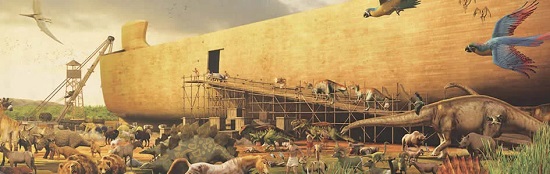
Artwork showing dinosaurs entering Noah's ark (ie, young-earth creationist fanon). Image source.

Gather round, it's story time. Here's the story of me and creationism.

So, I grew up evangelical, and one thing that was definitely made clear to me is that Christians DO NOT "believe in evolution." Apparently, evolution is an evil ideology that gives people an excuse to not believe in God, even though it should be SO OBVIOUS to everyone that God created the world. 

Yeah, definitely knew I had to believe that, because that's what Christians believe. But they were very sparse on the details. I never heard anyone actually put forth a comprehensive answer to "if we don't believe in evolution, what do we believe instead?" besides just a vague generalization like "we believe the bible" or "God created the world."

And there were many snippy comments that I heard at church, about why evolution is so obviously wrong: There are no transitional fossils. How could complex structures like eyes have evolved by chance? Imagine if you found a watch in the middle of a field, would you think someone designed that watch, or the pieces just fell together randomly? If a tornado goes through a junkyard, would it create a fully-functional airplane? LOLOLOL, evolutionists think their grandfather was a monkey. And, hey, the second law of thermodynamics, when things are left on their own, they naturally get more chaotic, not more ordered and complex. And there's no way for the life to arise from non-life- like come on, what are the odds that the exact right amino acids would just *happen* to come together in the primordial soup, like even if you waited billions of years, it would never happen. (Please note that "evolutionists" actually do have detailed answers to all of these objections. I had no idea- people at church would make these statements as if they were ironclad, like scientists were trying to cover them up and distract from the fact that evolution has no answers. Uh, no.)

And my favorite: sometimes I heard adults at church saying things like "when I was in college I had to take a class on evolution, and it just made no sense" and I can't believe I accepted that as an actual argument that evolution isn't true- really it's more of an argument that this person is not a very good student.

So anyway, I definitely didn't believe in evolution, but I wasn't given any alternative "scientific" theory to believe instead. And I was a huge nerd who read tons of books about dinosaurs, and nobody ever told me to be skeptical about the science in those books. I remember one time, I asked, "if dinosaurs went extinct millions of years before humans existed, but humans were created on the sixth day, how does that work?" The math doesn't add up, right? And someone answered "I don't know, that's a good question" (which is what you should say if you don't know, so good job to them). It was just one of those things I wondered about- because, obviously, dinosaurs went extinct 65 million years ago, and never lived at the same time as humans, but also, obviously, humans were created by God on day 6. I knew both of those things were true, and I was curious about how that would work, but never came upon anyone actually attempting an answer. (I also remember vaguely wondering if you could add up the genealogies in the bible to find out how old the earth is- turns out Bishop Ussher literally did this in 1650 and that's basically where the young-earth creationist ideology gets its numbers.)

(In some Christian schools, students are actually taught that the earth is 6000 years old, and dinosaurs lived with people, and the Loch Ness monster is evidence of this- that's very different from my experience. I never heard anything that clued me in to the fact that there's a whole subculture of Christians who believe the earth is 6000 years old.)

So yeah, never heard any attempt at an explanation for this. Until one day, when I was reading an apologetics book. "Apologetics" means offering arguments and evidence about why Christianity is true. I'm a huge nerd, so of course I was really into apologetics because of the emphasis on evidence and logic- but actually, I know now that apologetics isn't about following the evidence, finding the truth wherever it is. No, apologetics is about "I know I'm required to believe this, but it doesn't make sense, please help me convince myself it does make sense." There's no awareness that if something doesn't make sense, perhaps that's a sign that it's not true, and you're better off not believing it. 

Anyway, I was reading an apologetics book, when I was in middle school I guess, and this book had a bunch of questions and answers related to Christianity. One of them went like this:

Question: Should Christians believe that the "days" of Genesis 1 were long periods of time instead of literal days?

Answer: This belief, called "day-age theory" says that the 7 days described in Genesis 1 were not literal 24-hour periods, but that each "day" was actually millions of years long. But, no, we see no reason that Christians should believe this.

And I was like "!!!!! Wow! This actually makes sense! Why on earth does this book 'see no reason' to believe in day-age theory, umm, have they ever heard of modern science?" and I immediately became a believer in day-age theory. (Day-age theory falls under the category of old-earth creationism.)

So, that was cool, it felt like a good answer to the question of where the millions of years fit into Genesis 1. I didn't dig deeper for more details on it at that time though.

Okay, fast forward to high school biology class, in public school. I knew that we would be learning about evolution at some point that year. It would be my first time being confronted with evolution in a school setting, and I wanted to be ready to "stand up for my beliefs." I had read many fiction stories in Christian magazines about a brave student who stands up in biology class and says "I don't believe in evolution" and all the other students mock them, etc- I really believed that was a real thing that would totally happen to me, rather than some culture-war propaganda. Anyway, I knew that at some point in that class, the topic of evolution would be covered, so I decided to do a ton of research on my own so that I could argue against evolution in class or whatever. Also I prayed about it A LOT, this was a really big deal for me, fighting for my faith or something. (Yeah I feel very cringe, writing about it now.)

So that's when I really started looking for answers. And looking for even more answers. And more answers. I wanted to fully understand all of it. That's when I first encountered young-earth creationism.

See, before this, I had never heard about young-earth creationism at all. I had heard of the question "is the earth old or young" but I assumed they meant like, is the earth 6 billion years old or 1 billion- I had absolutely no idea that anyone was claiming the entire field of geology was just wrong about everything. And I had heard Christians talk about radioactive dating like "well how do they REALLY know that's how old it is" but again, I assumed they meant it like, maybe there's a slight math error and the number is off by a few percent- I had no idea that people thought every single rock on the earth was less than 6000 years old.

I think some Christians feel good about not being "extreme." Like, they told me evolution was wrong, but they didn't teach me young-earth creationism- see, they're being reasonable and not "extreme." But... no. When you make indirect negative comments about evolution, but you never provide any alternative explanation, that leaves science-nerd kids like me vulnerable to believing in "extreme" things like young-earth creationism. Because the young-earth creationists were actually presenting a whole entire ideology which answered all of those questions. That was much more useful to me than the occasional "well where are the transitional fossils???" comments I heard at church.

(I feel the same way about purity culture- I was definitely taught that it's a sin to have sex before marriage, but the rest of it was very vague, a lot of judging teenagers for this or that behavior which someone thought was "slutty" but no clear guidelines were ever given. Well then when someone came along and actually presented a whole complete ideology, with answers and guarantees and clear guidelines, of course I was all over it.)

So what I'm saying is, nobody personally taught me about young-earth creationism. I just learned it from books and the internet. But I believed it because many many many Christians had personally taught me that of course Christians don't believe in evolution, no way no how, definitely NOT- but never gave any details beyond that.

I started reading Answers in Genesis's website. (Answers in Genesis is one of the biggest young-earth creationist organizations. You know the "Ark Encounter," the full-size replica of Noah's ark in Kentucky? That's them.) And at first, it sounded completely ridiculous to me. They believe the earth is only 6000 years old! Like, what on earth??? I had taken earth science class in school, learned all about how rocks are formed, the different layers that different fossils are found in, how they're divided up into different prehistoric eras, radioactive dating, plate tectonics, all of that. I did very well in earth science class and learned a lot, and now here was Answers in Genesis saying all of that was wrong???

I had NO IDEA that the "controversy" about evolution had any connection to the age of the earth. Like, yeah of course I knew that as a Christian I couldn't "believe in evolution" but I had NO IDEA there was any "controversy" about the age of the earth. All my life, I had been happily reading books about how this or that species of dinosaur lived however many millions of years ago, and I had taken earth science class and learned all about geology, and nobody ever said anything that clued me in to "maybe all of this is wrong?" The most anyone ever said was "well how do they really know it was millions of years ago" which meant nothing to me. I was not concerned with *exactly* how many millions of years ago something happened, and surely if someone was so concerned about the exact number, they could go find an academic paper that explained it. Right?

So. Little high-school-Perfect-Number, reading the Answers in Genesis website. At first I didn't believe any of it, because the concept of the earth being only 6000 years old is just so ridiculous. But let me tell you the basic overview of their Genesis fan theory: So, God made the world, 6000 years ago, over the course of 6 literal 24-hour days. Well, then where did all the fossils come from? The answer is, Noah's flood. Yes, the bible says God sent a flood that covered the entire earth, but Noah and his family and 2 of every animal survived in the ark. Well, the flood is what created all the layers of sedimentary rock, and the fossils in it are the animals/plants that died in the flood. The reason that less-complex organisms are found in "older" layers of rock are that they were less able to escape from the flood, so they were buried first. And then as you move up the layers of rock- which were all formed in the span of 1 year or so, not hundreds of millions of years- you get more and more complex animals, because these animals were more intelligent and capable of escaping from the rising flood waters, until eventually they were buried too.

That's the overall structure of young-earth creationist ideology. Creation and the flood. See, before I started reading about young-earth creationism, I hadn't really thought scientifically about the flood at all. (Of course I believed it was a literal flood that covered the whole earth, and I believed it really happened like the bible said, but I didn't know there were, um, a lot of issues with that, from a science perspective.) I knew people were debating the science of Genesis 1, the creation story, but the flood was not anywhere on my radar at all. 

It actually fits together neatly. (If you, um, don't really think about any of the details...) Like, if the earth is only 6000 years old, then how do we have millions of years' worth of rock layers of fossils? If Genesis didn't have a flood story, it would be much more difficult for young-earth creationists to answer that question. The flood creates all the fossils and sedimentary rock that the 6-day creation story isn't able to create.

So that's the overall story, but obviously, high-school-Perfect-Number-who-had-just-taken-earth-science-class saw a lot of problems with it.

If you had asked me back then, before I really started examining young-earth creationism, I guess I would have said that everything I learned in earth science class was right, and new species of animals arose because God popped them into existence at various points in time over hundreds of millions of years- NOT through evolution. Like, look at the Cambrian explosion, for example. A whole bunch of new species just suddenly appeared at the same time- that sounds like God created them, not like they gradually evolved.

I guess I still believed in some form of day-age theory, but I didn't know any details about that either. And Answers in Genesis had many articles about why day-age theory is wrong. You see, Answers in Genesis doesn't just argue against evolution; they also argue against other creationists who believe in a different type of creationism. All those so-called Christians who don't agree with Answers in Genesis are bad and wrong and don't really believe in the bible, they've been led astray by the world, etc.

That's AiG's whole schtick. Bearing false witness against your neighbor (ie, claiming that Christians who disagree are motivated by sin) and taking the Lord's name in vain (ie, "God agrees with me").

(Also, there are some things about day-age theory that don't quite fit- like, Genesis says that God made fish and birds on day 5, and land animals and people on day 6. But, the fossil record tells us that fish appeared first, then amphibians and reptiles, then birds and mammals. The order doesn't match up. Young-earth creationism has similar problems though- the bible says the sun was created on day 4, so... how could days 1-3 be days? How can you measure a "day" without the sun?)

Anyway, as I read more and more of Answers in Genesis's articles, I really struggled with it, because young-earth creationism just sounds so laughably ridiculous. But finally it came down to this: I knew that as a Christian, I have to believe the bible is true. And if you open the bible to Genesis 1, it's right there in black-and-white: On the first day God made light. On the second day, on the third day, etc. That's what it says, and I believe the bible, right? Why would the author of Genesis write "day" if they actually meant "millions of years"? And Answers in Genesis had cobbled together enough sciency-sounding words that I felt it could be scientifically supported. So, I became a young-earth creationist.

If you're wondering what ended up happening in biology class, well, uh, yes, I did "stand up for my beliefs." But now I feel really embarrassed about that so I won't go into details.

Anyway, after the school year finished, biology class was over, and I didn't really think about creationism and evolution much any more. Then in college, occasionally my friends would happen across young-earth creationist ideas, and they would all laugh- "can you believe that there are people who really think the earth is 6000 years old???" I didn't tell anyone I was a young-earth creationist. I knew they would think it was so obviously absurd, I wouldn't be able to find any kind of common ground to begin to communicate to them about it.

I started to wonder, why are people treating creationism like it's so ridiculous that it's not even worth a response? And then on the creationist side, this is spun like "they're not even responding to our arguments, because we're bringing up such good points and they don't have answers and they're trying to cover it up." I wondered, why does it seem like everyone is talking past each other? I even watched a video of a debate between creationists and evolutionists, and the creationists were saying all kinds of things about evidence that people and dinosaurs lived at the same time or whatever, and the evolutionists answered "these are half-truths" and didn't really engage with the actual points the creationists were making.

I later found out that there's a debate technique (the "Gish gallop" named after creationist Duane Gish) where you spout a whole bunch of nonsense, so much nonsense that your opponent can't possibly keep up with it and respond to every single point, and then you claim that you win because they aren't able to respond to all of your amazing points. Fortunately, though, I have discovered this website: An Index to Creationist Claims (from Talk Origins), which really does give detailed responses to a massive list of common creationist talking points. Yes, these answers exist- it's not like scientists are totally stumped and just hoping no one notices. The answers exist, it's just that it's not practical to take the time to go through all of them in a live debate setting.

Another thing that happened in college, is that a Christian friend gave me a bunch of video files which contained hours' worth of Kent Hovind's videos. Kent Hovind is a young-earth creationist who basically presents the same ideology as Answers in Genesis, except he's a little more loony. I later found out he spent several years in jail for tax evasion. Anyway, I watched his videos, and the creationist ideology basically made sense to me, but what I really wanted to know was, why do scientists all act like this is so ridiculous it's not even worth a response? Why aren't the two sides actually engaging with each other? I kinda felt embarrassed, like I didn't want anyone to know I believed in young-earth creationism, but I couldn't figure out why everyone else was so sure it was obviously wrong- were they seeing something that I wasn't?

But anyway, I didn't really think about creationism much for several years. It's just not relevant to my day-to-day life. 

Then I started reading ex-evangelical blogs. I started questioning a lot of things that I thought Christians "have to" believe. Creationism wasn't one of them, though, because I just never thought about it- I was more concerned about the harmful effects of purity culture, anti-LGBTQ ideology, etc. I read Rachel Held Evans's blog- and that's how I first found out that it's NOT true that Christians have to believe all the things that I was told that "Christians have to believe." I was so confused when I first started reading her blog- I was like, "is she a Christian, or not?" Because she knew the bible, and she knew could speak evangelical fluently, and she was very motivated by very Christian concepts like, you know, the love of Jesus- but she asked questions that Christians weren't allowed to ask. She believed things- about the bible, about equality for women, about LGBTQ acceptance- that Christians weren't allowed to believe.

Rachel Held Evans taught me that it's *not* true that "the bible is clear." It's not true that being a Christian means I have to accept all these culture-war ideologies or else I'm a "fake Christian."

I started reading the Slacktivist (Fred Clark)'s blog. And at first, I disagreed with a lot of things he said, because they went against the beliefs that Christians "have to" believe. But, the thing is, I read more and more and more, and... he is a Christian. He really is a Christian. Even though he says so many things that Christians aren't supposed to say, even though he says things that would cause good evangelicals to immediately label him as a "fake Christian" and ignore everything he says... no, he really is a Christian. He knows the bible backwards and forwards. He preaches, on his blog- but he preaches about doing justice, loving mercy, and walking humbly before God, about hope and resurrection, about the kingdom of God, about the Ethiopian eunuch and Peter's vision that meant "God has shown me I should not call any person unclean" and how this means radical acceptance of queer people. I saw all this, and gradually I concluded that Fred is a Christian, despite every red flag that my evangelical perspective saw.

And, I eventually read some of his posts about evolution. He accepts evolution.

Why I am not a theistic evolutionist and why I do not ‘believe in’ evolution (part 1)
Why I am not a ‘theistic evolutionist,’ etc., part 2 
Young-Earth Creationism is Cruel
'We too fall with it' 
The Long March of the Koalas 
Young-Earth creationism and the light of distant stars 
Young-Earth creationism and the problem of telescopes (part 2)
Cain’s wife and Tubal-cain’s sonic screwdriver
Have a yabba-dabba-doo time
Creationism requires a global conspiracy of lying scientists and/or a lying God
Omphalos theory fan fiction 
A grove of aspen trees that proves Ken Ham is full of it

That's how I found out that it's possible to be a Christian and accept evolution. And, actually, I was relieved. I was very happy I didn't have to believe in creationism any more. I just kinda dropped it, immediately ready to trust that scientists know what they're doing. Excited to learn, instead of fighting against it like I had always done.

It feels really good to be able to just learn from experts. When I happen upon some very knowledgeable person explaining something I don't know much about, to just take it in and marvel at how amazing reality is. Instead of constantly making sure I'm ready to argue about why they're wrong. Feels good, to just accept evolution and not have to have my guard up in every natural history museum.

(And young-earth creationism is a really cool fan theory. Seriously, it's impressive how much work they've put into this fan theory. But it's not true in any sense.)

You may have noticed that if you meet someone who believes in something very absurd, or some ridiculous conspiracy theory, and you tell them scientific facts that disprove their beliefs, it doesn't seem to affect them. That's because their reason for believing in it is something else- the scientific facts aren't the real reason, though they may spend all their time talking about their so-called scientific evidence for their theory. If you want to change their mind, you have to figure out what their actual motivation is, and argue against that. In my case, I believed in creationism because I thought that a "real Christian" can't believe in evolution, and being a Christian is very important to me. And even if someone told me "there are Christians who accept evolution", I had been warned many times that those people are bad fake Christians, so that wouldn't have convinced me at all. I had to really spend time reading what the Slacktivist had to say, before I became convinced that his Christianity was real.

But once I found out that it *is* possible to be a Christian and "believe in" evolution, that was great news to me. I didn't want to believe in something that everyone thought was ridiculous. I was happy to ditch it at that point. It was easy. And I was glad that it meant there was so much more science out there that I could now learn about, which I hadn't been allowed to learn about before.

So, what do I believe now, about Christianity and evolution and creationism? Well, I don't think Genesis 1 is a true story. It's just simply not a true story. It's not literally true, and it's not metaphorically true (whatever that even means). It's great literature, which is important to me for cultural reasons. But if you want to know where the world really came from, or where people really came from, Genesis has nothing to do with that. You should ask scientists.

The challenge that evolution brings to Christianity isn't about specific words in specific bible passages, or calculating how much water there was in Noah's flood, or trying to make the story in the bible line up with the fossil record, or anything like that. No, the actual issue is this: Evolution means that the reason we have such a beautiful world, full of complex animals, and humans with the ability to achieve amazing things- the reason is that natural selection ruthlessly eliminated any creature that wasn't "fit" enough to survive. Animal species become stronger and more able to survive, because the weak ones died. Animals take advantage of other animals which are weaker- and that's just the way it is, there is no justice, and in fact this ruthless taking-advantage-of-each-other is the driving force that has made us human.

That's just... really bleak.

I want to believe we live in a universe where love triumphs over power. Where "the moral arc of the universe is long, but it bends toward justice." Where "blessed are the meek, for they will inherit the earth." Where "he has brought down rulers from their thrones but has lifted up the humble, he has filled the hungry with good things but has sent the rich away empty." Where "the first will be last, and the last will be first." Where Jesus died on a cross like a criminal, and then he rose and conquered death, and that changed the world.

But instead, we know that this is what happened, for hundreds of millions of years: Sometimes, by chance, an organism is born with a mutation which makes it better able to survive and reproduce, compared to other members of its species. If the mutation really does have a clear benefit, then eventually, the ones that don't have the mutation will die out- this is how the species advances, this is progress. It's about organisms competing with each other- members of the same species compete for food and other resources, predators and prey have an arms race as predators develop new ways to exploit any weaknesses the prey may have, and the prey animals develop ways to escape the predators. Any new development that makes an organism better able to take from others and ensure its own survival and reproductive success, will by definition become the dominant trait in that population. Power wins, not because it's right, not because that's how it "should be"- but because it can. Because if you're powerful enough to take advantage of others, then you do, and that's how it goes. Nobody cares about the weaker organisms who were exploited- that's the price of progress. They necessarily die out, because they are weaker, and that's how humans came to be.

Natural selection is bleak. But that's how it works- the logic of it is obvious, it's obvious that natural selection is real. (And even when I was a creationist, I knew natural selection was real and could cause changes in gene frequencies in animal populations- the creationist ideologies I followed never argued against that.) But evolution says more than that- not just that natural selection happens, but that it is the reason that the world as we know it exists. This is the reason that the people we love exist. This is the reason that humans have brains. This is the reason that humans have hands. And all of the abilities we have to do great things- these are the accumulation of small changes, and every time, those who weren't "fit" enough to keep up just died, and the universe didn't care.

(And I know I'm sort of oversimplifying it here. It's *not* true that animals will always take every opportunity to take advantage of each other. It is often evolutionarily advantageous to cooperate- and people do naturally feel that it's good to help each other. But here's the thing: animals cooperate not because "it's the right thing to do" but because, if you look at it as a long-term strategy, that's what's most advantageous. It's still about power, and what works and what doesn't work, rather than right and wrong.)

This is how it works, this is the reality we live in. But also, we long for a world that is better than that. As humans, we all have a sense of right and wrong. All throughout human history, there have been activist movements fighting for justice- people who stand up and say it's WRONG that the strong take advantage of the weak. All throughout human history, there have been religions that say you will be rewarded in the afterlife if you used your time on earth to help others, and you will be punished if you just selfishly amassed power for yourself.

We want a better world than this, and yet we are only able to exist because of the ruthlessness of natural selection, because our ancestors (all the way back to the first single-celled organism) were power-hungry and did whatever it took to get ahead.

And I know that the science of evolution is just describing what happens, and can't say anything about morality or what "should" happen. Creationists are always misrepresenting evolution, saying "this teaches people that they *should* take advantage of each other, and that life is meaningless, and that's why we have crime/murder/genocide." I'm not saying that. I have read articles from scientists talking about evolution, who say "that doesn't mean we have to be like that- we can be better, we can choose to protect the weak." What I'm saying is, it feels so pathetic to decide "we can be better," now, after hundreds of millions of years of benefitting from the strong preying on the weak.

If there's no god, then sure, there's nothing weird about humanity suddenly deciding to go in a different direction, and prioritizing equality and compassion for each other. Let's do it! But if there is a god... why would God have let things go on like that, for hundreds of millions of years, if that wasn't how They want people to live? Were They trying to create a world where love wins, or where power wins?

These are questions I don't have answers to- and this is the real reason that evolution is a challenge to my religion. And it doesn't bother me to be posting these things on my blog without answers- these things are worth talking about, and I'm not worried that this is not a good strategy to convince people to become Christians or whatever, because I don't care if y'all are Christians or not. I'm *not* trying to convince anyone. I just want to ask the questions that need to be asked.

So that's the story of me and creationism. I was always taught that Christians don't "believe in" evolution, but never heard any actual explanation of how the 6-day creation in Genesis 1 fits with the earth being billions of years old. Until I was getting ready for high school biology class, and decided to actually go looking for answers, so I could "stand up for my faith," and I discovered that young-earth creationists have a whole comprehensive ideology which uses sciency words and overconfidently answers all of my questions. But eventually, I found out it *is* possible to be a Christian and accept evolution, so I was like "oh, okay" and dropped my creationist beliefs without much fuss. And actually, that was great news for me, because it meant I was free to actually learn about evolution, rather than fighting it. That's great, because I love science. But still, here's the challenge that remains: Why would God let the world be this way, governed by the heartless process of natural selection? That's the real conflict between evolution and my religion, and I don't have an answer for it.

---

Related:

As a former creationist, I'm super excited to re-learn evolution 

Animals Screw Over Other Animals and Get Away With It

If God Metaphorically Made the World in 6 Days, What Does That Even Mean?

An Ex-Evangelical Mom Review of "When God Made The World"

She was the first (Thank you, Rachel) 

"Winners Take All": Businesspeople Only Want To "Change The World" If It Makes Money

Also, I highly recommend Joel Duff's blog, Naturalis Historia. He takes young-earth creationism extremely seriously, and truly investigates what the implications would be if it were true- and then shows SO MANY examples of scientific evidence that can't really be explained by young-earth creationist ideology.

Monday, July 10, 2023

An Ex-Evangelical Mom Review of "When God Made The World"

Book cover for "When God Made The World."

I bought the book When God Made The World [affiliate link] for my son, because I'm a Christian and I want him to learn about some Christian things. The difficult thing, though, is I'm ex-evangelical, and a lot of Christian children's books have harmful evangelical ideology. You know, stuff like "you deserve to go to hell." If you wanna say that to my son, you have to fight me first. (I've written about this issue before: Not Sure I Want My Kid Reading the Bible and 2 Wrong Ways to Write Bible Stories For Kids)

So, the question of how to find acceptable Christian children's books is an important issue to me. (Also, I'm in China, and while there are plenty of English books for kids available on Chinese shopping apps like Taobao and Jingdong, they don't always have the specific book I'm looking for, and often there is very limited information about the actual content of the book.)

I'm not trying to find books that 100% agree with what I believe. I'm not like, checking every sentence in every kids' book to see if they're "right." That would be totally the wrong approach. Kids should be aware that different people have different beliefs. (One of the reasons I'm glad my husband is not a Christian! Our son will see that it's fine for people to believe different things, without me even needing to tell him.) I just want to find books that don't have extremely harmful teaching, the sort of extremely harmful teaching which is so normal within evangelical culture that they don't even notice how messed-up it is.

Anyway, I'm featuring this one here on my blog because I like it. Yes, in my ex-evangelical queer Christian feminist opinion, this is a good book for kids.

Overall summary

It's about all the beautiful things we see in the world, and it says that God made them. The book has a lot of detail- listing things like:

God made comets that fly
with tails through the sky
and asteroids and meteors that sometimes zoom by.

and

God made tropics and plateaus,
glaciers and meadows,
marshes and tundras,
and erupting volcanos.

and 

Swordfish and trout, 
fish sleek and fish stout,
and whales that God made to breathe through a spout.

Lots of details describing the things found in nature- from stars, to geographic features, to plants, to animals, to people. Overall, it's really beautiful imagery about how amazing the natural world is.

And, the book encourages kids to enjoy nature:

Run barefoot through grass,
pick a flower or two or a bouquet, perhaps.

Find a tree you can climb, or with a seat and some twine,
build your very own swing or a backyard zip line.

It also tells kids to use their unique talents that God gave them to make the world better, and to protect the environment:

Save a whale, hug a tree, protect every bee.
Recycle, repurpose, reject apathy.

So overall, yes, I recommend it. It's a nice story about God and about the mind-blowing beauty of nature.

My son is preschool age. On Amazon, it says this book is for children 3-7 years old, and that sounds right to me.

Other books in this series are: What is God Like?When God Made YouWhen God Made Light, and When I Pray For You [affiliate links].

---

Okay, the rest of this post is little minutiae that I'm pointing out because it may be relevant to people who are ex-evangelical like me, and are EXTREMELY AWARE of all the evangelical culture wars. I would not mention any of these things to my son while reading the book, because they are very much NOT what the book is about.

Basically, if you just want to give your kid a nice book about God, go ahead and give them this one. You can stop reading the review here. The rest of this post is just little details that may be important to someone who has, um, ex-evangelical PTSD.

Author

The book is written by Matthew Paul Turner. I remember I used to read Matthew Paul Turner's blog way back in the day, when I started blogging. It seems that he has since moved his blogging to substack, and has come out as gay. Good for him!

Inside the front cover, it says, "In memory of Rachel Held Evans. The world is better because of your love, life, and words." There are actually several books in this series, and at least one is co-authored by Turner and Rachel Held Evans. If you know Rachel Held Evans, that should give you an idea of what kind of Christianity this book is about. (Evans died in 2019. She had a huge influence on me, and really on the whole ex-evangelical movement.)

In other words, knowing this book is associated with her, it indicates to me that this is likely to present a Christian view that I can accept.

Days of creation

In the bible, the creation story in Genesis 1 says that God made the world in 6 days, with different themes on each day.

This book does not mention the days of creation at all, but it loosely follows them. (Loosely. Genesis 1 has light made on day 1, and the sun, moon, and stars made on day 4, and I'm not really sure how that works- so this book does not follow that part.) Mainly the thing that sticks out and made me realize that it follows the days of creation is the fact that, when it gets to the part about God creating animals, it has 2 pages exclusively about birds, and then 4 pages about fish and other water creatures, then 2 pages mentioning animals that sorta live between water and land (like frogs), then 4 pages on land animals. 

Genesis 1 says God made birds and water animals on day 5, and land animals and people on day 6. The fact that "When God Made The World" divides the animals up like this, feels very "Genesis 1" to me. (This is also an interesting choice because in reality, reptiles evolved before birds.)

Which is fine, I'm not saying this is a bad thing. But I used to be a young-earth creationist, and I think this is information that former creationists would want to know before buying this book.

Detailed scientifically-accurate descriptions vs the creation-myth feel of the book

This book lists lots and lots of natural phenomena that the writer of Genesis 1 knew nothing about. For example: galaxies, planets, north and south pole, glaciers, geysers, grapefruits, limes, eels, flying fish, otters, kangaroos, giraffes, rhinos, and so on. It even says God made the earth and "designed it to orbit the sun once a year."

So... is this book basically Genesis 1? Or is it a modern-science-based description of cool things that exist in nature? Does it feel a bit weird to take a creation myth as the overall structure and tone of the book (I say the "tone" is like a creation myth because it just says God made this, God made that, but gives no details about *how* God made things), and then fill it in with things that we know about now but people in the ancient Near East would not have known about?

If you're trying to figure out how "literally" you're supposed to take this story, this makes it difficult.

Personally, I don't think this is a problem at all. Personally, I think it's pretty cool that they took a "creation myth" sort of style, and then put in a lot of really interesting details (that we only know about thanks to modern science). I like that.

But I'm just mentioning it here because I can understand if someone used to be a creationist, they may be very very sensitive about what's intended to be taken "literally" and what's not. 

Little kids definitely don't care about that- kids' books are full of talking cars and such, and the kid doesn't actually believe cars can talk. So I don't think this is an issue.

God's pronouns

This book does not use any pronouns for God. Hooray! I love that!

It just says "God" over and over. For example, there's one line that says, "give thanks to God for all that God made." No pronoun for God. I love it!!!! God is not a man!

Diverse kids

The illustrations in the book show a group of kids experiencing the wonders of nature on almost every page. It's basically the same group of kids all throughout the book. And it's a diverse group- I love that. Different races, and one kid is in a wheelchair.

Image from "When God Made The World", showing a diverse bunch of kids.

Interestingly, though, in the part of the book about how God made people, it describes the range of human diversity like this:

Each of our faces, bodies, and traits,
our skin tones, our features-- God did create.

God made some people shy and some people loud
and some who thrive in the midst of a crowd.

Some make music, and some like math,
and some are prone to blaze their own path.

So it's mostly about different personality types, rather than "identity politics" sorts of things. ("Skin tones" are mentioned 1 time. It doesn't even mention gender- even though Genesis 1 in the bible mentions humans were created "male and female.") Personally I think that's good- the pictures show a racially diverse group of kids, a mix of boys and girls, one is in a wheelchair, but the text doesn't call attention to that sort of diversity. Like it's just normal and doesn't need to be remarked on. The actual text of the book is about personality types, which is probably more practical and useful for little kids learning to interact with people.

"Evolve"

So, there are a few lines of the book that may or may not be interpreted as taking a position on the creationism/ intelligent design/ evolution debate:

[bold emphasis added by me]

all kinds of trees with leaves God designed

and

So God filled the sky, perhaps over time,
with birds and more birds, and most learned how to fly.

and

Yes, all living creatures from whales to snails,
from those covered with feathers to those covered with scales,
each God designed with a home in mind,
to develop and evolve if needed over time.

Luckily for me, I'm far enough removed from the creation/evolution debate that I don't really care about what position this cute children's book is taking. It's just a cute story. Let's not overanalyze it to figure out if this book is telling us the earth is 6000 years old or whatever.

But also, I do recognize that the author put the word "evolve" in there, which is very likely to get this book banned from evangelical-land. Good for him! That feels very bold to me, as an ex-evangelical. (This is the kind of thing that evangelicals would make a big huge deal about, even though the kids in the target audience won't notice or care.)

God made you for a purpose?

But always remember, 'cause this much is true,
God had a purpose for making you YOU.

I do not believe that, myself. But, it's fine, I don't need every book I read to my son to agree with me 100%. That would be ridiculous. It's good to let him learn about different ideas. I just draw a line at harmful ideas like "Jesus died because of you" etc.

Seeing god in people and nature

In the last few pages of the book, it says "With nature, God gives us a glimpse of divine" and "how we live, how we love, tells God's story too." I LOVE that. That is one of the key things I believe in now. God is alive, everywhere, in the world, in nature, and in human beings.

---

In summary: I'm really glad I bought this book for my son. It's positive, it's about God, and it doesn't have any problematic evangelical ideology. (Though everyone's definition of "problematic evangelical ideology" will be different- that's why I went into details in this post.)

---

Related:

Not Sure I Want My Kid Reading the Bible 

If God Metaphorically Made the World in 6 Days, What Does That Even Mean?

2 Wrong Ways to Write Bible Stories For Kids

Taking My Kid To Church: God Loves My Son

Monday, May 29, 2023

If God Metaphorically Made the World in 6 Days, What Does That Even Mean?

Gif of Jonathan Frakes saying "We made it up." Image source.

The first chapter of the bible, Genesis 1, says that God made everything in 6 days. On day 1, he made light. (I'll use "he/him" pronouns for God here because Genesis 1 does.) On day 2, he made the sky. On day 3, he made the land, the seas, and plants. On day 4, he made the sun, moon, and stars. On day 5, he made birds and water animals. On day 6, he made land animals and people. On day 7, he rested.

This is not a true story. None of this actually happened.

(I used to be a young-earth creationist, and really believed this story was true. If you ever want to hear about all the fan theories that creationists have come up with to explain how this story is true and set in the same universe we live in, I can tell you all about it.)

I've been thinking about this ever since I read the book "Inspired." (My review of "Inspired" is here.) There's a section in "Inspired" about creation stories, and comparing the creation story from the bible with the creation stories from other ancient cultures. The point of the creation story in Genesis 1 was to teach people to view the world as having a purpose and an order- it was made by God on purpose, in an organized way. To teach people to view God as being the One in control of everything- God speaks, and the creation bursts into existence. To teach people to view themselves as special, the crowning act of creation, with power over the earth and a responsibility to care for it. And to teach people that it's important to take time to rest.

From what I've read about these kinds of religious myths, ancient people weren't thinking in terms of what's literally true, but they used stories as a way to create their identity. In the case of Genesis 1, they wanted to be people who believe that the world has a purpose and an order, and God is in control. (This is contrasted with creation stories from other ancient religions, which had the world being formed as a result of gods fighting with each other, for example.)

So when modern Christians say it's not literally true, but it's metaphorically true, that's apparently what they're saying. 

But let's go a little further- what does that mean? So, we want to be the sort of people who believe in the sort of God who would create the universe in an organized way over the course of 6 days. Not that God actually did do that- we know They didn't, because the universe is way older than that- but They're the sort of God who would. That's the God we want to believe in. Or, taking it a step farther, maybe it's not important whether this God exists at all- it's just about us seeing ourselves as the sort of people who believe in a God who is the sort of God who would create the universe in 6 days.

I don't know, kind of sounds like a mess. I feel like the idea of believing something is "metaphorically" true but not "literally" true just doesn't make sense. So my position is, I don't think Genesis 1 is literally true or metaphorically true, but I like it as a story. (If I said Genesis 1 is metaphorically true, I would also have to say Star Wars is metaphorically true. That seems to me to be straining the definition of "true" way too far.)

Or... actually, it's more like, people believe in some story as sort of a shortcut to believing in a more abstract idea, and this more abstract idea is a beneficial thing for people to believe in. Is it important that the abstract idea is literally true? For example, maybe the abstract idea is about having hope that things will turn out okay, and you can make an argument that even if people are in a bad situation and will end up failing, it's still beneficial for them to have that hope. (But you could also make the argument that it's not good to have false hope, and that the "abstract idea" is only any good if it's literally true.)

The danger, though, is when the story teaches us an "abstract idea" which is harmful. For example, Adam was created before Eve, therefore it is argued that men have to be the leaders, and women can't be trusted because they are easily deceived, like Eve was deceived by the snake. (Or, if you ever read stories in the bible about how this or that shady character was the ancestor of one of the nations we don't like, well, that's not true, it was just made up as a way to justify their prejudice against the neighboring nations.)

Or there might even be an "abstract idea" that modern readers are getting from the story, which has no relation at all to what the author was trying to say, or how ancient readers would have read it. So these "abstract ideas" have to be judged on their own merits; it can't just be "it comes from a bible story, therefore it must be right." I love reading feminist/queer/liberation/trauma-informed readings of the bible, and these definitely view the text in new ways that the author did not intend. The bible is living and active, and we can interact with it and make it into something new; I love that. But it's not about "I interpret this bible story to argue my point, and since it comes from a bible story, my conclusion is automatically true and you have to accept it." It's about "I have a whole ideology that I believe in [for example, feminism], and I have logical reasons to back it up (and if you disagree with me, those 'logical reasons' are the place we should work on hashing out where we agree or disagree), and I am using this bible story as a convenient tool to help people connect emotionally with the point I am making."

And actually, if people believe the story is literally true, then everyone is welcome to pull out whatever idea logically follows from the story. They would all be literally true too, if the logic works. But if the story is not literally true, then the intention is only for one specific idea to be communicated by the story, and if you say it means something different, then you're "taking it the wrong way" and "the metaphor breaks down."

Here's a related example: I remember reading an article once, about a study where American children were surveyed to see what percentage of them wanted to be the president someday. I don't remember the exact numbers, but it was found that a much higher percentage of boys than girls planned on being president. Like 60% of boys and 40% of girls, or something like that. And the article was presenting this like it was a bad thing- specifically, that the percentage of girls was too low, and this was an indication of society's sexism.

When I read that article, I was SO CONFUSED. I was like... okay, you realize that only ONE PERSON becomes president EVERY FOUR YEARS, right? (Ballpark figure of 1 president every 4 years, though sometimes it's 8 years and sometimes it's less than 4 years.) 60% of little boys and 40% of little girls think they're gonna be the president? That's just patently absurd right there. Probably none of them are going to be the president. Like why do you want more girls to have this unrealistic belief? Why would that be a good thing?

Maybe a higher percentage of girls understand the realities of politics and the pressures of being in the public eye, how many years it takes working as a politician/senator/governor/whatever before running for president, what specific personality traits are required for the role of president, other influential leadership roles that may match her own personality better, etc. Maybe instead of being concerned that too few girls want to be president, we should be concerned that too many boys don't seem to have a realistic idea of what being president actually entails, and how to judge if that's something that's really a good match for one's own personality and skills.

What's actually going on here is, it's not literally about being the president at all. That's just being used as a symbol for being ambitious and believing you can reach your goals and be a successful important person. Believing that you can follow your dreams and not be restricted to certain types of jobs based on your gender. It really has nothing to do with actually becoming the president in reality; it's about this more abstract idea. And that abstract idea is a good thing for children to believe (regardless of gender).

Believing in these stories as sort of a shorthand for believing in these bigger ideas about your own identity and how you fit into this world.

(Suddenly, it occurs to me that adults asking children "what do you want to be when you grow up?" is ALWAYS about how the child views their identity and their place in the world, rather than about what they're actually going to be when they grow up. Huh. I guess I've been "taking it too literally" my entire life.)

Here's another example: People are always saying "representation matters"- ie, it's important that fictional stories contain a diverse array of characters. For example, people might say it's important that there are some female superheroes, because it conveys the message that women can be strong and clever and be leaders and save the world. If all superheroes were men, people might believe that only men can be strong and heroic like that, and women can't. But, let's dig into this a little bit- superheroes are actually not real at all, so why does it matter what specific demographics they come from? And if a movie shows a woman being strong and a good leader... well that's not real, it's just a fictional story, but in actual reality it is literally true that women can be strong and good leaders, and the movie conveys this implicit message. But how does a fictional story make its audience believe in a related claim about the nature of reality? How does that make sense?

And really, this is also why people criticize stereotypes and cliches in movies- even though everyone knows it's fiction, there's still some aspect of it that people are going to take as a true portrayal of how reality works. (For example, movies where stalking is romantic.)

Very interesting, how the human mind creates a connection between stories and truth, in a way that isn't necessarily right.

Anyway. Getting back to the question of the creation of the world. Well, what actually happened was the big bang, and then billions of years of star formation and rocks just kinda floating in space, and then the earliest life on earth appeared 3.7 billion years ago, and from there it was natural selection and animals being vicious to each other so that the weak ones died and the beneficial mutations were passed to the next generation, etc etc, and now here we are. There is evidence for this. (Like I said, I used to be a young-earth creationist, so I know all about arguing about the evidence, but that's off-topic for this post.)

But if you want to take this actual literal reality and pull out the abstract background ideas that tell us about our identity and purpose, it's, uh, kinda depressing? All of human existence is just this tiny blip compared to the time scales of the whole universe. We are just on one planet, out of all the millions of planets in the cold expanse of space. And survival of the fittest means the universe doesn't care who lives or dies. God- if any god exists- doesn't step in and stop the strong from taking advantage of the weak.

Aren't those things literally true, since they come from a story that's literally true?

Well... Yes, it's literally true that human history is just one tiny tiny thing in a vast universe with billions of years of existence, rather than humans being the pinnacle of God's creation. But if you go from there and then make a statement like "therefore our lives are not important" that's a bit of a logical leap. (What's the definition of "important"?) And if you take "survival of the fittest" and then say that it's right for the strong to take advantage of the weak, and that we should do more of that, well, that's also a logical leap. (And actually there's a lot of game theory stuff about why it's beneficial for people to cooperate with each other. Being heartless toward others isn't the optimal evolutionary strategy anyway.)

It doesn't have to be "depressing." I've read some really good articles from humanists/atheists about finding meaning and purpose in life, without religion. (Captain Cassidy and Bart Campolo come to mind. If you have more links about this, go ahead and share in the comment section- I'm really interested in this.) Generally it's along the lines of, we have to value this life because it's all we have. And being in awe at the sheer statistical improbability that you even exist- to even exist at all is so amazing. And the ability to create meaning ourselves is way better than a god assigning your life's meaning.

As for me, I'm a Christian. I literally believe in God. But, uh... if God exists, or if God is just a concept that we project our own ideas onto... does it make a difference? I don't believe that God intervenes in the world. Is there really much of a difference between God being literally real and not intervening in the world, or God being just an idea...?

Uh. Well I don't have an answer to that. I do literally believe in God, though.

And I literally believe in the resurrection of Jesus. And that someday the whole world will be literally resurrected. My feeling is that, for the idea of resurrection, there is a difference between "this is literally true" and "this is maybe not literally true but I want to be the kind of person who believes in it." I really believe what the apostle Paul said in 1 Corinthians 15, "And if Christ has not been raised, our preaching is useless and so is your faith."

It really matters to me whether that's true. We need resurrection. We need real justice. We need it to be literally true that "the arc of the moral universe is long, but it bends toward justice." It's not enough, to me, to be the sort of person who believes in the sort of God who would raise Jesus from the dead. To believe that it's something They would do- no, I believe it's something They did.

(Here's a thorny question, though: Isn't it a bit inconsistent that I don't believe Genesis 1 is literally true, but I believe the resurrection of Jesus is literally true? Is it just because believing in the resurrection is scientifically more convenient- like, it's just a one-off miracle, not something we'd expect to have scientific evidence for, whereas the evidence for the history of the universe and how it's billions of years old is EVERYWHERE, and you really have to put a lot of work into your fan theories if you want to argue for a young earth...? So I just believe in a literal resurrection because I feel like I can get away with it, in a way I can't get away with believing the universe was created in 6 days...? Uh yeah that's a question.)

So, in summary: When people talk about religious stories being not "literally" true, but "metaphorically" true, they mean that the story itself did not happen, but there's an abstract idea that the story is meant to represent, and that abstract idea is literally true- or perhaps even if it's not true, it [supposedly] makes us into better people if we believe it. In the ancient world, their stories weren't about what actually happened, but about understanding their identity. What kind of people are we? We are the kind of people who believe in this kind of God.

I wonder whether this makes sense at all, though. It feels very human, to use stories as proxies for communicating more abstract ideas. People will always do this, and it's beautiful, but at the same time, we should be aware we are doing it, otherwise we can easily fall into believing wrong ideas.

---

Related:

Sure Of What We Hope For 

An Ex-Evangelical Mom Review of "When God Made The World"

No One Can Take The Bible From Me

Animals Screw Over Other Animals and Get Away With It

"The Author of Leviticus Would Have Been Cool With It"

Thursday, November 21, 2019

Blogaround

A baby elephant standing with an adult elephant. Image source.
1. Why It’s Easier to Accept David as a Murderer than a Rapist (posted October 14) "If David was merely a weak man who fell prey to a tempting woman on a lonely night, then we don’t have to grapple with the far more insidious reality: David was one of many (mostly men) throughout history who used their power for sexual exploitation."

2. ‘Meth. We’re on it,’ South Dakota says in ridiculed ad campaign that cost $449,000 (posted November 19) LOLOLOLOLOL

3. Here’s What’s Actually Going on With the Chick-Fil-a Charitable Giving ‘Controversy’ (posted November 18) It's sort of good news, but not as much of a big deal as people are making it out to be- and as a queer Christian, I am still not supporting Chick-Fil-a.

4. This tweet from @AspieHuman:

Wow. This is EXACTLY my experience. Really really valuable to see someone put it into words like this.

5. Star Trek Doesn't Actually Understand Evolution (posted November 20) Yep.

Thursday, September 26, 2019

Blogaround

Charizard. Image source.
1. Black Christians Deserve Better Than Companies (And Churches) Like Relevant Media Group (posted September 19) "I shared that I was unaware that a request for permission was needed to commemorate Black History Month with the rest of the country."

And then this post and this one from Relevant Magazine, apologizing for the issues raised by former Relevant employees Andre Henry [linked above] and Rebecca Marie Jo. It's good to see they are apologizing. I hope they follow through with the changes they say they will make.

2. Walking Whales On Board Noah’s Ark: The Inevitable End-point of Creationists’ Post-Flood Hyper-Speciation Belief? (posted 2017) "Similarly, how did a massive chaotic flood killed all the sea reptiles but no sea mammals? This makes no sense."

3. Is Star Trek Actually Less Progressive Than You Think? (posted September 25) "Did he 'some of our best friends are black' an entire planet?"

AddThis

ShareThis