Showing posts with label prochoice. Show all posts

Wednesday, July 2, 2025

"Give Birth Like a Feminist" (book review)

Book cover for "Give Birth Like a Feminist"

I recently read the book Give Birth Like a Feminist by Milli Hill. It's about the rights of pregnant people to make choices during the process of laboring and giving birth to their babies, rather than just being pushed along by doctors telling them what's going to happen. You may recall I've written before about how I'm interested in what consent should look like in a medical context- so obviously I'm interested in this book. Also I've given birth twice so yes I have some opinions on that.

---

People say "A healthy baby is all that matters"

This is something I've heard many times- when a woman tells the story of how she gave birth, and there are always some things that went wrong or didn't go the way she would have preferred, and then someone says it's okay, all that matters is that the mom and baby are alive and healthy.

I don't like when people say that. Very much disagree. The writer of this book, Milli Hill, also very much disagrees.

I guess when people say all that matters is that the baby's healthy, there are 2 different ways you could understand that:

  1. Some things didn't go the way the pregnant person expected/wanted- for example, medical issues meant that the baby had to be born early, so you're rushing around in a panic, texting your manager on the way to the hospital to tell them you have to start maternity leave right now, you didn't even have time to buy things for the baby yet, all you have is a bunch of newborn clothes somebody gave you, and you thought they looked kinda old and ugly and didn't want to use them, but now that's all you have for your baby to wear. And whenever you look at your kid's newborn photos, the kid is wearing those ugly clothes. 
    The sorts of things that are like, at the time, they're really stressful, but later you look back on them and you can kinda laugh because they're not really a big deal in the grand scheme of things, and everything turned out fine.
  2. You feel you were pressured or coerced into doing things that you didn't want. (For example, getting an epidural or not getting an epidural, getting induced, C-section, not having skin-to-skin time right after the baby is born, etc.) You wanted your birth experience to go a certain way, but other people disregarded what you wanted and pushed you into things that you didn't want- and you were vulnerable and in pain and weren't able to stand up for yourself. You feel violated. You have trauma from that. The birth of your child is a very important moment in your life, and it could have gone so much better, but that was taken from you.
    And then you hear people say "all that matters is that the baby is healthy" like they think you should just ignore your trauma and pretend it doesn't exist.

And maybe in between these 2 things, there's a whole range of experiences that a pregnant person may have had, where they didn't get the kind of birth experience they wanted, and for some cases it's best to just conclude that it's not a big deal and move on, and for some cases, there is real trauma there, and it can only heal when you acknowledge it and believe that you did deserve better.

(And there can also be trauma from genuine medical issues, but that's kind of a different thing than what we're talking about here.)

The point of this book is, it's NOT true that as long as the mom and baby are healthy, everything is fine. Pregnant people deserve better than that- we deserve to be listened to and respected. We deserve to have choices. If doctors do things to you which feel traumatic and violating, and then people say it's fine because at least no one died, well, that's NOT COOL.

(Also, I've often heard moms talking about what they wish had gone differently with giving birth, from a sort of "mommy wars" perspective- ie, if you're a good mom, you should give birth without an epidural, etc. The idea that your birth experience is supposed to go a certain way, or else society will judge you and say you're a failure as a mom/ as a woman. And it can be good and healthy to just ignore society's judgment, and say "just because my experience didn't fit this 'ideal' image, doesn't mean it was bad." Yes, I agree with this advice. But this aspect of it wasn't really what was discussed in the book. It wasn't about judging one's birth experience from a "mommy wars" perspective. It was about being able to make your own choices. It was about consent.)

---

Is your doctor actually working in your best interest?

In an ideal world, of course the doctors and medical staff are working in the patients' best interest. But, here in reality, sometimes patients have concerns, and doctors don't listen to them, and this leads to worse problems. Or sometimes doctors perform various medical interventions during the process of labor and giving birth (induction, C-section, forceps delivery, episiotomy, etc), and these interventions actually do more harm than good. Because of problems like this, maternal mortality rates are higher than they should be- especially for certain marginalized groups like Black women.

Why do doctors do these kinds of interventions, if the patient doesn't need it? Why not just let the patient labor by themself and give birth vaginally, and only intervene if you run into serious problems? Well, I can think of a few reasons:

  • Interventions mean the doctor is the one in control. If you're trying to have a natural delivery, who knows how long you'll be in labor? Could be hours and hours. The doctor has to wait around that whole time- this is very inconvenient for the doctor. But if you get a C-section, well, the doctor knows exactly what to do and when and exactly how long it will take. This is much better for the doctor's schedule. Rather than having a timetable that's out of their control.
  • Sometimes patients feel like nothing is happening, and it would make them feel better if the doctor would just *do something*. I think the issue there is when pregnant people are not well-informed about what labor and birth actually look like. If you have only seen it on tv, you probably expect that it all happens very fast and exciting- but actually, the reality is you'll probably be experiencing contractions for 24 hours or so, before the baby is finally born. When you're all excited and you get to the hospital and get changed into your hospital gown and they hook you up to the fetal monitoring and it's all very exciting, and then, okay, and then pretty much nothing happens. You have to just wait around, experiencing contractions for hours and hours. It's kinda boring. Sometimes patients will be unhappy with this, and will want to know, isn't there anything the doctor can do to make this faster??? And, yes, there are things the doctor can do to make it faster. But it's not a good idea to do that, if there's no actual medical reason for it. But if you're there in that situation, and you expected it to go a certain way, because you aren't well-informed about what labor actually looks like, it might make you feel better for the doctor to do things (that aren't actually necessary and might do more harm than good).
  • Doctors are afraid of getting sued. It's much more likely that they'll get sued for "you should have done something, but you did nothing"' than for doing something that maybe was not necessary and resulted in additional complications. So it's not really about what's in the patient's best interest, it's about what the doctor is more likely to get sued for.

I'm in China, and I've heard that Chinese hospitals serve such a huge number of patients, so they don't want you taking up a spot in the labor room if you're taking forever and nothing seems to be happening. After a certain amount of time, they would want to do a C-section. I gave birth at an international hospital in China so I wasn't in that kind of environment though.

And another thing that happens is, doctors tell you that there's some serious problem, and they have to do some medical procedure on you right away, or else there is a risk that your baby might die. They act like it's very urgent, and there's no time to actually understand the situation or what your options are, DO YOU WANT YOUR BABY TO DIE???? This is a very difficult situation to be in, as a patient, because you're not an expert in pregnancy complications- how do you know if it's really as serious as what the doctor is saying? Or is it just a small risk that they are blowing out of proportion? Or do they have other reasons, not related to your health or the baby's health, that they want to push you into some medical intervention? It can be really coercive.

It can help a lot, in this situation, to have a midwife or doula who is "on your side." The midwife or doula will be knowledgeable enough to know if the risk is really as great as what the doctor is saying.

Honestly, though, my opinion is, you should talk to the doctor during the pregnancy, and make sure you find a doctor you can trust. During your prenatal appointments, talk to them about what kind of birth you want to have, and see what their perspective is. Find information about what percentage of births at their hospital are vaginal vs C-section, and other statistics like that. You find a doctor you can trust, who supports the kind of birth experience you want to have, and then if they tell you there's some kind of urgent reason they need to do something that wasn't in the plan, you can trust that it's because there really is a medical reason, not because they just don't care about your plan. You don't have to be in a situation where you're second-guessing them and have no idea if your baby is actually at risk or not. (And then afterward, you always wonder if you should be grateful to the doctor for saving your baby's life, or if everything would have been fine if they had just done nothing, and they violated you and disregarded your wishes for no good reason.)

For example: When my second child was born, we had discussed with the doctor beforehand that my husband was going to cut the umbilical cord. This is apparently a thing that a lot of dads find meaningful. I don't think my husband really had a strong opinion about it though. But then, my baby came out, and the doctor was immediately saying "cut it" in Chinese, and the doctor and nurses cut the cord right away. Turns out this was because the cord was around the baby's neck, and she wasn't breathing. The doctor cut the cord and immediately handed the baby over to the other medical staff there who know how to get the baby to start breathing. (Don't worry, they got the baby to breathe.) So, the doctor didn't follow the plan, but there was a good reason for it- you don't want to be in the middle of a situation like that, and be arguing with the doctor because you don't trust that they actually cared about your plan.

It is a privilege, though, to be able to have access to a doctor you can trust like that. In some places, there are not any good options, or they are too expensive. This is so wrong- everyone should have a doctor who listens to them and is supportive.

This book talked about how women are often told they are "not allowed" to do something. That it's the hospital policy. They're "not allowed" to do skin-to-skin with the baby immediately after birth. They're "not allowed" to do delayed cord clamping. They're "not allowed" to continue laboring after a certain number of hours. They're "not allowed" to continue being pregnant past 41 weeks, they have to get induced. 

How can you be "not allowed" to do these very simple things? It's your body!

Why do we have this concept that hospitals are in charge, and they tell you what you are or aren't allowed to do with your own body? It should be that the hospital's services are a resource that pregnant people choose to use, as they make their own health care decisions.

The book makes the connection between birth trauma and sexual assault and the #metoo movement. Between the concepts of consent as it relates to sex, and consent as it relates to giving birth. Here is a quote from page 177:

Just as women were once told, 'sex is for procreation and nothing more,' they are now told, 'childbirth is for procreation and nothing more'. In either act, what matters is the production of a healthy baby, and the woman is merely a means to that end. The experience of childbirth is dismissed as meaningless and unimportant to a woman's body, heart or soul, just as the experience of sex used to be.

---

Birth plans

The book said that society mocks women who make detailed birth plans- saying they are too high-maintenance, too controlling, need to be more realistic, need to learn to "go with the flow," their expectations are not reasonable, etc.

What is a birth plan? It's a document that the pregnant person writes, to communicate their preferences for how they want labor and birth to go. When I was pregnant, I read online that I should write one, so I did, and I brought it to a prenatal appointment to show the doctor. He read it and basically said yeah all of it is fine, it's all consistent with hospital policy. Then we didn't really discuss the birth plan again, and then during the actual birth, a bunch of things did not go according to plan, but I was okay with that because I did trust the doctors and nurses to respect me and my choices.

You should do this if you are pregnant. You should write a birth plan and discuss it with your doctor, well before the actual birth. Milli Hill also thinks so, and says it is not cool how women get mocked for expecting doctors to care about their birth plans. There's this caricature of a pregnant woman being really unrealistic about her birth plan- don't you know that sometimes things go wrong? Don't you know that birth isn't really something that can be planned down to the last detail?

Okay, people who mock birth plans are really misrepresenting the whole thing. Making a birth plan doesn't mean you're in denial of the fact that things don't always go according to plan. It's about communicating what you want. There are plenty of things that are extremely reasonable, that it's best to communicate with the hospital beforehand. Who do you want to be with you when you give birth? Do you want to bounce on a yoga ball during labor? Ask the hospital whether they provide a yoga ball. 

Making a birth plan isn't like, you actually believe it's going to happen that way, just because you wrote it down. It's about communicating with the medical staff about your preferences and your choices. Yes, you absolutely should have a birth plan.

Here's a quote from page 53 about women feeling bad for "getting their hopes up":

Interestingly, and also in common with other forms of violence against women, it is often the woman who is left carrying the blame and shame in the aftermath. Just as the woman who has been attacked may feel that the clothes she wore or the route she took home at the end of the night may have contributed to her violation, women traumatised by birth will spend the days, weeks or even years afterwards going over the events in fine detail and asking, 'What could I have done differently?' And, just as men are rarely asked to reflect on what they could do to reduce violence against women there is similarly considerably less postnatal analysis - and often none at all - done by the individuals, institutions and systems that inflict birth trauma. Women are left with the shameful reflection that they 'should not have got their hopes up', 'should not have made a birth plan', or 'should have just gone with the flow' and those messages are consistently reinforced in popular culture. Those who try to take control of their births, and antenatal courses and teachers who encourage them to believe they can do so, are consistently derided and mocked. 'Yes,' the woman thinks to herself, 'I was totally unrealistic to think I could have a positive experience of birth, and that is why I now feel so awful. It is my fault I feel this way.' This is victim-blaming, pure and simple.

---

She is more of a "hippie" than me

It's very clear that the author, Hill, personally believes home birth is better than hospital birth. There are statistics in the book about how only a very low percentage of women are having home births, and this is presented as a bad thing. Also, the book talks about how many medical professionals have only experienced birth in a hospital setting, isn't it sad that they don't even know what their patients are missing out on.

Also, there's a lot of language in here about pregnant women being naked and roaring and powerful. I'm not really... that's not really my thing. I'm not into the idea of feeling powerful and "trusting my body" while giving birth. I already grew the whole baby during the pregnancy, that's already impressive and "powerful" enough, I don't also need the birth to be like that. I want to be with doctors and nurses who know what they're doing. Make it easy for me.

I mean, if I was stranded at a truck stop and had to give birth there, I would encourage myself with talk of my powerful feminine energy, but thank goodness I never had to do that. Let's avoid that if possible.

My opinion is, I don't really believe in this talk about "trust your body" and "women's bodies are made to do this" (the book uses language like, hospital birth is based on the belief that "women's bodies don't really work"). Because, yes, sure, giving birth is natural and the body has processes that handle it- but from an evolutionary perspective, that only has to "work" at a rate high enough so humanity as a species can continue. It's not something that I as an individual woman can rely on. Giving birth is natural, but dying in childbirth is also natural. I don't want to take my chances on that; I want a doctor who knows what they're doing.

Note, though, that actually studies have shown that home birth is just as safe as hospital birth- if there is a midwife present at the home birth who knows how to recognize when you need professional help, and you have a backup plan about how to get to the hospital if necessary. So, sure, okay, I guess it makes sense that some pregnant people would want to do it that way, but I very much do not.

Even though the author clearly has a preference for home birth (and being naked and roaring, etc), the book repeatedly emphasizes that this is about supporting all women's choices in childbirth. It's NOT about saying one type of birth is "better." The book says we should support women along the whole entire spectrum of options- from home birth to elective C-section.

Here's a quote from page 13:

We also need to talk about those women who don't want or cannot have straightforward vaginal births. There is literally not one single birth scenario in which increasing empathy for the woman, listening to her voice, respecting her decisions, and honouring that this is an extraordinary day in her life will not be valid. There is literally not one single type of birth that we cannot improve upon. The best way to find out more about this is again to listen to women. I learned so much about what women want in birth from talking to those those have experienced caesarean, and in particular, caesarean under general anesthetic - often the most difficult birth experience to process and recover from. From them I learned that the smallest of gestures can make the biggest and most life-changing differences. Taking a few moments to photograph the newborn on their mother's chest, for example, even if she is still unconscious, will create something she will treasure for a lifetime, a tangible antidote to her trauma. Women repeat again and again how much it means to them to know that their hands were among the first to touch their baby, even if they were not 'there' to experience it. Every small gesture matters, and we can always do better.

Yes! Totally agree with this! It is absolutely NOT true that if some kind of emergency comes up and you can't have a birth according to your birth plan, then you have no choices or consent at all and the doctors take over everything. This example of the C-section under general anesthesia- this would happen only in very rare cases, when there's such an extreme emergency and the baby has to be born right away, and there's not even time to do an epidural; the only way to give the pregnant person anesthesia fast enough is to use general anesthesia. Being asleep while your baby is born, yeah, that would be traumatic. I definitely see how it can help, to take a photo of the baby on the mother's chest, and other little gestures like that.

Don't view it like the "home birth" end of the spectrum is the "respecting women's choices and consent" end, and the "hospitalized birth" end of the spectrum is less so. No, at every point along the spectrum, no matter what kind of birth you end up having, even if legitimate medical problems mean it ends up having more interventions than you originally wanted- every birth can be improved by doctors respecting the pregnant person and caring about their choices.

So yes, the book says sometimes there are circumstances where you really do need a doctor. Doctors are experts in medical interventions for pregnancy complications- which are sometimes necessary to save lives- and midwives are experts in how pregnant people's bodies are meant to naturally give birth, and how to support them in that. Doctors and midwives both have important expertise, and they should learn from each other.

Yeah, throughout human history, the midwife role has been very important. And women knew about how childbirth worked because they were there to support the other women in their family who gave birth. But that knowledge is not really being passed down any more. It's really common for women to not really have any idea about the reality of what childbirth looks like, until they're actually pregnant themselves. It's very common to feel like it's unbelievable that a whole entire baby can come out of a vagina- how on earth would that even work? Doesn't feel realistic, does it?

---

What about doctors not being comfortable with participating in scenarios they feel are too risky?

The idea that pregnant people should have doctors or midwives supporting them in whatever choice they make for the birth- I'm wondering about the details for how that would work. 

For example, suppose an unborn baby is in the breech position (ie, the baby's head is not pointing down). Now, this would make vaginal birth more risky- and as far as I know, most doctors would be unwilling to try for a vaginal birth in this case. They would say you have to have a C-section. But if the pregnant person wants to have a vaginal birth- well, what should happen? Doctors refuse to try for a vaginal birth not because they are being mean and not supporting women, but because they know that vaginal breech birth is more difficult and risky, and they feel that they don't have enough experience and knowledge about this specific situation to be confident that they would do a good job. Seriously, if you're pregnant and your baby is breech and you want to have a vaginal birth, I don't think you should try to talk *your* doctor into it, I think you should *find* a doctor who is experienced and confident with vaginal breech births.

I wonder about this... and the book didn't talk about it, so I don't really know whether my speculation matches reality or not, but, don't you think it would be traumatic for a doctor, if the patient insists on something the doctor believes is a serious risk to the baby's life- how can you force the doctor to participate in that? I mean, I guess to some extent that *is* their job, they can give recommendations but at the end of the day they provide the medical service that the patient chooses, not necessarily the one that the doctor thinks is best. But for something like vaginal breech birth, I wonder if doctors feel they don't have the training to do a good job with it- and the pregnant person and baby deserve to have a doctor who is trained enough to do a good job.

So it can't be like, you force doctors to participate in something they think is a bad idea. It should be like, even if most doctors don't want to be involved, there at least exists *somebody* who says "yes, I will support the patient in this" and society should allow pregnant people to use their services. (The book had examples of midwife organizations being shut down for shaky reasons- so, don't do that, allow the midwives to continue doing their work.)

But wait, what if that "somebody"- who says yes to whatever choice a pregnant person makes- is a quack? Shouldn't society require some kind of certification for these people? You can't let quacks and "influencers" give pregnant people misinformation about how this or that serious pregnancy complication is not actually a problem and you just have to trust in your feminine energy or whatever.

I agree with the idea that pregnant people should be supported along the whole entire spectrum of choices- but how can you make sure it's really an informed choice? Like, yes, if you want to have a home birth, or other things I personally think are a bad idea, because you are well-informed about it and you know what you're doing, I totally support that. But if you want to have a home birth because somebody in a facebook group said that pregnancy and childbirth carry no risks at all, well, yikes.

Like, how would this 'making sure all pregnant people's choices are supported' work? Who do you give midwife certification to? There has to be some kind of vetting. And I think the answer is, the standards for midwife certification should be created by experienced midwives who know what's what. So it's not that 'it's impossible to draw a line, so don't even try'- it should be that a line is drawn by people who know what they're doing.

---

This is a feminist issue- but it's difficult

The book emphasizes that this is a feminist issue. Yes! I agree! Birth trauma is a feminist issue, and we should talk about it more. On pages 88-89, Hill speculates that maybe this is difficult to talk about because people who have bad experiences during birth tell themselves that there were reasons that it had to be that way- and to find out that actually it didn't have to be that way, and they deserved better, can be traumatic:

To say that we are not powerless in birth can be extremely triggering for those women who feel that they absolutely were, and this alone could explain the lack of feminist attention to the birth experience. Such a large percentage of women have had utterly dreadful birth experiences in the past few decades, and they're been given these experiences in a well-rehearsed cultural package bound up neatly with the ribbon of unwavering faith in medical science to rescue them from their inadequate bodies. And the bow on top is the repeated mantra that a healthy baby is all that matters, setting them up for a lifetime of reluctance to question whether their experience could have been less traumatic, could have been different, could even have been glorious.

Anyone who talks about birth in positive terms, therefore, can face a huge backlash, which often seems to me to come from a very hurt place, a wound in women that is often both personal and cultural. I felt the pain of it myself, when, after my first hospital forceps birth, a friend, who had been pregnant at the same time, had the easy home birth that I had been hoping for. I can still remember where I was when I heard the news, and it floored me. I felt gutted - and yes I know that some people will try to tell me that this was simply because I had been set up to view one kind of birth as somehow 'better' than the other, that I felt I had failed the test somehow, and my home birth friend had passed it. But I was not gutted because I had had my silly head filled with unrealistic ideas of the perfect birth - far from it. I was gutted because I was traumatised. I hated to think about her birth because it brought up so many 'what if' questions about mine. I was so deeply wounded by my own birth that it was almost unbearable to think that it could have been different for me.

But also, to me it feels sort of more difficult and complicated than other issues. Because, doesn't it feel like there is an argument to be made that pregnant people *shouldn't* be allowed to do things which put their unborn baby in serious danger?

Or, to put it another way, as far as reasons go for restricting women's choices/ telling them what they're "allowed" to do with their own bodies, saving a baby's life seems like a really good reason. Childbirth truly is risky. Before the era of modern medicine, people were dying in childbirth all the time.

But, maybe every feminist issue used to feel complicated. Maybe people used to feel like "well there are plenty of good reasons for not letting women [vote/ have a bank account/ get divorced/ etc]," and now that feminists have been talking about these issues for so long, they no longer feel "complicated." They feel obvious.

The book said that there's a big connection between "pro-life" ideology and controlling women's choices during childbirth. I feel like, superficially this seems surprising- isn't "pro-life" about wanting to have a baby, and "pro-choice" is about wanting to kill one's unborn baby- and so women who are giving birth are on the "wanting to have a baby" side of that, ie, the "pro-life" side. That's how I would have thought about it, years ago when I was evangelical and "pro-life."

But the way I see it now is more like this: "Pro-choice" is about supporting people's choices related to their own health and their own bodies. If they want to be pregnant, we support that, and if they want to have an abortion, we support that. But "pro-life" is based on the idea that women can't be trusted to make their own choices, so we need the government to make laws to force them.

Page 36 says:

Some may feel that a pregnant woman should not have the right to make a decision that puts her baby 'at risk', but, unfortunately, as unpleasant as it may sound, the unborn child can never and should never be considered to have any rights - and as soon as we put so much as a toe in this water, we begin to stray into a place in which a woman can be taken from her house by the police and compelled to undergo major surgery against her wishes. [Earlier in this chapter, there was an account of a Brazilian woman who was taken by police and given a C-section because of a court order.] There is a creeping nature to such a mindset - once we begin to make provision for the occasions when doctors or the state may overrule a pregnant woman with full mental capacity, we are on a very slippery slope indeed. Instead, the point needs to be made clear, often over and over again, that we have to trust women to be the ultimate decision maker in birth, no matter what.

I think... I think it's difficult, and this is something you should really think through rather than just agreeing with it because it's the "pro-choice" or "feminist" opinion on it. But basically yeah I do agree with what the book is saying there. It has to be the pregnant person who is making the decisions. 

Even though pregnant people might sometimes do a bad job of making decisions, there's nobody else you could pick who would do better. Sure, we can think of hypotheticals where a pregnant person decides to do something which is a really bad idea, and they or their baby might die as a result- but there are also plenty of cases where the government makes bad decisions for pregnant people- and that would happen far more frequently.

---

It's such a scam that they've got us believing women are weaker

Can I just say, it's such a scam that society has us believing that women are weaker than men. Seriously! Women/ people with a uterus are the ones who make new people. We create life! And we have to deal with menstruation, pregnancy, and childbirth. Even a healthy pregnancy is extremely difficult, very hard to go through. Cis men don't have any kind of equivalent difficulty that their bodies go through. If cis men are healthy, their reproductive organs never give them any trouble. IMAGINE. Blew my mind when I realized that. Can you believe patriarchy has really tricked us into thinking women are weaker than men?

---

It's hard for me to get my head around the idea that these unpleasant but normal medical procedures violate patients' rights

When you are in labor, you might have all manner of people sticking their fingers in your vagina to check how dilated your cervix is. (This is called a vaginal exam.) *I* personally did not have "all manner of people", just 1 doctor, but yeah it is common that women report having all manner of people sticking their fingers in the woman's vagina.

Here's the purpose of the vaginal exam: During the process of labor, the cervix opens in order to let the baby come out. This could take hours and hours. Doctors feel that it's useful to do a vaginal exam to check how far the cervix has opened- this gives you a sense of how far along you are in the process. But it's not *necessary* to do it. You could just labor without knowing how dilated your cervix is, and then when you have a feeling like you want to push the baby out, that's how you know it's time to push the baby out. (Note that when the pregnant person has an epidural, they might not be able to feel this feeling of knowing it's time to push.)

So the vaginal exams are not medically necessary. But patients often like to know their progress, so they want to do them. But some patients do not want to do vaginal exams- and they should absolutely be allowed to say no. It's your vagina! You're not *required* to let people stick their fingers in there, wtf.

Page 38-39 says:

The interesting thing about VEs is that they are completely optional - but not a lot of people know this. You would think it would be obvious - of course nobody can put their fingers inside your vagina if you don't want them to, right? But the majority of women are unaware that they are perfectly entitled to decline. Furthermore, some women report a nagging sense that they are entitled to decline, but are unable to voice their refusal, whereas others do manage to decline but are then either directly or indirectly coerced, for example by being told they cannot be admitted to the ward or use the birth pool unless they comply, or by simply being told they 'have to' - which is of course incorrect, as you don't 'have to' allow anything to happen to your body against your wishes. Still others consent to the VE but are told afterwards that their midwife or doctor gave them a 'sweep' or broke their waters 'while they were in there'. Women to whom this happens report finding it extremely violating and yet rarely complain formally about it, perhaps because there is a widespread and unspoken acceptance that maternity care requires you to 'leave your dignity at the door' and can at times be violating by its very nature.

And I also want to put a few quotes here about doctors respecting patients and how that can come across as unusual. From page 276-277:

What is also at risk of happening is women who, for whatever reason, can no longer have the straightforward birth they really wanted, feeling like they no longer have any rights or choices. As some put it, 'the birth plan went out the window'. On the contrary, when those situations that truly do require medical help arise, respectful care means continuing to keep women and their feelings at the heart of every action. Nothing illustrates this better than the many examples of clinicians trying to raise levels of empathy in highly medicalised settings. In Nottingham, obstetrician Andy Sim has been one of the pioneers of 'woman-centered caesarean,' which shifts the focus of surgical birth away from clinicians 'doing their job' and towards the woman as the pivotal character in the drama. ... One of Andy's 'small' changes - which of course any woman may ask to be part of her caesarean - is that, while the catheter is being inserted, theatre staff who are not needed for that procedure go and stand at the woman's head. When I've told people about this option, many will look a bit baffled and ask - why? Perhaps their first assumption is that there is a complex medical reason for the doctor's actions, but in fact the answer is simple - it's entirely about the woman's dignity. This seemingly small act of kindness says: 'We, the medical team, are thinking about what this is like for you, the person giving birth.' It's a sudden flash of empathy for how a woman, on the threshold of becoming a mother, may feel at that moment as an area of her body that is usually kept private is exposed. And it's an acknowledgement that in birth, everything is remembered, and everything 'matters'. Perhaps people are initially baffled by this because we're simply not used to the concept of building the activity in the birth room around the needs of the woman.

And this one from page 267:

As Hermine Hayes-Klein put it to me: 'How much would it change in the birth room if everybody in that room really understood that the woman could not be touched without her permission - this would be transformative. And the fact that it would be transformative tells you everything you need to know about how informed consent is routinely ignored in current maternity care systems.'

Yeah... I feel like, for me, it's hard to get my head around the idea that... like... it is right to limit how much medical staff look at patients' "private parts" and/or touch patients in intimate, invasive ways. Because, isn't that how it always is with doctors? Like, of course I don't want strangers looking at me or touching me like that- but if it's a doctor, then you have to, that's just how it is with doctors. 

I don't really know how to put my thoughts into words on this... I really like what these sections of the book were saying, but I just can't see how to fit in into my understanding of what medical care even is.

---

I pay the big bucks for the international hospital

In China, I always go to international hospitals for my medical care, because they have standards for bedside manner, patient privacy, etc, which match what I'm used to from the US. I have had bad experiences in Chinese hospitals. Chinese hospitals are very good at giving you the medical treatment you need, but don't do anything about caring for your emotions surrounding it.

This was especially important to me when I was pregnant, because I've heard things about Chinese hospitals- like they will push you into having a C-section if they think you're taking too long, male partners aren't allowed in the labor rooms, you get treated as just an object in a system instead of a person- that kind of stuff. (In some cases, the reason they don't allow your partner to come to the labor room is that it's not just you- there will be other women also laboring in the same room. You don't want *other people's* male partners in the labor room with you. In some cases, though, it's a private room, and I have no idea what the justification is there.) 

These things won't be true of all Chinese hospitals- there is a huge range. (And there are public hospitals, private hospitals, international hospitals, VIP departments in public hospitals- all of which will give you a different kind of experience.) And sure, plenty of people report having good experiences at Chinese public hospitals too. 

Anyway MY POINT IS, I pay the big bucks to go to the international hospital. 

Yes, it is much more expensive. Not everyone has access to that kind of medical care. And that's the problem.

---

This book is not trans-inclusive

I have to put a warning here, for readers who are trans/nonbinary/queer, that the language used in this book is not inclusive of trans people. The book constantly refers to people who give birth as women, constantly talks about how this is a women's issue, etc- and yes, that is true, this is a women's issue- but *not* all people who give birth are women. Trans and nonbinary people exist. I think it's better to use language like "women and/or people who give birth" but this book doesn't do that, it's always just "women."

... Oh, oh dear, I just did a little googling and found the author's substack and it's, ahem, not really trans-friendly. Oh wow, I'm actually really shocked to see that- because trans rights are all about trans people being allowed to make their own decisions about their medical care, rather than having the government/ gatekeepers/ conservative politicians/ etc decide what kind of medical care they're "allowed" to have. And isn't that the exact same thing that "Give Birth Like a Feminist" is about?

---

Conclusion

The topic of what consent should look like in a medical context is extremely important to me. And giving birth is one area where a lot of people have trauma due to disrespect and lack of consent. The message of "Give Birth Like a Feminist" is that women deserve better than that. Yes! You have choices! It's your body! But society and the medical system treat women like they are being unreasonable for "getting their hopes up" and expecting that their choices will be respected during childbirth. This definitely is a feminist issue that we should be talking about.

---

Related:

A Comprehensive Pro-Choice Ethic

"Expecting Better": Asking the Right Questions About Pregnancy 

I Had Pre-Eclampsia

"Queer Conception" (book review) 

So I Got the Epidural

"Afraid of the Doctor" (I read this book because I have medical trauma)

I Don't Want My Baby To Be "Brave"

Doctors (part 3 of Autism & Teaching Kids to Protect Themselves)


Sunday, March 16, 2025

Why do we only talk about transvaginal ultrasounds when we talk about abortion?

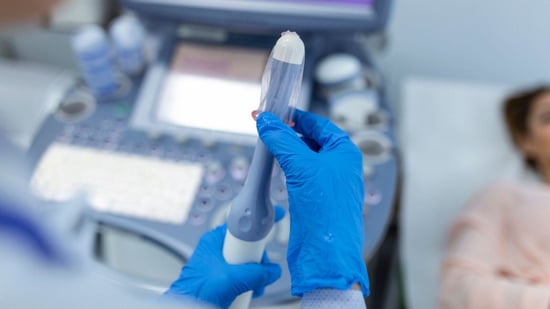
Transvaginal ultrasound wand. Image source.

One strategy that "pro-life" lawmakers use, to make it more difficult to get an abortion, is to require that patients get a transvaginal ultrasound before they can get an abortion. For example: Wyoming governor vetoes 'invasive' transvaginal ultrasound mandate for medical abortions (the veto was then overridden).

People who speak out against these laws say that transvaginal ultrasounds can be invasive and traumatizing, especially for victims of rape. There's this paper from 2013 which includes quotes that say requiring patients to have a transvaginal ultrasound is rape.

Here's what I want to know, as a woman who used to have vaginismus and has had bad experiences with transvaginal ultrasounds because of it: Why is this the only time I'm seeing people concerned about the potential trauma of transvaginal ultrasounds? Why have I been subjected to transvaginal ultrasounds, without anybody making sure I understood what it was and that I consented to it, and I was just expected to be fine with it- but then suddenly when there's a "pro-life" law about it, people come out of the woodwork exclaiming that we can't do this because transvaginal ultrasounds are potentially such a terrible thing?

Why is it only here, in the context of talking about abortion, that people understand that it's valid to have trauma about this?

I mean, I know why. It's because these "pro-life" laws are about making transvaginal ultrasounds actually legally required, whereas in my case, I wasn't required by law to do anything. My situation was more about lack of sex ed, and about medical staff not prioritizing the idea of informed consent. I didn't need anybody to go ask congress members to change a law- I needed to know how to speak up for myself. So, I think the pro-choice people who speak out the loudest against these "requiring abortion patients to have a transvaginal ultrasound" laws would also strongly advocate for all patients to be fully informed about what's going on, and have the option to say no, when they're told they need a transvaginal ultrasound (in all situations, not just when it's related to abortion). But the average pro-choice person, who is repeating this talking point "oh no, we can't require transvaginal ultrasounds because that's traumatizing for rape victims"- well, it feels kinda fake to me. If the average pro-choice person really felt that way, I think people would have cared more about my problems with vaginismus.

Let me give you some background info about transvaginal ultrasounds: 

There are 2 different kinds of ultrasounds performed during pregnancy: transvaginal and transabdominal. Most people have seen images of pregnant women getting transabdominal ultrasounds- this is the kind where you have a huge baby bump, and the doctor moves the ultrasound tool around on your belly to see what the baby looks like in there. But, in early pregnancy, the unborn baby is so small that you won't be able to find it with a transabdominal ultrasound. In early pregnancy (maybe around 6-8 weeks), you need to have a transvaginal ultrasound instead. 

In a transvaginal ultrasound, the doctor uses a long ultrasound wand, puts a condom and lube on it, and it is inserted in the vagina. In this way, they are able to see if the embryo has implanted in the uterus correctly, and they can measure the size. They also look at the ovaries and they tell you which ovary the egg came out of, though I remember being a bit confused about what I was meant to do with that information, when I was pregnant.

Yeah, if we're not talking about abortion, if we're talking about people who want to continue their pregnancy, a transvaginal ultrasound is basically required. It's not required in the sense of being required by law, like those "pro-life" laws, but doctors will tell you it's medically necessary. And, yeah, there are important medical reasons why they need to do it:

  • Check if the embryo is implanted in the uterus- this is important, because in some rare cases it implants somewhere else- this is an ectopic pregnancy and is life-threatening for the pregnant person.
  • Measure the size of the embryo- this is important for dating the pregnancy and calculating the due date.
  • You can see the baby's heartbeat. I know, I know, the fact that there's a "heartbeat" at 6 weeks has been massively politicized by the "pro-life" movement, and then the pro-choice side pushes back and says it's not really a heartbeat because the heart hasn't developed yet at that point, etc... so I don't really know how to talk about this... But my experience was, in the early stages of pregnancy I was so worried about everything. I really wanted a baby, and I had gotten a positive pregnancy test, but I knew there is a pretty high rate of miscarriage in those early stages- and seeing the ultrasound, seeing that little white blob with a little heartbeat, it made it feel real. (And I'm sure this is the reason why "pro-life" people want to require ultrasounds.) It made me feel less worried.

I've heard that sometimes it's medically necessary for abortion patients to have a transvaginal ultrasound, and sometimes it's not. I bet for people who want to continue their pregnancy, it's even more medically necessary, and therefore we should be even more thoughtful about how to balance the concerns of people who have trauma related to vaginal penetration, vs the benefits to the pregnant person's health and the baby's health.

(To be clear: For most people, a transvaginal ultrasound is NOT painful or traumatic. But if vaginal penetration *in general* is painful or traumatic for you, then yes, a transvaginal ultrasound will be like that too.)

If you really really can't tolerate a transvaginal ultrasound, and you have a doctor who says it's required and isn't willing to be reasonable and work with you on it, then I think you just have to completely refuse, then come back a month later when the unborn baby is big enough that they can do a transabdominal ultrasound instead. (If you're keeping the pregnancy, you have this option, whereas if you need an abortion and you're in a state that passed one of these invasive laws, well, this won't help.) But, if you do go without the transvaginal ultrasound and wait a month, you're running the risk that it might be an ectopic pregnancy and you wouldn't know it. It's a pretty small risk- and before ultrasounds were invented, every pregnant person had that risk- but yeah, it's not ideal to skip the early-pregnancy transvaginal ultrasound.

Best-case scenario is, you can talk to your doctor about your concerns with vaginal penetration, and work together to figure out a way to do the transvaginal ultrasound. One important thing I would recommend is self-insertion- ie, the patient inserts the ultrasound tool into their own vagina, rather than letting the doctor insert it. And then once it's in, and the patient consents, then the doctor can move it around to get the ultrasound images they need.

Seriously, self-insertion is incredibly important. I would advise anyone who has vaginismus to absolutely refuse, if a doctor says you can't insert it yourself and they have to do it. There is no reason why you, the actual person whose vagina it is, can't be the one to stick things in there. I can't believe I used to let doctors do that to me. Sure, you don't know how to move it around to get the right images, but if you have vaginismus, the doctor likely doesn't know how to insert it without hurting you.

Maybe it's easier to take a stand against these "pro-life" laws because there's an easy fix there. Just don't make a law requiring medically-unnecessary ultrasounds. But what if someone *does* need a transvaginal ultrasound- like a pregnant person who is *not* getting an abortion- and they have problems with vaginal penetration, maybe because of vaginismus or maybe because they are a victim of rape or abuse. What then? See, then it's more complicated. Then it's about sex ed and consent within a medical context, training doctors to be understanding about those kinds of issues, training patients that it's right to stand up for themselves.

I mean, forgive me if I find this sudden concern for people who can't tolerate transvaginal ultrasounds a bit fake. When I was pregnant, and I read all about pregnancy, I never came across anything giving advice on what to do at the early pregnancy ultrasound if vaginal penetration is difficult. Never. (I bet if you used the keyword "vaginismus" when searching, you could probably find useful information- but if you don't know that word, LOL GOOD LUCK.) And now it's a political talking point that, oh no, transvaginal ultrasounds are BAD and TRAUMATIC for rape victims who want an abortion. Okay, where was all this outrage when I was having my own problems with transvaginal ultrasounds?

Well... I know it's because what I'm asking for is more complicated. Everybody can understand that it's a bad idea to make a law requiring unnecessary medical procedures, just to inconvenience people who want to get abortions. Everyone can see the obvious solution: just don't make laws like that. But in a situation where a transvaginal ultrasound is medically necessary, and the patient finds it difficult or painful, well, what then? That's a harder problem. The people who oppose these "pro-life" laws probably also want everyone to have good sex ed, and doctors to care about informed consent- but how do you actually go about pushing for those cultural changes?

Maybe I'm being a little too harsh here, and instead I should say that opposing these "pro-life" laws is a good first step. We should take a stand against laws which require medically-unnecessary ultrasounds, and at the same time, we should take a stand for better sex ed and better training about consent for doctors.

---

Related:

Sea Monsters on Land, and My Life With Vaginismus 

A Comprehensive Pro-Choice Ethic

On Gynecologists and Angry Turtles 

Don't You Think If It Was Possible To Re-Implant Ectopic Pregnancies, We Would Already Be Doing That?

That happened to me too

Saturday, November 30, 2024

A Comprehensive Pro-Choice Ethic

A protester holding a sign that says, "Health care is a human right." Image source.

Occasionally I see "pro-life" people advocating for the idea of a comprehensive pro-life ethic. Typically when people use the term "pro-life", it means "abortion should be illegal" and that's it. But, those who have a comprehensive pro-life ethic say that's not good enough. Pro-life can't just mean you care about protecting an unborn baby's life, but the moment they're born, you don't care any more. People who are truly pro-life are anti-war. They oppose the death penalty. They want gun control. They support universal health care.

I like that. If you're gonna be pro-life, be that kind of pro-life person. Provided, of course, that you recognize that abortion may be necessary to save a pregnant person's life. The most obvious cases are where the pregnancy is causing a life-threatening medical problem- but abortion may save someone's life in a less direct way than that. Domestic violence victims are more at risk of being murdered by their abuser if they are pregnant. 

Usually I put "pro-life" in scare quotes because it's not about life at all, it's just about banning abortion. But hey, if you really do have a comprehensive pro-life ethic, I won't even put it in scare quotes. You really are pro-life. 

I'm thinking about how to conceptualize something similar for pro-choice ideology.

I always felt like the pro-choice movement wasn't really *for* me, because I have kids and I'm happy being a mom. Sure, I can help out the movement by talking about how my experience of pregnancy was so bad, and no one should have to go through that if they don't want to- but it's not *for* me. It's for women who want to have sex but not have babies. Right?

(Note, though, that a high percentage of people who have abortions already have kids. [This data from 2019 says it's 60%.] The stereotype of the slut who just wants to have sex with whoever, and hates children, is not at all representative of who is actually getting abortions.)

Anyway, when I watched the video from the Democratic National Convention this year, and saw Kate Cox there representing Texas, along with Cecile Richards, former president of Planned Parenthood, that really affected me. 

(If you haven't heard about Kate Cox, here's her story: She was pregnant, and then found out her unborn baby had a health problem and would not survive, and that for the sake of her own health and her ability to have another pregnancy in the future, it would be best for her to have an abortion. But she lived in Texas, and it was a whole ordeal which was in the news, about whether of not the state of Texas would let her have an abortion. Eventually she went to a different state and had an abortion. This situation was very shocking because of how clear-cut it seemed to be- Cox was basically a "perfect victim"- she's white, married, she's already a mom, and it was a wanted pregnancy. And there was no way her unborn baby would be able to survive. And still, Republican politicians in Texas did not allow it.)

The video from the Democratic National Convention serves as an update on what happened to Kate Cox after that. She got pregnant again, and fortunately, this pregnancy has not had any massive problems like that, and she's looking forward to a healthy baby who will be born in January. And everyone cheered. Everyone is happy for her. The former president of Planned Parenthood is happy for her. (Here's a link to the video- but I'll warn you it's sad to watch because everyone is talking about Kamala Harris being president, but that is not gonna happen.)

Seeing that video, I was struck with this thought, "what if the pro-choice movement really is about choice?" Here's someone who wants to be pregnant, wants to have a baby, and she gets pregnant and decides NOT to have an abortion, and as pro-choice people we celebrate that. In Cox's case, actually, she wanted to have another child, and an abortion was a necessary step on the way to reach that goal- because the complications in her pregnancy meant that there was a risk she would be infertile. She wanted to have another baby, and having an abortion was a means to get there. 

Maybe that's what it's about. 

In the "pro-life" movement, they talk about pro-choice people as if pro-choice people just really love killing babies, and twirling our mustaches evilly or something. But what if the pro-choice movement is actually like this: It's not about celebrating abortion as a good thing in and of itself. (Actually, in an ideal world, nobody would be in a situation where they need an abortion.) It's about being able to choose the life you want for yourself, and sometimes abortion is needed in order to get there. 

So we want to protect people's right to have an abortion, if they want to. And in the same way, we want people to be able to have babies, if they want to.

If we want to be comprehensively pro-choice, that requires a whole lot more than just "abortion is legal."

What if someone wants to have a baby, but for various practical reasons they feel like it's not really possible, and their only real option is to have an abortion? This is not okay. To be truly pro-choice, we need to address the problems that restrict people's choices in this area. It is very expensive to pay for prenatal care and hospital bills for childbirth- being truly pro-choice means supporting universal health care. It means society needs to implement policies that will help people get out of poverty- everything about kids is expensive, and that's one of the big reasons people have abortions.

And remember earlier I mentioned that victims of domestic violence are more likely to be murdered if they are pregnant? If we say "okay, then they can get an abortion, for their own safety", that is NOT GOOD ENOUGH. No one should be in a situation where they have to choose between their pregnancy and their safety; that's terrible. What changes does society need to make to keep people safe from abuse? We need to advocate for all those things, in order to be truly pro-choice.

But let's take it farther than that.

I always hear politicians saying "women can make their own choices about their bodies." This is nothing more than a euphemism for "abortion is legal" (or, possibly, "abortion is legal and accessible"). I don't like that. I want to live in a world where "women can make their own choices about their bodies" means exactly that.

Certainly that includes abortion access, but it includes so much more than that.

Let's start with giving birth. Giving birth is scary, and some people have traumatic experiences, or problems come up- and I sometimes hear moms reassuring each other by saying "the only thing that matters is that the baby is born healthy." 

I disagree with this.

If you have a traumatic birth experience because the medical staff don't respect your right to make informed decisions about your own body, that is not okay. That matters. If people tell you that your trauma doesn't matter because your baby turned out fine, they're wrong.

For example: if people are pressuring you to get an epidural during childbirth, or to not get an epidural, that's NOT COOL. It should be your decision.

I've heard about hospitals which recommend C-sections to birthing women at a higher rate than is necessary, because that's what's more convenient for the hospital. (This is an issue in China- I don't know about in the US.) For a C-section, the hospital can control the timing and the entire process. When there are lots of women giving birth there, it's hard to allocate rooms for all of them, and you don't know how long it will take to have a natural labor and vaginal birth- it's easier to just do C-sections. 

But a C-section is a major surgery; you shouldn't do that unless there's a good reason. 

Another example about giving birth: VBAC. (Vaginal birth after C-section.) This means that in a previous pregnancy, the person gave birth via C-section, and now in their current pregnancy they would like to try to give birth vaginally. Vaginal birth is better in terms of the recovery process for the birthing person- but VBAC is riskier than a vaginal birth in someone who doesn't have a C-section scar. The scar might rupture during labor. You need to be aware of the risks of trying this. You need a doctor with experience. 

All of this should be included in what people mean when they talk about "women can make decisions about their own bodies."

And so many other aspects of pregnancy. When you're pregnant, you always get random people trying to police what you eat, or telling you you're gaining too much weight... Emily Oster's book "Expecting Better" (which I reviewed here) was all about giving pregnant people the data they need to make choices during pregnancy, because typically that data isn't really available. It's about making choices during pregnancy, but I'm not talking about abortion. Even though this is for people who are NOT having abortions, it's an important pro-choice area.

And let's talk about breastfeeding and "making choices about your own body." Many people are pressured to breastfeed, or pressured to not breastfeed, or shamed and treated like they're a "bad mom" because of whether or not they breastfeed. Not cool. First of all, don't judge people for this. But, more important than that is people need to have the resources and support they need if they want to breastfeed. You need information about what to do- it's not straightforward. Maybe you need a lactation consultant who can give you hands-on instruction. If you have a full-time job and you want to pump milk, you have to buy a pump, and you need your boss to give you break time during the day, and a private room where you can pump.

Breastfeeding isn't something you can just do all in your own power- you need to be in an environment that has the necessary resources and support.

Okay, let's expand this pro-choice ethic to other areas of women's health care.

I've heard some women talk about being prescribed birth control when they were teenagers, because of acne or some other problem like that- not because they were having sex. And, looking back on it, they are unhappy about how they had to deal with a lot of bad side effects from the birth control hormones, and they feel like they didn't really have a choice. It was just "well we tried various things and they didn't solve your acne problem, so the next step is to take birth control" and that's that, and as a teenager they didn't have a real choice.

I've also heard that it's very painful to get an IUD inserted, and it's common that doctors don't inform patients about the pain, or offer any anesthesia or pain medication. Not cool. Are the people who talk about "women have the right to make choices about their own bodies" going to do something about this?

Or the many other scenarios where women's medical issues are not taken seriously by doctors. Being comprehensively pro-choice means having a society where women really are given the support and resources and information they need to make medical decisions for themselves.

But actually, this shouldn't just be about women, and/or people who can get pregnant. Everyone, of any gender, should have the freedom, information, and resources to make medical decisions for themselves.

This is something I've blogged about before, in the context of the question "what should consent look like for children in a medical setting?" I'm very interested in the concept of consent as it relates to health care.

You may have noticed that this "comprehensive pro-choice ethic" is in no way the opposite of a "comprehensive pro-life ethic." There's a huge amount of overlap. Many policies, such as universal health care, very obviously belong in both. People who are truly pro-life and people who are truly pro-choice should all advocate for universal health care. I mean, I don't want to spin this as "we have so much in common so let's just forget about abortion and focus on those other things instead"- I do think abortion access is very important. But being pro-choice shouldn't only be about abortion. It should be about "the right to make choices about your own body" in all health care areas.

---

This post is part of the October/November 2024 Carnival of Aces. The topic is "sexual healthcare."

---

Related:

What Pregnancy Taught Me About Being Pro-Choice 

"Expecting Better": Asking the Right Questions About Pregnancy 

Don't You Think If It Was Possible To Re-Implant Ectopic Pregnancies, We Would Already Be Doing That?

"Life's Work" (read this book and become even more pro-choice) 

Why I Am Pro-Choice 

On Gynecologists and Angry Turtles 

Boundaries With Dentists

Doctors (part 3 of Autism & Teaching Kids to Protect Themselves)

"Afraid of the Doctor" (I read this book because I have medical trauma) 

I Don't Want My Baby To Be "Brave"

Tuesday, October 22, 2024

My Republican Role Models

Sticker that says "VOTE". Image source.

I grew up in a conservative Christian environment, so I implicitly understood that it was "right" to vote Republican. But I was always skeptical of political parties in general, and when I was old enough to vote, I believed that I needed to research every candidate for myself, and make an informed decision on each one, rather than just voting Republican or just voting Democrat. I figured that in general, doing this research would result in me voting for Republican candidates, because my views fit with the Republican party- but I should do the research anyway and not follow a political party.

At one point, I was listening to what different candidates said about climate change. And it seemed that the evidence very clearly supported one side. Scientists were all saying that climate change is real and is caused by big industries putting carbon into the atmosphere, and we need to take action to limit this, or else the earth will become warmer, sea levels will rise, and it will be a disaster. The Democratic party agrees with the scientists on this. The Republican party, on the other hand... seemed to think everything was fine? All the scientists were pointing to the evidence, and Republican politicians just kind of ... said it wasn't true, but didn't go into any detail beyond that. They didn't seem to be making much of an effort to actually respond to what the scientists were saying.

I felt like... I wanted to be on the Republican side of this issue, but I saw the evidence and I didn't have an answer for it. But, I thought, Republican leaders think climate change isn't real, and they're responsible adults who surely must be well-informed about this, because their actual job is to know about the issues and make good decisions about them. Right? So even though *I* don't have an answer to argue against all the scientists who are warning us about climate change, I can be reassured by the fact that Republican politicians think it's not real, and surely they have good reasons for that.

So my Republican role models let me go along with what I wanted to believe, without me doing the work of thinking through what the reality was and what kind of policies would be best to address it. It was just... I don't want to believe this, and the existence of supposedly "responsible adults" who don't believe it means that it's reasonable for me to do so too.

(I think my mistake was believing that it was their job to be well-informed and make decisions that benefit society as a whole.)

Similar thing with minimum wage laws. What I had heard from Republican role models was, Democrats are saying "oh we feel so bad for these people who work minimum wage jobs and are trying to raise a family on that, oh it's so saddddd, we want to help them, we should raise the minimum wage" and they want to be nice and help people, but it's so short-sighted and will be bad in the long run. If you raise the minimum wage, it's going to mess up the whole economy. Republicans were the ones being realistic and making sure the economy would continue to work correctly. Democrats were just making decisions based on feeling sad for those people who made bad decisions. You can't run a country that way! Besides, you're not supposed to be able to earn a living wage at a minimum-wage job. Minimum wage jobs are just for students working part-time before they start their real career.

That's what I had always heard. Then, one day when I was in college, I happened upon an article about a city which had increased its minimum wage and their economy was basically fine. All those doom-and-gloom predictions about how it would mess up the whole economy didn't happen at all. And I thought, wow, this is great news! This is awesome! So we totally should raise the minimum wage, because it helps people and it doesn't ruin the economy! 

Surely when my Republican role models hear about that, they'll want to raise the minimum wage too. Right?

Eventually I started to realize... these sophisticated-sounding talking points about how climate change isn't real, and raising the minimum wage would be horrible for the economy, and so on- are these just flimsy justifications for doing what we selfishly want to do? Voters and politicians who personally benefit from certain policies, even though those policies are not fair to everyone, and don't help society. Is it really just "business owners want to make more money, and don't want to pay their employees a living wage, and so they're going to go ahead and do that because they have enough power to make policies that say they can"? Is that what's really going on, this preschool-level morality of just doing things that benefit yourself, and not caring about how it's unfair to other people? 

I really thought that responsible adults don't do that. Or, sure, some adults do, but it's very obvious to everyone that that's "corruption" and it's wrong.

And I don't necessarily think that believing "we can't raise the minimum wage because it would ruin the whole economy" makes someone a bad person. Maybe they heard that Republican talking point, and didn't think much about it, didn't think to challenge it because emotionally they just didn't like the idea of raising the minimum wage. They're scared of change, and so they feel relieved when they hear some analyst saying "well this is just the way the math works, it would mess up the whole economy." I can relate to that. 

You should still be held accountable for your lack of awareness of how your fear is driving you to support a policy that harms people- but you're not a bad person.

Or maybe they really wish that society could raise the minimum wage, maybe they hear about families who are struggling because their income is low, and they really have compassion for them and wish something could be done- but they believe that a government policy to raise the minimum wage wouldn't actually help, because Republicans said so. Yeah, I mean, I understand that- I understand being in an environment where all you hear is one viewpoint, and you have no idea that other arguments even exist.

The real test is this: If someone thinks "we can't raise the minimum wage because it would mess up the whole economy" and then you show them an article about a city which raised the minimum wage and nothing disastrous happened (like this one for example), how do they respond? Do they leap on to it- "What?! Oh my goodness, tell me more! This is great news! Was there anything unique about this situation, which prevented those predicted economic disasters from happening? Let's think about how to replicate this in other places! HUGE IF TRUE!" Or do they ignore it, or even act like they don't *want* it to be true?

Another example: I received my absentee ballot for an election one year, and it included a proposal that I could vote "yes" or "no" on. The proposal was something like this: "Equal Rights Amendment: This proposal will make it illegal to discriminate on the basis of gender or pregnancy status."

So, that sounds good, the way it's written there, but you should always do your research to see what it's actually about. Maybe the way they wrote it on the ballot doesn't give the whole picture. So I looked it up online, and found a Democrat statement on it, which went something like this: "We support this proposal because we think it's wrong to discriminate on the basis of gender or pregnancy status." Very straightforward, very "duh"- equal rights are obviously a good thing, so that's why we should support this.

And the Republican statement on it: "We don't support this proposal because the way it is written is too vague, and we think it could maybe be used to allow late-term abortion." I read that and I was like "???" What do they mean, it's too vague? What do they mean, it "could" allow late-term abortion? Is there any substance to this, or do they just feel uncomfortable with the term "equal rights" and are casting about for an excuse to vote against it?

Imagine a young person coming from a conservative background, who has internalized the idea that it's suspect when Democrats put forward a policy about "equal rights", though they can't necessarily explain why they feel that way. This young person can't put together a coherent argument for why something called "equal rights amendment" would be bad, but it just kind of... feels like the kind of thing they shouldn't support. It feels liberal. And so they look to their Republican role models, to offer an argument about why it's reasonable to not support an "equal rights amendment." And the Republican role models give this statement, about how "oh it's kinda vague and something something abortion"- is that supposed to convince anybody? Or is it just, like... "oh good, I didn't want to support this, but I didn't have a good reason, but at least I know there is a good reason out there (even though the Republican side hasn't articulated it in a way that makes sense to me), so I can be assured that it's okay for me to vote against this."

Another example: One day, years ago, as I was walking around on my college campus, I happened across a protest about the Darfur genocide. The protesters were trying to get people to sign a petition about it. I recognized one of them; she was in one of my classes, and so she started talking to me about the Darfur genocide, and asking me to sign the petition.

I felt like... if it's true that this is happening, then of course I oppose it. Of course genocide is bad. But taking a stand on this feels like the kind of thing that my Republican role models wouldn't do. I can't explain why, but it feels liberal, and so I don't want to get involved. Maybe if I talked to some well-informed Republicans, they would be able to explain why the situation was much more complicated than "it's a genocide, obviously that's terrible, let's protest against it."

I didn't want to sign her petition, but I didn't have a good answer when she asked why not, so eventually I just scribbled something and kinda pretended I was signing my name. Honestly, my worry was that I was going to find out later that the protesters had completely misrepresented the situation, and that I had actually signed my name to something bad. Like, of course if there really is a genocide, I want to oppose it- but I felt that my Republican role models might know what the real truth was, and that it wasn't actually what the protesters were saying.

I mean, thinking about it now, it would have been reasonable for me to say "this is the first I'm hearing about this, I want to take some time to read more about it before I have an opinion." Always a good idea to fact-check! At the same time, I understand why a protester wouldn't like that answer, and would see it as an excuse made by people who don't care about others.

It depends on whether you're actually going to go off and read about it on your own, and then take action, or if you just feel like "this protest makes me uncomfortable, I want to get away from it" and then you don't think about it again after that.

Outsourcing your thinking to "Republican role models." Feeling like you can't really explain the reasons you support certain political ideas, but there are serious adults who hold these positions, and surely they have good reasons because that's their job.

To some extent, though, don't I do the same thing now? Now I follow a lot of progressive/liberal/feminist/queer people online, and sometimes there are situations where it seems like everyone dislikes something, but I don't understand why, but I just kind of go along with them and vaguely dislike it too.

I guess the key is, don't go along with other people's opinions on an issue if they don't give you a reason that actually makes sense to you. If it's about something that's not that important, then it's fine if you don't really have an opinion. No one has time to form an opinion on everything. But definitely avoid situations where you're like "I support this position, even though I don't understand why, but I have to in order to be a good feminist." Instead, ask more questions. 

But, at the same time, yeah there will definitely be people on the internet reacting badly to someone "asking questions" rather than just holding the "correct" opinion they're supposed to hold. (I remember seeing an internet thread one time, where someone was asking "does 'trans woman' means they were a woman and changed to a man, or they were a man and changed to a woman?" just genuinely trying to understand the terminology, and someone else kept angrily replying "Trans women are women!" Not helpful! Btw the answer is, a trans woman is "a man who changed to a woman" but you shouldn't phrase it that way because it's oversimplified to the point of being offensive.) But they react this way because there really are people "asking questions" in bad faith, trying to argue rather than really understand. So, uh, that's a problem.

This phenomenon of not looking into issues yourself (either because it's impossible to have time to have an opinion on everything, or because emotionally you just want to believe something) and just going along with what other people say because they seem like "reasonable adults"- this is related to the Overton window. The Overton window is the range of ideas that are seen as okay for a reasonable person to hold. People talk about "shifting the Overton window"- this means taking an idea that is seen by society as so "out there" that it's not even considered as a real possibility, and talking about it a lot, so that eventually people will think of it as an idea that is normal for people to hold (even though most people may not agree with it), and then from there it can progress to convincing more people and being an actual policy.

Whatever's in the Democrat and Republican party platforms, regardless of whether you agree with them or not, you recognize that those policy positions are held by many "normal people." And this was not a good thing for me when I was younger and trying to figure out my own views, because I believed that if there were "Republican role models" who held some opinion, then there must be good reasons behind it. For example, denying the reality of climate change. Yes, there are *reasons*- politicians getting donations from the oil industry, for example- but not *good reasons*, not reasons along the lines of "here's why this position benefits society."

News shows would bring in 2 "experts" to discuss climate change. 1 of them would be a scientist who said climate change was real. The other would be a climate change denier. And it communicates the idea that- how should I put this- that it's okay to be a climate change denier. Regardless of how their "debate" goes, it sends the message that there are normal and reasonable people who don't believe climate change is real. 

The thing is, though... there are "normal and reasonable people who don't believe climate change is real." There are people who are normal people, good people, who generally vote Republican and so they tend to believe the typical Republican talking points, about climate change and other issues. Or at least, back when I was in college and voting for the first time, that was the status of the Republican party. Now it's a personality cult around Trump, and I just cannot fathom why anyone would vote for him... I can't bring myself to believe "there are normal and reasonable people" voting for him.

Is it bad that I'm viewing 60-ish million Americans as so "out there" that it's impossible for me to relate to them?

Is it bad that I'm viewing 81% of the white American evangelical church- which is literally the subculture I come from- as so "out there" it's impossible for me to relate to them?

Is it better to use a strategy of "these ideas are so ridiculous, we shouldn't even legitimize them by talking about them" or "the only way we can reach these people is if we really understand the reasons why they believe this"? Well, it depends who you're talking to, and what your goal is.

I remember there were people I followed on the internet in 2016, who made it a point to continually note that what Trump was doing was "not normal." This wasn't just typical politician behavior- he is something different, and we should be appalled over and over at how wrong and how offensive his behavior is. Over and over, every time he did something that just a few years before would have been seen as so over-the-top, offensive, career-ending... and his supporters and the media just kinda went along with it, as if it was just normal politician behavior. Some people I followed on the internet would remind us all, "this is not normal."

The thing is now, 8 years later, it basically is normal now.

I did something similar back then- I refused to use his name; I called him the orange antichrist, because it was so shocking how evangelicals were getting in line behind a man who broke all the moral principles they supposedly cared about. And I didn't want to say his name because I viewed him as so beyond-the-pale that we shouldn't even be talking about him.

I still think it's beyond-the-pale to support him. But I've stopped doing the thing where I don't say his name. Kinda wish I could go back to doing that, actually... but now he feels like a normal part of politics, rather than something that will soon go away if we all just stubbornly refuse to acknowledge it.

Anyway, what was I saying? The Overton window. So you don't want to legitimize bad ideas by setting up a discussion about them. But at the same time, if those bad ideas are never addressed, their followers will literally not know that there exist good arguments against them. I used to be a young-earth creationist, and I always saw people treating young-earth creationism like it was so ridiculous they shouldn't even bother responding to it- and that gave me the impression that creationist arguments were so good that those evolutionists couldn't respond to us at all, and the only way for evolutionists to fight back against us was to cover up our evidence and say nothing about it.

I'm not a creationist any more. And it was a while after I stopped being a creationist that I found this site- An Index to Creationist Claims - and I was astounded. Whoever put this site together really knows what they're doing. They truly understand creationism, and they wrote good responses to all the common creationist talking points. Wow. I had no idea anybody had answers like this. This would have been life-changing if I had had access to something like this back then.

My point is, you avoid talking about some "extreme" ideas because you don't want to give legitimacy to them in the eyes of the public, but for people who already hold those ideas, that strategy just makes them even more certain that they're right and you have no counterarguments at all.

Same thing with being "pro-life." In the environment where I grew up, everybody was "pro-life." I never heard any pro-choice arguments that meaningfully addressed my "pro-life" ideology. Sure, I knew pro-choice people were saying "my body my choice"- but that didn't do anything for me because hey it's not about your body, it's about your unborn baby's body. And pro-choice people were saying this was about women's rights, but that didn't mean anything to me either, because I felt abortion was only relevant to those "bad" women who had unmarried sex, not women in general. I totally could not imagine how anyone could be pro-choice.

And then I went to college, and it seemed that everyone was pro-choice. And some of them had very strong opinions about it. And I was so confused, I could not understand how anyone could be pro-choice, but I didn't feel like I could ask anyone about it, because they viewed "pro-life" people as so incredibly wrong- they would probably get angry rather than put together an argument that actually connected with ideas I could understand.

(I have written some blog posts which explain my own pro-choice beliefs: What Pregnancy Taught Me About Being Pro-Choice and Why I Am Pro-Choice.)

So I would say, on the question of whether to treat other people's opinions like they're so ridiculous they're not even worth discussing: It depends what your goal is. If your goal is to convince people, then you do need to learn the actual reasons for their beliefs. You need to understand how someone could believe those things. But, you're not required to do that. Maybe you have a different goal- like supporting people who are hurt by those bad beliefs.

And one more thing I want to say about voting: Voting is kind of a unique thing in that you can just vote for whoever you want, without needing to explain yourself or give a good reason for it. You have the right, and your vote counts, regardless of whether you articulate a "good reason." And in the past I sort of saw it as... "here are the candidates, I'm confused about how to choose one, but I thought about it a long time and really thought about what's important to me, and I picked one, and maybe I don't even know exactly why I feel one candidate is better than the other, and I'd be too embarrassed to stand up and try to explain my vote to other people, but there it is, it's my right." A personal thing, a confidential thing... a thing where your voice still counts even if you don't know what you'd say to people who would hate your voting choices.

Maybe that's how it is for people who aren't well-informed about politics? I don't feel that way now at all; I'm very confident about voting for Kamala Harris. My #1 issue is I support American democracy, and the Republican party just, uh, doesn't anymore??? Never thought that would be something a major political candidate would oppose. We all remember January 6. Why are people still voting for this guy?

The phenomenon of just going along with what other people ("role models") believe... to some extent it's unavoidable, because nobody has the time to research every issue. But it's a problem if it allows you to feel justified in your positions which are motivated by your own selfishness/fears/biases. I think all of us are susceptible to this; it's not related to being a Republican or being a Democrat.

---

Related: 

I'm just wondering what happened to the Republican party

"This Doesn't Make Sense, But It Must Be Right" 

That Time I Voted For Obama ... Plus a Bunch of Republicans

I'm concerned that there's still an argument to be made for "pro-life" policies where women die

AddThis

ShareThis