Showing posts with label fan fiction. Show all posts

Monday, March 31, 2025

One Of You Will Betray Me (a bible fanfic)

Clipart image of a church. Image source.

[content note: anti-gay bigotry]

---

Sunday morning, Judas was at the door of the church, greeting people as they walked in. The church lobby was crowded that morning, as people scurried around with their bibles and coffee cups. When he heard the music start inside the sanctuary, Judas made his way in and found a seat in one of the pews near the back, next to a young woman with two braids and a pink skirt.

"Oh hi!" she said. "Good morning! I'm Jamie, that's my brother John, and that's Joshua," she spoke over the music and gestured at the two guys on the other side of her.

"I'm Judas Iscariot," answered Judas. John, whose hair was the exact same shade of brown as Jamie's, leaned over to shake his hand. Joshua, who was taller and skinnier than John, waved from the end of the pew.

"It's our first time here, and these two are too shy to talk to anyone," continued Jamie. "What would they do without me?"

Judas was always excited to see new people at church. And after the service was over, Jamie chatted with him for a while, and invited him for dinner with the three of them at her apartment.

---

Judas arrived at the address that Jamie had given him. At the door of the apartment building, there was a name directory on the wall, and he pressed the button next to "421 J Fisher." He went up in the elevator to Jamie's apartment, where she was in the kitchen with John and Joshua, assembling plates of nachos. Her hair was still in two braids, like he had seen it at church, but she was wearing jeans now. Jamie handed him a plate, and after Judas got his nachos ready, he and Jamie went to the living room.

She put her plate on a small white table, and sat on the floor with the tv remote. Judas sat on a large purple bean bag chair. She started scrolling through menus, and said, "Okay, so I'm thinking we should watch Star Wars. I always like to watch Star Wars with new people. You can tell a lot about a person by watching Star Wars with them."

"Oooh!" said Judas. "Wow it's been a long time since I've watched these. Yeah, let's do that. Which episode do you like?"

"Okay," Jamie turned and faced him. "Unpopular opinion: I actually like the prequels."

Judas was intrigued. "Weren't they mostly about trade routes being blockaded, or something? Something very boring?"

Jamie scrunched her nose. "Okay, yeah, there was way too much of that in episode 1. But. Listen. Qui-Gon Jinn was right about everything."

Just when Judas started to consider that, he heard John's voice from behind him, "Oh no."

Judas turned to look at John, who had sat down on the couch with his nachos and glass of water. Judas asked, "You don't like the Star Wars prequels?"

"I just don't like hearing her talk about them all the time!" John said, and Jamie gasped like she was pretending to be offended. "I'm not watching Star Wars with her."

"I bet Josh wants to watch it," Jamie said. "Hey, let's not even watch the prequels, let's watch Empire, everyone knows that one's the best."

"No," said John.

"You're no fun," said Jamie.

"So, uh, it's okay, we can watch something else," Judas said, unsure about whether he should try to stop their bickering.

"Yes," said John. "Judas should pick."

Jamie handed the remote to Judas, and he started clicking through the menus. Jamie was happy to offer her opinion on every single movie.

As Judas was looking through the list of comedy movies, Jamie suddenly exclaimed, in a fake high voice, "Oh my god, look how cute!" She wasn't looking at the tv; she was looking at something behind him. 

Judas flinched a little, hearing her take the Lord's name in vain. He turned and looked behind him, where John and Joshua were sitting on the couch. Joshua was leaning close to John and had his arm around him, and John was glaring at Jamie. The way they were sitting together... it was like they were a couple. Judas suddenly felt panicked- were they...? If they were... He had come here, to Jamie's apartment, not suspecting anything like that at all, and... if... but it's a sin, don't they know that? But he had to make sure he didn't act different toward them because of it. He couldn't act like he was judging them. Suddenly things had become very difficult to navigate.

"Look at these two lovebirds!" Jamie gushed, and Judas was even more concerned and horrified, because that confirmed it.

"Stop it," John said to Jamie, clearly annoyed, and Joshua pulled away from him, looking uncertain.

"So," Jamie said to Judas. "Okay, this is such a cute story. So, after John graduated, he moved in with me here. But then, look who he met! And now he has moved into Josh's apartment. Wow, that's wonderful! Weirdly, though, all his stuff is still here!"

"Ugggh, can you stop telling people I moved? I still live here," said John.

"Listen to him, he's hilarious," she said to Judas, as she gestured at John. "'I still live here.' When was the last time you spent the night here?"

John stopped, seemingly unsure about what to say to that. Joshua spoke up, "So, how about we watch the movie?"

They started up a comedy movie, and Judas thought about the situation. So, John and Joshua were in a relationship. And, they were living together. Definitely not okay. Judas didn't know what to do. He was sure he shouldn't say anything about it to them directly. He needed to "hate the sin, love the sinner"- he needed to earn their trust before they would be willing to listen to him about it. 

Besides this issue, the three of them seemed like fun people. Judas was actually really curious to hear what Star Wars opinions Jamie had which annoyed her brother so much. Maybe he could hang out with them more, and become friends. And maybe they would keep coming to church. Once they were more committed to following God, maybe it would be easier to talk to them about this sin.

As he drove home that night, Judas prayed and asked God to help him know what to do.

---

The next day, Judas texted Jamie. "So, you said you like qui gon, what about Mace Windu?"

Less than a minute later, her reply came. "Okay. The thing about Mace Windu. we all love Samuel L Jackson obviously, and people fall into the trap of thinking that means mace windu is also a total badass. But he's not. It's a trap!"

Judas smiled. The way she talked, the way she had so many things to say about Star Wars, it was fascinating to him.

They texted about it for several hours that day.

---

"I'm not playing monopoly with you," said John.

"Come on," Jamie said. "Monopoly is a great game! I'll even let you be the hat."

"I don't want to be the hat, and I am not playing monopoly," said John.

"Josh wants to play it," answered Jamie. "Hey, remember that time it was just me and Josh and we played monopoly, that was fun, right?" 

"Yeah, I mean, it was fine. Sort of a case of managing my expectations. I knew you weren't gonna go easy on me," said Joshua.

"See? He loved it!" Jamie said to John. John rolled his eyes, and Jamie continued, "I am an absolute delight to play monopoly with."

"Okay, not true," said John.

"Hey, um, guys..." Joshua tried to interrupt.

"Wait wait wait, I know what game we should play!" announced Jamie. "It's a really fun game called Pack Up Johnny's Stuff Because He Doesn't Live Here Anymore."

"Jamie-" John started to say.

"Hey, guys," Joshua said. "Are we going to play something or not? If you can't pick, me and Judas are gonna pick. Now," he looked at the stack of board game boxes. "what's parcheesi?"

"Oh man, remember when we used to play parcheesi at Grandma's?" said Jamie. "Oh we are SO playing parcheesi."

"I just said me and Judas are gonna pick," said Joshua, looking at Judas.

"Well I don't know what parcheesi is, but okay," Judas answered.

Parcheesi turned out to be a game about moving little colored tokens around a board. Jamie played it like it was the most high-stakes, cutthroat strategy game.

---

"Here's what I don't understand," said Jamie, a week later when they were having dinner at her apartment again. "Hypothetically. Just, let's imagine a hypothetical situation here. Now. Why would someone need two guitars?"

"Oh great," said John.

"What...?" Judas started to ask.

"Two guitars," she continued. "That seems like a lot of guitars to have. Especially for someone who DOESN'T EVEN LIVE HERE."

"Okay, first of all, I live here," said John. "And second, they're not my guitars, they're Josh's."

"Oh!" Jamie gasped. "Oh, well, that's totally different. We love Josh. Josh can leave as many guitars here as he wants. You know what," she turned to John again, "you should really move your stuff out so Josh has more space for his guitars."

"Oh, sorry, I just, I just left them here last time..." Joshua said.

"It's okay! No worries!" said Jamie. "Hey can you play us a song?"

Joshua looked embarrassed. John smiled at him and asked, "Do you want to play something? You should."

So Joshua got one of the guitars, and the three of them watched as he started to strum it. He seemed nervous at first, but after a minute he started to sing a worship song:

"Draw me close to you
Never let me go
I lay it all down again
To hear you say that I'm your friend."

It was beautiful- the way the whole room was quiet except for Joshua's voice, the way they all sat there enraptured, in an atmosphere of worship to God. Joshua closed his eyes, and started to sing louder and more passionately as he got to the chorus:

"You're all I want
You're all I've ever needed
You're all I want
Help me know you are near."

He went back and sang the beginning of the song again, and the rest of them joined in. Judas felt great, like he was really feeling the presence of God. He thought about how happy he was to have met Jamie, John, and Joshua. 

And he saw Joshua's love for God. It seemed that Joshua was getting closer to God, and Judas was happy to see that. And, Judas thought, maybe soon Joshua would realize that being in a homosexual relationship was a sin. Judas wouldn't need to say anything to him about it; God would convict him. That would be the best way for it to go.

---

Every week, Judas saw the three of them at church. Jamie would sit next to Judas and make comments which annoyed her brother.

"John. Johnny. Johntober. I made up a song for you," she was saying. 

John shushed her; one of the pastors was up front making announcements about events going on at the church. "We're be starting these community groups next month," said the pastor. "If you're interested in volunteering, email the church office."

---

When Judas arrived at Jamie's apartment on Friday night, she met him at the door, and closed it behind her as she stepped out into the hallway. "Hey," she said, very seriously, "Josh lost his job at the furniture store. He's really broken up about it."

"Oh no," said Judas.

She narrowed her eyes angrily. "They made some bullshit excuse about his 'lack of people skills' or something. Ridiculous, right? But it's really messed him up. ... He doesn't even want to play parcheesi, can you believe that?" she asked. Judas was pretty sure that Joshua and John had no interest in parcheesi to begin with, and only played it with Jamie so she wouldn't force them to play monopoly, but, okay, sure.

Judas and Jamie entered her apartment, and found Joshua and John in the kitchen, with 2 pizzas. Joshua did look a bit upset, as Jamie had said. John was putting pizza on plates for both of them, while Joshua looked down with a forlorn expression.

"Hey guys, look who's here!" Jamie announced.

"Hi Judas," said John. "This one's pepperoni and that one's mushroom and extra cheese." Then he balanced the two plates on one arm and put his other hand on Joshua's arm. "We're gonna go pick a movie," he said as he led Joshua out of the kitchen. As Jamie started to say something, John called back from the living room, "We don't need any suggestions, Jamie!"

"Move your stuff out!" she yelled back to him.

"Was that a suggestion?" came his answer, and Jamie rolled her eyes.

The four of them got their pizza and settled onto the living room couches to watch some comedy movie that John and Joshua had picked. Partway through the movie, John leaned closer to Joshua and started stroking his shoulder, while Joshua continued to stare at the tv. Judas felt a little uncomfortable, and wondered if John was touching him because of his sinful desires, or just to encourage Joshua when he felt sad.

When the movie ended, Jamie got up and started to pick up their plates. Joshua stood up too, and said, "No, no, I can do that."

"See, this is what I mean when I said you are like, the nicest person," said Jamie. "You are definitely gonna find a new job. Don't worry." The two of them went into the kitchen, leaving John and Judas sitting around on the couch and bean bag chair.

"Maybe I can help him," Judas said to John. "I sometimes interview people at work." (Judas worked in the financial industry.) "I can help him with his resume and interview skills."

"That would be great. Thanks, man," John answered.

Joshua and Jamie came back into the living room. Joshua sat down, and John put his hand on Joshua's knee. "Babe, Judas is gonna help you with your resume."

"Yeah, let's meet up on like, Monday, maybe?" said Judas. "And... I'll pray for you. It's gonna be okay."

When Judas went home that night, he did pray for Joshua. He prayed that God would help Joshua find a new job. And he prayed that Joshua would be open to God's plan for his life.

---

On Monday afternoon, Judas arrived at Joshua's apartment building, and texted Joshua to come down and let him in. Joshua showed up in a white T-shirt and jeans, with slippers on his feet. As he and Judas got into the elevator, Joshua said, "My apartment is kinda small... I don't know if maybe we should go to the Starbucks across the street instead..."

It was a studio apartment, big enough for a bed and basically nothing else. The bed had a wrinkled blue blanket. Next to the bed was a desk with a laptop computer and piles of papers, and a small chair. Judas looked around and saw a kitchen area on the left. The stove had a small stack of plastic boxes with half-finished baked goods inside, and several coffee mugs sat on the counter.

Judas's first impression was a bit of disgust at seeing the bed. This was where Joshua and John were... together. His second thought was, "Well now I understand why John doesn't move his things into here- there's no space at all. Does Jamie know that?" His third thought was, "Why does John even come here? It's a mess. Well, I guess, temptation."

Joshua pulled out the desk chair a bit, careful not to hit a box of books on the floor next to it. "Here, sit down," he said, and Judas awkwardly sat in the chair. 

Joshua smoothed the blanket and sat down on the corner of the bed. "Okay. Umm. You know, actually, do you want to go to Starbucks? There's not really a good place for both of us to sit here."

So they took Joshua's laptop and went down to the Starbucks across the street, and Judas felt much better. Judas ordered coffee for both of them, and paid for it himself. He felt that he should do that, since Joshua had just lost his job.

Joshua opened up his resume document and passed the computer to Judas. Judas was glad to have something to focus on. He was glad to be able to help Joshua. This was something he could do to show God's love to him. Hate the sin, love the sinner.

They worked on it for a few hours, discussing Joshua's work history and skills and how to convey that in a way that potential employers would like. He didn't just need help with writing the resume; he also needed encouragement. Losing his job had really damaged his confidence, and he seemed hesitant to even talk about his strengths now.

"I don't even know why I got fired," Joshua said. "They didn't give a real reason. They just said my people skills weren't very good, but... that doesn't even make sense. That's not a real reason..."

"Yeah," Judas agreed. "I think it sounds like their own problem, and doesn't really have to do with you at all. ... Most people have lost their jobs, at some point in their life. You will move on from this and get a better job." And Judas really believed that too. There was nothing wrong with Joshua's professional skills. He was sure Joshua would be able to find a better job, and he was happy to support him in this.

---

A few days later, Judas spent most of the afternoon texting with Jamie about Doctor Who. She had never watched it, and clearly that needed to be remedied. When Judas showed up at Jamie's apartment for dinner and game night, he found Joshua and Jamie talking in the kitchen.

"...Okay, great, that'll work great," Joshua was saying.

"Yeah," Jamie said. "Hey look, Judas is here." She nudged Joshua with her elbow. "Tell him, tell him."

Joshua looked at Judas. "Oh. It's not that big a deal. You know how the church is going to launch those community groups, and we'll be reading a book on prayer? I just volunteered to host one of the groups. And Jamie said I can use her apartment. The living room here is great. I mean, you saw my apartment, I don't have space to have people over."

"Wow, cool," said Judas, but it didn't feel right. Joshua was going to be a small group leader? He couldn't do that, not when he was so obviously living a sinful lifestyle. 

Judas was sure somebody at the church would refuse, if Joshua tried to volunteer for it.

---

Judas was on the schedule to be a greeter the next Sunday, so he was at the Wednesday night church meeting.

Molly, the church secretary, was clicking through the powerpoint slides as the meeting went along. "Okay, so the next thing," she said, adjusting her glasses. "The small group leaders have to pick up the books this Sunday. We're just gonna have a table in the lobby. If you need the books but you won't be here on Sunday, you can stop by the church sometime next week and get them."

He saw Joshua's name on the powerpoint slide with the list of small group leaders. Oh no, thought Judas. He thought somebody at the church would have ... somebody would have screened him out.

"Umm, wait," Judas spoke up. "Umm... you have Joshua Lamb on the list. But... he's... actually..." Everyone was looking at him. "... same-sex attracted." Wait, the issue wasn't the attraction, there's nothing wrong with being same-sex attracted on its own, the sin is that he was acting on it... "I mean... he's... he's not submitting to Christ in that area of his life."

The room was totally silent. The other church leaders looked horrified.

"So, you mean he's a practicing homosexual?" asked the pastor, Caiaphas, from the back of the room.

"Yes," said Judas, timidly.

"Oh, wow, thanks for telling us this," Pastor Caiaphas said. "Take him off the list. Judas, can you just let him know we took him off the list?"

Judas agreed, but he had no idea what he would say to Joshua. How do you "hate the sin and love the sinner"?

---

Judas sat next to Jamie at church. When the service ended, they started to gather their things, and she asked him, "So. I've heard there are a bunch of Doctor Whos. Doctors Who? Like 10 or 12 or 13 or something. Which one are we gonna watch?"

"Well, mostly I've watched the episodes with David Tennant, so I guess we would start there," said Judas.

"All right, and which of us is going to talk John into making nachos?" she said.

Judas looked past her and caught a glimpse of John and Joshua filing out of the sanctuary with everyone else. Suddenly, Judas realized he had forgotten to tell Joshua about the small group thing. The small group leaders were supposed to pick up their books in the lobby right after the service. Judas had to get to Joshua before Joshua got to the lobby.

In a panic, he tried to weave his way around the other churchgoers. Up ahead, he could see John and Joshua. "Oh no," he thought. He hadn't even had time to figure out what to say. He hadn't had time to pray about it. "Help me, God," he prayed. "Help me know what to say." He was terrified, dreading the awkwardness of telling Joshua he couldn't be a small group leader because of his... homosexuality.

He wondered if he should have taken Joshua out for coffee and discussed it there.

So many things ran through his mind as he tried to get past people and catch up with Joshua. There wasn't time to figure out what to say. He would just need to focus on speaking the truth in love. Whatever he did, it had to be about love.

Joshua was already at the table, where a woman named Cindy was sitting with several stacks of books and a name list. She was checking the list and telling him that his name wasn't on it. John stood nearby, fiddling with his jacket and looking a bit bored as he waited for Joshua.

"Hey, uh, hey, Joshua," Judas started to say. Joshua turned around so fast, not realizing Judas was right behind him. His face was so close to Judas's, Judas had a fleeting terrified thought that Joshua was going to kiss him. No, he realized, his mind was being ridiculous because he was so nervous. He tried to breathe and calm down. He looked at Joshua and managed to say, "Can I talk to you for a minute?"

Joshua looked at him, mildly concerned but not as panicked as Judas was. "Yeah, I just, they're saying they don't have my name..."

"Hey, so, uh," Judas lowered his voice and took a step away from the table, and Joshua followed him. "So it's... the church decided you..." He was so scared, but he knew he needed to tell the truth, that's what God would want. "...you can't lead a group... because... you know..."

Wide-eyed and shocked, Joshua asked, "Because... why?"

Judas didn't want to say it. He wished he could be anywhere but here. But, he reminded himself, the most loving thing we can do is warn people about their sin. "Because of your... struggles... with... same-sex attraction."

"What?" asked Joshua.

Judas had to do this, for God. God was watching. God needed him to warn his friend about sin. "We care about you... we don't want you to feel bad... but it's just... I can't condone your lifestyle... and the small group leaders need to be more spiritually mature..."

John came up behind Joshua and put his hand on his shoulder, but Joshua shrugged him off.

Cindy was watching, Jamie was watching, everybody was watching, and Judas felt so bad. Like he was hurting Joshua. Why did he feel so bad for obeying God?

"You don't think I'm spiritually mature enough?" Joshua asked, looking more and more pained.

"Well... you... God's design for sex," Judas said, a bit too loudly in the middle of the church lobby. He felt so awkward. Everyone was looking at them. "It's supposed to be one man, one woman." He almost said something about "Adam and Steve" but he stopped himself. This was all happening so fast and he felt like he was doing it all wrong. Racking his brain for anything else to say, he finally got out, "And... you need more time to work on looking for a new job now. And also your people skills."

A new wave of shock and sadness came over Joshua's face. John stepped forward and put his hand in front of Joshua, protectively. "I'm going to ask you this one time," John said, his voice low with barely-concealed anger. "Are you saying that, no matter what we do, this church is never going to accept our relationship?"

Judas felt trapped. Why did God put him here? Why did God have to send him out to stand in front of his friends and tell them what God said about their sin? All this time, Judas had thought that if John and Joshua just came to church and got to know God, they would figure out themselves that it was a sin, and they would break up, and Judas wouldn't even have to say anything, and wouldn't that just be better for everybody?

It was so hard to walk that line between "hate the sin" and "love the sinner."

But he had to say it.

"No," Judas answered. "We can't." And his voice shook, but he knew he had to say it, for God. "It's just what the bible says."

"Okay," John answered. With his bible in one hand, he started to guide Joshua out of the church.

Judas watched them go, feeling so awful. People were staring. He had tried so hard, but it felt like it had all come out wrong. Well, he just had to pray that God would use his imperfect words to somehow speak to Joshua.

And then suddenly, Jamie was right there in front of him. "I can't believe this. I thought you were his friend," she said angrily, and she turned and strode to the door of the church.

Judas wanted so bad for her to understand. He didn't want her to say he wasn't Joshua's friend. He hurried after her, and finally caught up to her in the parking lot.

"Jamie, wait-"

She spun around and pointed her finger at him. "No, you listen, Judas Iscariot. You come to my home, you eat my nachos, and now you're throwing my brother's boyfriend under the bus."

"It's not throwing under the bus! It's just the church policy! And, and, it's a sin! I'm just telling you what the bible says!"

"You don't know!" she yelled, and her braids bounced against her shoulders. "You don't know where John was before he met Josh! You don't know what Josh has done for him!"

"Yeah, but, I mean, he could have done it without dating..."

Jamie shook her head in disgust, turned, and started to walk away. "You don't know," was all she said.

As he watched them drive away, he had a nagging feeling like he had done something wrong. Like he shouldn't have said those things to Joshua. But he had done it out of love. See, Judas was the one who actually cared about Joshua, unlike his boyfriend. Judas was the one who cared enough to tell the truth about his sin. Right? Then why did he feel so bad?

That evening, Judas wanted to text Jamie and ask if she still wanted to watch Doctor Who. But he couldn't bring himself to do it. He was sure she didn't want to talk to him.

---

Judas ran through it in his head, over and over. Part of him was sure he had done the right thing. He had spoken the truth in love. Of course Joshua couldn't be leading a small group if he didn't repent. That was just the simple truth of it. Judas hadn't said anything wrong. He had just told the truth about sin.

But, he felt terrible. Honestly, he had never wanted to talk to Joshua or John about... homosexuality. All this time, he had been hoping he would never need to say anything about it, and they would figure out it was a sin on their own.

"God, I did what you wanted," he prayed. "I did my best. But I feel so bad. Help me."

---

On Saturday night, Judas texted Pastor Caiaphas, to ask if they could talk before the Sunday morning service.

The pastor would know how to help with this problem, Judas thought. He would help him figure out what to say to his friends, to make things right. So they could be friends again. The pastor would know how to strike the right balance between "hate the sin" and "love the sinner." How to say to John and Joshua, in a loving way, that the church loves them but it's a sin to... to... to act on their homosexual desires.

Basically, advising them to break up, right? Judas rubbed his eyes with his hands. Of course that would be an awkward conversation. Of course they wouldn't take it well. Of course they wouldn't accept what he said. Because they were stuck in their sin... Judas really really didn't want to talk to them about any of this. Why couldn't God just tell them Himself? Why did Judas need to be involved, trying to tell them what to do with their sex lives? But now this had already happened, so he had to tell them something.

Pastor Caiaphas would know what to do.

He got to the church early on Sunday morning, and took the small hallway behind the foyer to get to Pastor Caiaphas's office. He saw light from the small window in the office door, streaming into the dimly-lit hallway. He took a deep breath and knocked on the door.

The door opened, and Pastor Caiaphas was there, wearing his glasses and suit and tie. "Come in, come in," he said, motioning to Judas to sit down in a chair. "Now, what did you want to see me about?"

Judas sat in the chair, and looked down at the edge of the pastor's desk, trying to gather his thoughts. "Well," he began nervously. "It's about... my friend... Joshua. You know the one I, uh, mentioned in the meeting last time. Last week. Uh, a week and a half ago."

"Hmm?" The pastor didn't seem to remember.

"You know, when we were... the list of the small group leaders..."

"Oh, the homosexual." Pastor Caiaphas suddenly looked worried. "You did tell him he couldn't lead the group, right?"

"Yes, I told him," said Judas, wishing that he hadn't.

"Oh," Pastor Caiaphas nodded, relieved. "Great."

Judas looked up at him, desperate for some answer to this. He remembered how Joshua had looked at him, how heartbroken he seemed to be, and Judas wanted so badly to make it better. 

"So," the pastor said, glancing at his watch, "is that it?"

"Uh," Judas said. "I just... he hasn't talked to me since then. I feel really bad, like maybe I said the wrong thing. Maybe I ruined our friendship. ... I just want to... like... I want him to know that I still care about him... you know... we are all sinners, and we want to show love to people who are struggling with ... that..."

"Ah, I think I have something that could help you," said Pastor Caiaphas. He picked up his leather-bound bible which was on the corner of the desk, and started to flip through it.

Finally, thought Judas. There was going to be some answer in the bible. There would be a verse about how to "hate the sin and love the sinner." How to make his friends really understand that he cared about them and wasn't judging them even though their lifestyle was sinful.

The pastor continued to flip through the pages of his bible, than stopped and looked off into the distance as he tried to remember which verse he was looking for. "Hang on, let me search it on the computer."

Judas sat there and waited as Pastor Caiaphas sat down at the desk, opposite to Judas, and typed away at his keyboard. Judas felt more hopeful than he had in days. He was going to find some bible verse, and it was going to answer Judas's questions.

"Here we go, okay." Pastor Caiaphas started flipping the pages of his bible again. "Ah. Here it is." He slid the open bible across the desk, with his finger pointing to a specific verse. "Leviticus 18:22. You shall not lie with a man as with a woman; it is an abomination."

Judas just stared at him, completely dumbstruck. What did this have to do with anything?

After a few long seconds, Pastor Caiaphas helpfully added, "That means it's a sin, Judas."

"I know it's a sin," said Judas. He wanted to say more, but couldn't quite find the words to tell him why this verse didn't really help at all.

The pastor gave him an encouraging smile. "Nowadays, our culture has strayed so far from what God said. People think, if it feels good, it must be right. But," he tapped his finger on the page of the bible, "always gotta come back to God's word. This is where we find truth."

Judas felt so lost, like his chance at fixing his friendship with Joshua, John, and Jamie was slipping away. He felt like the pastor was totally missing the point- or maybe he was the one who was missing the point...

Pastor Caiaphas started to stand up. "Anyway, I've got to go up and get ready for the service. Hey, you know what, I have a book that might be helpful for you. You can borrow it if you want." He stood up, pulled a book from his bookshelf, and handed it to Judas. Some title about what the bible says about homosexuality.

"All right, well, I'll see you in there," the pastor said, as he started to walk out the door, leaving Judas sitting in the office alone.

"Bye..." Judas managed to say.

Judas slowly got up, and came out of the office to stand in the narrow hallway. What was he going to do? He really thought Pastor Caiaphas would have answers for him, but what if there were no answers? What if he really had messed things up? What if the church didn't want him being friends with Joshua at all?

He looked down at the book in his hands. It didn't seem to be remotely helpful at all. He didn't need anyone to tell him that homosexual relationships were sinful. He already knew that. The actual issue was, how should he interact with people who were stuck in that lifestyle? How would he love them, as God loves them, without accepting their sinful lifestyle?

He opened the book to somewhere in the middle, and started reading. For some reason, the book was talking about teletubbies. One of the teletubbies was male and carried a purse, Judas read, and this was a sign of how the liberal media is trying to indoctrinate children into the homosexual lifestyle.

What on earth?

Judas's vision blurred as he tried to hold back tears. This is what I betrayed my friends for? Because some teletubby has a purse, and we're scared of that? He had come to the church for help, to learn how to love his friends, but all that he found was condemnation of sin, and culture wars about teletubbies.

Enraged, he threw the book against the wall and stormed out of the church. When he got to his car, he sat in the driver's seat and cried in the parking lot.

---

After another week, he finally got up the courage to call Jamie. She answered her phone, "What do you want?"

"Hi, Jamie, I just want to say I'm sorry, I guess, to Joshua..." Judas said.

"You're sorry for what exactly?" asked Jamie.

So many things raced through his mind- about how he cared about Joshua, about "hate the sin, love the sinner," about "speaking the truth in love," about nachos and guitars and Star Wars and parcheesi and resume writing in Starbucks, and how he didn't want to lose all that. But none of it answered Jamie's question. Judas was sorry for what, exactly? He didn't quite know. 

"I..." he started to say. He was going to tell her "I shouldn't have said those things," but, shouldn't he? He was just telling the truth about their sin. It had felt so wrong, but it had to have been the right thing to do- it's what the bible says.

He was sorry for what, exactly? He had no idea.

"Yeah, that's what I thought," said Jamie, and hung up on him.

---

6 months later, Judas hadn't gone back to church at all. One day, he was scrolling through Facebook and saw that John and Joshua were engaged. He was happy for them- and it surprised him, that that was his first reaction. He really was happy for them. He was glad they had each other. That was good- unlike what he had done to Joshua. (Distantly, he wondered if John had ever gotten his stuff out of Jamie's apartment.)

"Should I give it a like?" thought Judas. It seemed so weak and inadequate, to show up out of nowhere and "like" their Facebook post, after not talking to them for 6 months. After... what he had done. 

Weak and inadequate, yes, but at the same time, it would be crossing a line that he had never crossed before. He had never ever ever said anything positive about John and Joshua's relationship. He had always been careful to never do or say anything that could be interpreted as "condoning sin." But now he genuinely felt happy for them. That was new.

Does "love" mean a struggle to find the exact right level of judgment one should have toward one's friends? Don't judge them so obviously that they notice you're doing it, and they stop hanging out with you- but don't be too nice and "condone their sin." What if "love" means something different than that?

Judas wanted to learn to do better. Even though he didn't think he could talk to John or Joshua, he could at least be a better person the next time he met an LGBT person. He was going to read, he was going to listen, he was going to learn, and he was going to believe in a God who was love, rather than a God who would be angry at him for not judging people enough.

He clicked "like" and vowed to do better.

---

More bible fanfics:

Mary's Choice

Love Wins (an Ezra fanfic)

Strange Fire 

What Would Abraham Do? (a bible fanfic)

Related:

Unaffirming Church Bingo 

Searching for a Less Terrible Way to Express Your Hateful Theology Doesn't Count as "Love"

---

This post is part of a series on the gospel of Matthew.

Previous post: Sheep and Goats (Matthew 25:31-46)

Next post: Was Jesus' Death a Good Thing or a Bad Thing? (Matthew 27)

Click here to go to the beginning of the series.


Sunday, January 12, 2025

What Would Abraham Do? (a bible fanfic)

A painting which shows the angel knocking the knife out of Abraham's hand, as Abraham holds Isaac down. Image source.

[content note: it's about the bible story where God tells Abraham to sacrifice his son Isaac]

When Sarah got up in the morning, Abraham had already left.

He had told her the night before, he and Isaac were going up the mountain to offer a sacrifice. Isaac was a little young, she thought, but perhaps Abraham thought it was time for him to come along on one of these trips. They would probably be gone for several days; the mountain was far.

In the afternoon, their servant Eliezer came by her tent, while Sarah was making bread. She asked him if he had helped Abraham get one of the goats that morning, for the sacrifice.

"Hmm? No, he didn't come to me for a goat this morning," said Eliezer.

"Maybe a sheep?" asked Sarah.

"No, I didn't talk to him at all this morning. I did see them as they were leaving though- Abraham, Isaac, and two of my sons."

Sarah looked confused. "But they must have taken a goat- he said God told him they should go present a sacrifice."

"Are you sure?" asked Eliezer. "It doesn't make sense. I don't think he's making a sacrifice this time. I can tell you they definitely didn't take a goat with them."

"Okay..." said Sarah, still puzzled. She was sure Abraham had told her that he was going to sacrifice an offering.

After Eliezer left, she continued to think about it as she made her bread. He had definitely told her the night before, that he and Isaac were going to sacrifice an offering. Maybe they changed their plans? But, that didn't make sense either- Abraham had said that God commanded him to sacrifice an offering.

Last time, it was Abraham, the two servants, and the goat. But this time, it was Abraham, the two servants, and Isaac.

Wait.

No, she thought.

Oh no...

He wouldn't.

He wouldn't... right?

She thought about what he had said the night before. It was very normal and routine- sometimes he took two of the servants and traveled for a few days, and this time he was taking Isaac along. He had said it like it was no big deal. But, as she thought about it, she seemed to remember there was something about the way he talked, something more serious in his voice, like he was afraid and trying to hide it.

She ran it over in her head again and again.

No, it couldn't be... He wouldn't...

She grew more and more nervous, and finally she couldn't help herself- she rushed outside and started to run in the direction of the mountain, with wild thoughts of saving her son and bringing him home. Where was he? Her perfect little boy, her little ray of sunshine, who had brought laughter into her life- he was somewhere out there, on that mountain.

She slowed down and came to a stop. There was no way she could catch up with them. They had left hours ago. There was nothing she could do.

All around her, she heard birds singing. Nothing out of the ordinary. Everything felt normal.

So... she would just have to go back to her tent and wait. And not know if Isaac would even come back or not. No... she couldn't imagine what her life would be without Isaac... 

But surely she was being ridiculous. She shouldn't jump to conclusions.

But... When she asked herself whether Abraham would really do that, if his God commanded it... she honestly didn't know the answer. And that terrified her.

He wouldn't, right?

Sarah tried to sleep that night, but all she could think about was her son's beautiful face. The way he talked, the way he laughed, the way he was learning how to help with chores, the way he asked questions, the way he seemed to light up when he was telling her about some interesting thing he had done... He was with his father, so, was he safe? She didn't know. She honestly didn't know.

He wouldn't, right?

She knew she would have to wait a few days for Abraham to come back. It was torture. She tried to go about her life, tried to work just like she usually did, but she couldn't stop thinking about Isaac, worrying for his safety. Wondering if Abraham was the kind of man who would... who would...

No, he wouldn't, right?

What if he would? And there was nothing she could do about it. She didn't even know where Isaac was right then. Somewhere on that mountain.

The days passed so slowly.

Finally, on the seventh day, they came back. 

She heard the servants calling out, and she rushed out of the tent to see what was happening. She was terrified- what if Isaac wasn't with him?

Far away, on the horizon, she saw them- Abraham, Isaac, the two servants, and the donkey. She collapsed right there on the ground, and cried, overwhelmed by all the stress of the past few days. Isaac was safe! He was safe. He was coming home.

She couldn't believe she had been so worried. She couldn't believe she had really thought...

Later, she asked Abraham if he had really offered a sacrifice to God, because he hadn't taken a goat. Abraham said that God had provided a ram, stuck in the bushes, on the mountain, and he had offered that as a sacrifice.

At first she was relieved, and thought about how silly she had been. Of course he was sacrificing a ram. Of course it wasn't... Isaac... their son... of course not. Why had she thought that?

Thank goodness, he wouldn't.

But, still, something didn't add up. They just happened to find a ram stuck in the bushes? Did he know it was going to be there beforehand, when he decided not to take a goat on the trip? How would he have known that? Did God tell him...? She felt there was still something a bit off about this story.

But Isaac was safe. That's all that mattered.

---

Isaac lay in bed that night, unable to sleep. He kept thinking about how his father had tied him up, and raised the knife...

An angel stopped him. And then he killed a ram instead. Isaac kept thinking about the way his father cut that ram's throat, and its blood poured out... Of course he had seen his father kill livestock before, but this time it was different.

It had been a test from God, apparently. And God was pleased, because now God knew that Abraham really would do it.

But, Isaac thought, what if next time there was no angel?

Yes, now God knew that Abraham would do it.

But, even worse, Isaac also knew Abraham would do it.

---

Other bible fanfics:

Love Wins (an Ezra fanfic) 

Strange Fire 

Noah's Evangelism 

Mary's Choice

Related:

Thanos Tested 

For Rizpah (or, a post about human sacrifice in the bible)

No One Can Take The Bible From Me 

Bathsheba's Son

Saturday, October 12, 2024

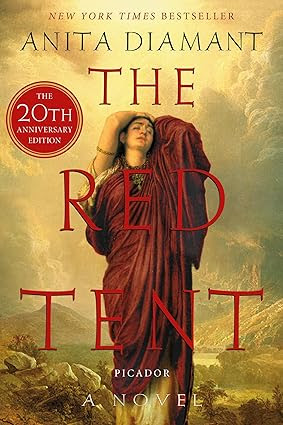
"The Red Tent" (this bible fanfic is great)

Book cover for "The Red Tent."

[this review contains spoilers for "The Red Tent"]

I read The Red Tent [affiliate link] by Anita Diamant. This is a bible fanfic narrated by Dinah, daughter of Jacob. It tells the story of Jacob's 4 wives- Leah, Rachel, Bilhah, and Zilpah- and their children, giving a "woman's perspective" on this story from the bible.

I love this book. Here's my review of it:

---

Fleshing out a whole world

The main thing that this book does is to portray a whole realistic world which contains ideas and practices that we know were common in bible times, but may be hard for us to imagine because they are so different from our modern world. 

Some examples:

  • Polygamy. What would society be like, if it was normal for a man to have multiple wives? How would people view that? 
  • Women dying in childbirth. Babies dying at birth. We know that these things used to be very common, but it's so different from how we live now, thanks to modern medicine. What was it like for women back then, when these tragedies were common? In this book, many of the characters work as midwives, and you see their thoughts on the risk of death during childbirth, and how they handle it.

The book does a good job of showing how issues like these would have effects on many aspects of people's lives and the way they viewed the world. I think for me, if I try to imagine something like polygamy (ie, what if men could have multiple wives, but women could only have 1 husband), I imagine a society that is basically the same as ours but with that 1 difference- but no, that's not how it would be. There would be so many differences, in how people viewed gender, marriage, sex, etc, in a society that viewed polygamy as normal.

This is a fictional story, so we can't necessarily take it to mean "this really is how they viewed marriage back then"- but it does the worldbuilding in a plausible way, much better than whatever I was imagining upon hearing the definition of polygamy, for example.

---

Polytheism

In this book, the women in Jacob's family worship many gods, and this is talked about like it's totally normal. Sometimes, in the book, Dinah tells us about Jacob's God, whose name is El, and some ways he is different from other gods. Not in a good way, though- mainly he is more harsh than other gods.

In the bible, it says that Rachel stole her father Laban's "household gods" when Jacob's family left Laban. This always confused me, when I read that bible story- why would Rachel steal these idols? Don't all the "good guys" in the bible believe in the "correct" god, and therefore wouldn't have any interest in idols?

But in "The Red Tent," the women really do believe in the gods represented by Laban's idols. They are nervous about their journey back to Jacob's homeland, and they feel that if they bring the idols with them, the gods will protect them.

This also makes Genesis 35:2 make more sense- "So Jacob said to his household and to all who were with him, 'Get rid of the foreign gods you have with you, and purify yourselves and change your clothes.'" When I read that verse, when I was a kid, I always wondered what it was talking about. Why would Jacob tell them to get rid of their "foreign gods"? Of course they don't have foreign gods- is he just saying that as a formality? But I think, instead, we should take that verse to mean that members of Jacob's family did worship other gods besides Jacob's god. (And maybe that they should have been allowed the freedom to do so- isn't it kind of wrong that Jacob forces them to stop?)

---

Women's roles and men's roles

In this book, the women live very separate lives from the men. And, it turns out, that makes sense, in a world where women often die in childbirth, and babies often die. In that kind of world, in order to have enough children to maintain the population, most women do need to have their whole adult lives dominated by pregnancy and breastfeeding. Not only breastfeeding your own baby; if another woman in your household dies giving birth, maybe you have to breastfeed her baby too.

There are a few women in the book who are independent and have careers of their own, but that is only because they are unmarried, or because their children have already grown up.

The interesting thing is, the book shows the wives all working together to raise each other's kids. From a patriarchal perspective, a big deal is always made about who someone's father is- but it was the women who actually did the work of caring for the babies and little children. Not just the mother, but the other wives. It's likely that a child has a closer relationship with their father's other wives than with their actual father. Rachel and Leah were both Jacob's wives, and they fought over his affection, but in the practical day-to-day stuff, they had to work together. This is an interesting dynamic.

---

Wife vs slave

[content note for rape and abuse]

In this book, the categories "wife" and "slave" are sort of blurred. Both of them mean "a person you're legally allowed to have sex with" and the other details beyond that- details about how well a man treats his wife or slave- sort of exist along a whole spectrum without an obvious dividing line.

In "The Red Tent", Laban (father of Rachel and Leah) has a wife/slave named Ruti, and everyone knows he is regularly beating and raping her. But no one does anything about it; they act like "that's just the way it is." (At one point, Ruti is pregnant and asks the other women for help getting an abortion- that's the only thing they ever do to help her.)

But there are other couples in this book where the man treats the woman decently. Where the man cares about the woman's pleasure during sex, and they both enjoy sex. And it's kind of like... a woman might end up with a man who cares about her and treats her well, or she might end up with an abuser, and it's just luck of the draw, there's no way a woman can really have any control over this. You hope you end up with a decent man, but if you don't, well, *shrug* that's just the way it is.

Hope you think about that any time anyone tries to make an argument about "the biblical definition of marriage"!

Also, the characters in this book don't seem to have any concept of monogamy being the "ideal." Some men have 1 wife, some men have several wives, some men are having sex with their slaves, and all of these are just kind of seen as normal. There's no sense that monogamy is "better" or that monogamy is "the way it should be."

(Again, this is fiction, so we shouldn't take this to mean that actually *was* how people thought back then. Maybe it was, but we'd have to do more research to find out. Don't just rely on what we see in this fictional book. What I'm saying is, this feels plausible and fits with what the bible says.)

---

There are sex scenes in this book

[content note: explicit sex scenes]

So, Jacob has 4 wives- Leah, Rachel, Bilhah, and Zilpah. (Oh, Bilhah and Zilpah are slaves, by the way.) Each of them has sex with Jacob, and the book talks about what the experience was like for each of them.

And, beyond that, a lot of things about women's lives in this society were related to sexual things that men did to them, so it makes sense that the book would describe that.

The sex scenes are like... they're explicit enough that you understand what's going on if you generally understand what sex is, but euphemistic enough that you'll be completely confused if you're sheltered and "pure." I actually hate that; I really care a lot about the sheltered-and-pure demographic, and it really bothers me how parts of this book are not accessible for them.

Let me give you an example. Here's Leah and Jacob's wedding night:

"It was not fully dark inside the tent. He [Jacob] saw my [Leah's] face and showed no surprise. He was breathing heavily. He took off the rest of my clothes, removing first the mantle from my shoulders, untying my girdle, and then helping me as I stepped out of my robes. I was naked before him. My mother told me my husband would only lift up my robes and enter me still wearing his. But I was uncovered, and then, in a moment, so was he, his sex pointing at me. It looked like a faceless asherah! This was such a hilarious idea, I might have laughed out loud had I been able to breathe.

"But I was afraid. I sank to the blanket, and he moved quickly to my side. He stroked my hands and he touched my cheek, and then he was on top of me. I was afraid. But I remembered my mother's counsel, and opened my hands and my feet, and listened to the sound of my breath instead of his.

"Jacob was good to me. He was slow to enter me the first time, but he finished so quickly I barely had time to calm down before he fell still and heavy upon me, like a dead man, for what seemed like hours. Then his hands came to life. They wandered over my face, through my hair, and then, oh, on my breasts and belly, to my legs and my sex, which he explored with the lightest touch. It was the touch of a mother tracing the inner ear of her newborn child, a feeling so sweet I smiled. He looked at my pleasure, and nodded. We both laughed." And then Jacob spoke tenderly to his first wife.

My first reaction on reading this was, if I had read this book years ago, when I was in my early 20's and "pure", for example, I would have had no idea what it was talking about. Yes, I knew the dictionary definition of "intercourse" but I didn't know anything else about the actual practical mechanics of sex. I would have had no idea what these people were doing.

Yes, if I had read this back when I was "pure", I would have hypothesized that perhaps what was going on with the "enter me" bit was the dictionary definition of intercourse. But I would have rejected that hypothesis, because I would have felt that the other details being described in the passage didn't really match. If 2 people were doing the dictionary definition of intercourse, they wouldn't talk about it in this way, they wouldn't feel this way about it. I would have concluded that it must be describing something more mysterious and intangible.

To help out readers of my blog who are very sheltered/naive and can't make any sense out of what this part of the book is saying, I'll link to the Scarleteen glossary entry for "penis-in-vagina intercourse" [content note, explicit NSFW language at that link]. When the book says "enter me" that's what it means. You may find this unbelievable, but really, that *is* what it means.

And then towards the end of the passage, when Jacob is touching Leah and it uses the word "pleasure" I honestly can't tell if that means she had an orgasm or not. Sometimes "pleasure" is a euphemism for orgasm. If you're confused about the mechanics here, here's the Scarleteen glossary entry for "manual sex" and a Scarleteen post about how women can orgasm *not* through intercourse.

I understand what this part of "The Red Tent" is talking about because I have experience having sex and also reading explicit sexy fanfiction. I am extremely disturbed by the assumption that the reader should have experience with things like that, otherwise they'll just be completely lost when they try to read the sex scenes in this book.

I found myself wishing the book would just come right out and SAY what these characters are doing, rather than assuming the reader already knows the basic structure of what hetero sex is like, and then all the book needs to do is add a layer on top to describe some small details about how it played out for this specific couple. I want this to be MORE explicit.

But then, I realized something else: When I was all naive and "pure" and didn't know how sex worked, if I had come across an explicit description of people having sex, I would have had a very strong reflex reaction to turn away from it, block it out, I cannot read this because it's BAD. That comes from purity culture ideology; I believed that if I knew more details about sex, I might become interested in it, and then it's a slippery slope to doing all kinds of horribly sinful sexual things. So, good and pure girls are ideally supposed to not know any details at all about how sex works. Besides, you know, the dictionary definition of intercourse. Flee from temptation. 

And even after I didn't believe in purity culture any more, the visceral reflex reaction was still there. Sort of being overwhelmed at the wrongness of... like... a penis existing, without anyone trying to euphemistically hide its existence. If I had tried to read a sex scene that spells it all out in detail, I wouldn't have been able to do it. The urge to block it out and get away from it. You know what, if I had tried to read the sex scenes in "The Red Tent", which describe sex without using explicit words like "penis," I still wouldn't have been able to do it. It still would have been too explicit, and I would have felt it was wrong to read about it. Not necessarily "wrong" as in "purity culture says this is a sin", but even after rejecting purity culture, I still had a deep feeling of wrongness about being exposed to the concept of how sex actually works, in practical terms.

So... I don't know what would be best for the "too sheltered to know how sex works" crowd. At first I thought the sex scenes should be more explicit, but now I feel like that's bad too.

So don't take this as me saying what the book should have done differently. ("She wants there to be porn in this book?") I'm not giving advice. LOLLLL imagine me giving advice about how to write sex scenes. Mostly what I'm saying is, I don't understand the logic behind vaguely-written sex scenes. I'm so confused about this.

It seems like this book is not interested in describing the exact mechanics of what the characters did, but instead, talking about how they felt and what their relationship was like. Ohhh, I just realized that's literally the reason the author did NOT make the sex scenes more explicit. (Also, ohhh, if the reader is a child who doesn't know what sex is, the actual intention in writing sex scenes so vaguely is that the reader is NOT supposed to understand it.) Because the book isn't supposed to be about that; it's supposed to be about how the characters feel and how they interact with each other.

I think what we're supposed to get from this passage- I'm gonna take a stab at this even though I am asexual af, which means I have a lot of difficulty matching up specific sexual actions with what feelings are seen as "normal" to have about them- I think what we're supposed to get from this passage is this: Jacob is a decent sexual partner. He wants his wife to feel good and have an orgasm. Jacob still takes the lead- they're not equals; she doesn't really know what's going on, and she just has to go along with whatever he does, but I think most modern readers see that as normal and not a bad thing (???) as long as he leads her along with kindness and care. And there was never any option of *not* having penis-in-vagina sex on their wedding night. The basic structure of what they're doing is they're going to have penis-in-vagina sex, and that's not open for discussion (I think most people don't register this as a problem though) and within that framework, he is kind to Leah and cares about how she feels, so he is a good sexual partner.

---

Bilhah and Reuben

In the bible, Jacob marries both Leah and Rachel. Leah has a slave named Zilpah, and Rachel has a slave named Bilhah. Leah and Rachel fight over Jacob's affection, and it's a big deal how Leah gives birth to several sons, while Rachel is unable to have children at all. So Rachel tells Jacob to have sex with Bilhah, so Bilhah can get pregnant and the child will "count" as Rachel's.

In the bible, Bilhah gets pregnant twice, and has 2 sons: Dan and Naphtali. In "The Red Tent" this happens differently (we'll talk more about the differences in a minute). Bilhah only has 1 child, Dan. (In "The Red Tent," Naphtali is Leah's son.) And then after that, Jacob doesn't have sex with Bilhah again.

Later, in "The Red Tent," Dinah describes how Jacob's son Reuben is spending a lot of time with Bilhah, and they seem to like each other. This subplot is meant to shed some light on Genesis 35:22, "While Israel [Jacob] was living in that region, Reuben went in and slept with his father’s concubine Bilhah, and Israel heard of it."

I love this, actually. I ship Bilhah and Reuben.

When I was a kid, and I read the bible, and I read that Reuben had sex with Bilhah, his father's wife, I was like "oh gross, that's bad and wrong, she had already had sex with Jacob, so she's supposed to be with Jacob." From a purity-culture perspective, it's disgusting if someone has sex with one partner, and then at some other point in their life, they have sex with some other partner. (And the bible definitely frames it like Reuben did something wrong.)

But the way it's portrayed in "The Red Tent"... Bilhah was a slave, and Rachel used her. Jacob goes along with it, and he's decent toward her during sex, so good for him I guess, but Bilhah never had a choice. And even though she had sex with Jacob, and she gives birth to his child, and she's called his "wife" (again, the blurriness between "wife" and "slave"), there's not really any relationship between Bilhah and Jacob. Why shouldn't she go find someone else who actually cares about her? Reuben cares about her- you know what, I'm happy for them.

---

Things that happened differently in "The Red Tent" than in the bible

Okay I LOVE the fact that some things happened differently in "The Red Tent" than in the bible. I interpret this as saying that the bible was written by men who sometimes got things wrong because they didn't pay attention to the women.

I would say, if you're a bible nerd, the most important difference is the issue of Bilhah having 2 sons or 1 son. In the bible, the sons of Jacob are as follows:

Leah's sons:
Reuben
Simeon
Levi
Judah
Issachar
Zebulun
(also 1 daughter, Dinah)

Rachel's sons:
Joseph
Benjamin

Zilpah's sons:
Gad
Asher

Bilhah's sons:
Dan
Naphtali

(Jacob has 12 sons and 1 daughter.)

In "The Red Tent," there is 1 small difference: Naphtali's mother is Leah, not Bilhah. I know the author did this intentionally- there's no way you can write a fanfic about the wives of Jacob and *accidentally* get a detail like this wrong. And this comes up several times in the book, the fact that Naphtali is Leah's son. This isn't a mistake; the author, Diamant, meant to do it.

For a bible nerd like me, this is a really big deal. This is the biggest difference between the bible and "The Red Tent." The 12 sons of Jacob are important because they become the 12 tribes of Israel; it's a big deal if the bible gets the origin of one of the tribes completely wrong. Also, the number of children that each of the wives has plays a huge role in the conflict between Rachel and Leah, as the bible tells it. This is a big deal.

If you're not a bible nerd and you didn't really know about those details, the biggest difference between the bible and "The Red Tent" is what happened to Dinah. In the bible, there is only 1 story about Dinah, in Genesis 34. Here's what happens in the bible's version of it: Dinah is raped by a man named Shechem, who then wants to marry her and asks for her father Jacob's permission. Jacob's sons aren't happy about this, so they tell him that they will only agree to the marriage if Shechem and all the other men in his city are circumcised. (Here's a [NSFW] link to Mayo Clinic if you're too pure to know what that means.) Jacob's God requires men to be circumcised, so all of the men in Jacob's household already are. Shechem agrees to this. He and all the men in his city get circumcised. Then, while all the men are still in pain, Dinah's brothers Simeon and Levi attack the city and kill all the men, including Shechem. Then the rest of Dinah's brothers come and loot the city and take the women and children as captives.

In "The Red Tent," Dinah was not raped. It's very much consensual, and they are in love. After her brothers come and kill her husband (and the other men in the city), she is beside herself with anger. She feels like no one in her family cares about her, and she runs away.

The way I interpret this is, the author is saying that the bible records this incident as rape because Dinah's consent wasn't what mattered. Her father and brothers didn't consent to it, therefore it was seen as rape. How messed-up is that.

---

Hey, what's up with Christians and the story of Dinah?

In all my years as a good churchgoing evangelical, I don't think I ever heard a sermon or Sunday school lesson about the story of Dinah. (I do remember one time the boys in the youth group were talking about this story and giggling endlessly over the whole circumcision aspect.) So while I haven't heard a standard evangelical response to this story in particular, I do know the response to other bible stories where the great role models do horrific things: they weren't perfect. (For example, Abraham has sex with Hagar, a slave- well, Abraham wasn't perfect. David rapes Bathsheba and murders her husband, well, David wasn't perfect. They weren't perfect because of these small incidents, but don't think about those too much- mainly they were great bible heroes, roles models we should learn from.)

Simeon and Levi murdered all the men in the whole town. Well, they weren't perfect.

I can't believe I have to say this, but: There is a BIG DIFFERENCE between "not perfect" and "murdered all the men in the town." If you're not perfect, that's fine. If you murder all the men in a town, oh my GOD, what the heck, you should go to jail.

And Christians who view the bible as lessons for us about how we should live... they read these horrible stories and say "well this is an example of what we should NOT do" and just move on like it doesn't matter, like it's just a slight aberration from the main theme of "here are some great role models we should imitate."

In "The Red Tent," the incident recorded in Genesis 34 is the turning point of Dinah's whole life. She is so angry at Simeon and Levi. She never forgives them. Of course she doesn't! Seeing how devastating this was to her, how it affected her for the rest of her life... the typical Christian response "well they weren't perfect" is so wrong, so disproportionate to what we are actually talking about. They murdered all the men in the town. 

(Yes, I realize that the bible tells the story as a rape, so if we take the bible's version of events as true, then Simeon and Levi were rescuing Dinah from her rapist, so that's a very different thing than murdering her husband just because they happen to not like him. Still, though, the other men in the town had nothing to do with it- definitely was wrong to kill them!)

And, actually, if you pay attention when you read the bible, you see that there were some consequences, that the story doesn't just move on like it doesn't matter. At the end of Genesis 34, Jacob tells Simeon and Levi that he isn't happy with what they did, because what if other nearby people hear about it and attack Jacob's family. And in Genesis 49, when Jacob gives "blessings" to his sons, he says that Simeon and Levi were violent, and that this is a bad thing. This is likely referring to what happened with Dinah. Still, though, none of this is really the right level of response when someone murders all the men in a town.

Why DON'T we talk about this story in church? Abraham, Isaac, and Jacob are the patriarchs of Israel, we talk about them a lot, why don't we ever talk about "hey remember the time when Jacob's son's murdered/enslaved a whole town?" Seems like that should be a bigger deal.

---

I'm really curious about this being a bestseller

This book was published in 1997 and was apparently a bestseller. When I was in the US and I was reading it, there were a few times that people told me they had heard of it before. I was really surprised- bible fanfiction is the kind of obscure niche content that I'm into, but I wouldn't expect people *in general* to be interested in it. Was there some big cultural moment in 1997 when everyone was talking about the 4 wives of Jacob?

Did this book cause controversy among evangelical Christians when it came out? I remember when "The DaVinci Code" came out and evangelicals were all up in arms about how it was an attack on Christianity, how it was so harmful because it didn't agree with the bible. I can easily see evangelicals starting a similar culture war over "The Red Tent."

First of all, the biggest reason evangelicals would hate it, is that some things in this book happened differently than in the bible. The book is saying that the bible got some things wrong, oh let's clutch our pearls over this terrible attack on the inerrancy of scripture.

Second, "The Red Tent" shows Jacob's family members worshiping many gods, and viewing this as normal. The book mentions Jacob's God but isn't that interested in him. There's no message about Jacob's God being better than other gods; there's no point at which the reader is supposed to think "this character is having problems because they don't believe in the right God." The book is just not about that at all, and from an evangelical perspective, that's not acceptable.

Third, the polygamy, the abuse, the way women are treated in this book. Evangelicals have this weird fantasy that "the biblical definition of marriage" is "1 man, 1 woman" and this gets trotted out to justify discrimination against queer people, single mothers, and anyone else whose family doesn't fit this ideal structure that the bible supposedly presents to us. Evangelicals will tell you that yeah sure there's a lot of polygamy in the bible, but the bible makes it clear that's not how it SHOULD be. 

Well, "The Red Tent" gives a realistic portrayal of a society which had as much polygamy and slavery as is described in the bible, and it's so far from modern evangelicals' fantasies about "the biblical definition of marriage." It's very clear that women are not treated well in this book- it makes it very hard to argue "we need to go back to how marriage and gender roles were understood in the bible."

Fourth, the sex scenes.

---

Conclusion

I had a great time reading this book. You should definitely read it if you like bible fanfic which tells a bit of a different story than what the bible says. The biggest strength of this book is that it creates a whole world, which is so different from ours but the book makes it feel like something we can understand and relate to. It's hard for me to imagine what it would be like if most people believed in many gods, if polygamy was normal, if slavery was normal, if women frequently died in childbirth, etc, but this book does a good job of imagining it.

---

Related:

The Bible and "Purity"

Womanist Midrash 

Mary's Choice 

Bathsheba's Son 

Love Wins (an Ezra fanfic) 

Strange Fire

Monday, June 3, 2024

Womanist Midrash

Book cover for "Womanist Midrash." Image source.

I started reading the book Womanist Midrash: A Reintroduction to the Women of the Torah and the Throne [affiliate link], by Wilda C. Gafney, and I LOVE IT. This is how I want to read the bible. This is so good.

Let me explain what "womanist midrash" means:

  • Womanism is basically feminism from a black perspective. It prioritizes black women's experiences.
  • Midrash is the historical Jewish tradition of writing fanfic about the bible. You may know that I also write fanfic about the bible and it makes me so happy. Turns out this is a tradition with a very long history.

The book goes through the stories of women in the bible- laying out the whole story of what the bible says about them (not leaving out the ****ed-up parts like we do in church), discussing ancient Hebrew words and how they should be translated, and asking questions about how the characters felt, and about other aspects which were ignored by the biblical authors.

I am so here for this! This is SO how I read the bible- except Gafney is an actual biblical scholar who has studied Hebrew, so she has a lot of in-depth knowledge about the language and how English translations don't quite capture the meaning. 

Right out of the gate, the book starts with talking about Genesis 1, when God created the world, and it says in Hebrew, the word "God" is masculine but "spirit of God" is feminine. YESSSSSSS I love this. (And Gafney doesn't use pronouns for God in this book.)

Then there is a section for each woman character. Some of them are well-known, like Eve, and some of them are obscure characters that no one talks about in church. I love this! Let's talk about the obscure ones! A lot of WEIRD stuff in the bible, but in church we streamline these stories down into simple lessons about morality. Gafney's book doesn't do that. She talks about every aspect of these characters' stories, even the really weird stuff, and the focus is on understanding what they experienced and how they felt, and aspects of their lives which are similar to things that happen in our world now (with a particular emphasis on black women).

For example, there's the section on Adah and Zillah. You may be saying, "who?" We find these 2 women in Genesis 4, which is about the descendants of Adam and Eve. The bible says that Adah and Zillah were the 2 wives of Lamech. This is the first example of polygamy in the bible.

Now, when I've seen Christians talk about this story before [if they ever mention it at all], mainly they say something like this: "God made Adam and Eve, and that was the ideal for marriage- 1 man and 1 woman. But look, we're here in Genesis 4 and already people are straying from God's plan. Lamech had 2 wives, and that is BAD." Like it's just a simple morality lesson for us about "monogamy is good, polygamy is bad." And that's it. And nobody cares about how Adah and Zillah felt.

Well, Gafney cares about how Adah and Zillah felt. Yes! 

And, Gafney asks questions about how to think about relationships in the bible which English translations typically call "marriage." Actually, she says, the bible doesn't use the words husband/wife/marriage when talking about Adam and Eve. She is very very careful with her translations. And check out this part:

Should unions that encompass polygamy and permit sexual access to abducted women, slaves, sex-workers, non-Israelite women, and widows without sanction be called "marriage," as the term has come to be used? Should they be called something else?

How did Adah and Tzillah feel about this new social structure Lamech invents? Was their participation voluntary? What did God think about this new development? Why is God silent on this development in the text? Since neither God nor the text critiques the practice, is it permissible? Is it simply a matter of human volition? Does this text mean marriage, coupling, or partnering, by whatever name, is ultimately just a human, social construction?

Yes! These are all questions we should be asking! Not simply taking our modern understanding of what marriage is, and assuming that's what it meant for Adam and Eve, and that's what it should mean for everyone, and that's what it means when the bible says "marriage."

I remember when I was a kid, reading the bible, reading about how Sarah wanted her husband Abraham to impregnate her slave Hagar- and I was thinking about how that's wrong because sex is only supposed to be in marriage. But then I read in the bible, "Sarai his wife took her Egyptian slave Hagar and gave her to her husband to be his wife." And I was like "... to be his wife? So... so... so then Hagar and Abraham are married, so that makes it okay. ...?" And thinking about how I had been taught that sex is only for marriage, and if you have sex outside of marriage then that's bad, because you form a lifelong emotional connection to someone when you have sex, but since you're not married then you end up breaking up and you're sad forever, and you're "impure" in your next relationship... But if Hagar was Abraham's "wife" then you wouldn't have to be concerned about those things, so... that means it's okay? 

It's about the definition of "marriage", and the weird belief that if you call something "marriage" then it's a good and healthy relationship. What it actually was, though, is Sarah and Abraham mistreating Hagar, using her body for their own purposes. There was no consent; nobody cared what Hagar thought. Doesn't matter if you call it "marriage"- it's still wrong. (And "Womanist Midrash" has some really interesting stuff to say about intersectionality and privilege and how Sarah used Hagar, rather than women standing together and supporting each other.)

As I was reading this book and enjoying it, I thought to myself, this is a book specifically about the women in the bible, and normally I don't like that kind of thing. You know, church women's groups are always like "let's study the story of Esther" and I roll my eyes at that so much. Oh, we're women so we should read the bible stories about women. I always felt like, uh I want to read the whole bible, why should we limit ourselves to Esther and Ruth? (Because honestly, when they talk about studying the women in the bible, it's basically just Esther and Ruth. Oh and Proverbs 31.) And also, shouldn't Christian men read about Esther and Ruth too? I'm really not into this "the women's group is gonna read about the women" stuff. So what's different about Gafney's book?

The difference is, "Womanist Midrash" is examining these women's experiences from a feminist perspective, paying special attention to issues that specifically applied to women- like sexual violence, not having a choice in whom to marry, having your worth tied to your fertility, etc. It's not like those church study groups which talk about "Esther was a role model who had courage, and therefore we should have courage"- parsing the story into some lesson that we should apply to our lives, and that's it. I mean, if we want to talk about Esther from a feminist perspective, we could talk about how she came from an immigrant family, how she didn't have a choice in marrying the king, what it would be like to be in the huge harem of women who had sex with the king 1 time and then he may or may not ever be interested in them again (and maybe we need some F/F fanfic about this), how all these young women were brought in and whichever one sexually pleased the king most would be the new queen, what would it be like to know that was your objective during sex, and how would you prepare for it, and then after she became queen, she wasn't even allowed to talk to the king unless he called for her, and can you even call that a marriage, etc etc etc. (These are my own ideas, I don't know if the book "Womanist Midrash" talks about Esther or not. I'm still in the beginning chapters.)

Also, when I say midrash is fanfic, I'm not exaggerating. It's fanfic. And for some of these bible characters, Gafney even writes her own midrash. Here's one from the section on Rachel:

Rachel and Leah were ordinary sisters. They had largely separate lives. Leah preferred indoor life, and Rachel preferred outdoor life. Neither was much interested in marriage. Following the rules of the household established by Milcah, their great-grandmother, whose name their grandfather Bethuel ben Milcah bore, they were asked if they would marry each time a suitor came forward, as their aunt Rivqah [Rebekah] had been asked. And each time they said no. They said no to their brothers and cousins. They said no to intrafamily unions. They said no to the neighbors and to strangers. They said no to unions outside of their family.

Then one day their cousin Ya'aqov [Jacob] came to town looking for a woman from their family, his family. Their father said one of them would have to marry him. Auntie Rivqah would not take no for an answer. Ya'aqov asked for Rachel and offered seven years of his labor in exchange for her. She spent the seven years getting to know him, but she never came to love him. He turned to Leah to help him win her over. The more he pursued her, the less interested she became. The more time he spent with Leah, the more she came to love him.

When the time for the wedding feast and consummation came, Leah and Rachel agreed to switch places and told their father what they had decided. They waited until deepest night and put out all the lamps in the wedding tent. Leah hoped that Ya'aqov would realize that [it] was she whom he truly loved. Ya'aqov was angry and disappointed. He demanded Rachel. Lavan [Laban] tried to dissuade him. Rachel hoped he would give up, but he stayed another seven years. Ya'aqov's pursuit of Rachel broke Leah's heart. The love she held for him and for her sister soured. When Rachel finally consented to marry Ya'aqov, she was at the end of her childbearing years. He did not care. He wanted her, and finally he had her. That Rachel still did not want him and that he never wanted Leah wounded Leah deeply. Leah carried that hurt to her grave. She held on to and acted out of her deep hurt. She was never reconciled to her sister.

Wow, interesting! Some of that is in the bible; a lot of it is not. Very cool how occasionally in this book, we get midrash written by Gafney. Also I'm fascinated by the fan theory that Rachel didn't love Jacob.

(Also I love how this book makes no attempt to cover up all the incest going on in the book of Genesis.)

Another awesome thing about this book is that Gafney uses Muslim sources. Yes, many of these bible characters, like Abraham, are also important for Muslims, and there have been Muslim scholars writing about these characters (and writing fanfic on them) for hundreds of years. I love how "Womanist Midrash" brings in ideas about these bible characters from Jewish, Christian, and Muslim sources, and treats them all as useful. This is really astounding to me- wow, other people exist besides Christians, and they have ideas worth listening to! You normally don't see that in Christian books.

Anyway, those are my thoughts so far on this book. I'm very excited about it, and wanted to share this on my blog, though I don't really think I can do it justice because it's so good. This is EXACTLY how I want to read the bible.

---

Posts about the book "Womanist Midrash" by Wilda C. Gafney:

Womanist Midrash 
The Slavery We Ignore in the Book of Exodus 
The Second-Worst Bible Story
Michal wasn't here for David's worship, and now neither am I

Why did I think David was the good guy in the story of Abigail?
David's Womanizing 
The Bible and "Purity"

---

Related:

No One Can Take The Bible From Me 

Not Sure I Want My Kid Reading the Bible 

The Worst Bible Story 

Bathsheba's Son 

Reading US History Inerrantly (first post in my blog series on James Cone's book, "The Cross and the Lynching Tree")

Some of my bible fanfics:

Mary's Choice

Strange Fire 

Love Wins (an Ezra fanfic) 

Noah's Evangelism

Monday, August 7, 2023

Sodom

A painting showing the confrontation between the two angels and the men of Sodom. Image source.

[content note: rape, genocide]

A mother looked out the window
Seeing the streets that were getting dark as the sun set
She didn't let her children play in the streets
It wasn't safe, even in the day.
She wished she could give them a better home
A place to run and play
"Who will help us?" she prayed.
A mother, and her three children.
One, two, three, four.

A young girl waited at home while her father arranged her marriage
He said she was growing up now, and the men of the city would soon notice her
He said she needed to be married, to be protected
If they saw that she didn't belong to any man, they would think they could have her.
She had seen her friend married off in the same way.
Forced to grow up too fast.
She wondered what would happen to her little sister
And her little brother- who would he grow up to be?
Would he be one of the violent men in the streets?
Would he be the desperate father helpless to protect his daughter?
Would he be the husband, seeing a vulnerable girl as an opportunity for himself?
"Who will help us?" she prayed.
A young girl, her father, her friend, her sister, and her brother.
Five, six, seven, eight, nine.

A man walked home alone, hoping no one would notice him
He didn't want to hear their mocking
They said he was weak
They said he was unmanly
The way he walked, the way he talked, the way he dressed
Then one day, they held him down and raped him
Since then, he has just tried to hide
"Who will help us?" he prayed.
Ten.

"Who will help us?"
The outcry against Sodom reached the ears of God.

Two angels came down and entered the city
That night, the gang of rapists found them at Lot's house
As they tried to break down the door, the angels struck them with blindness
And they stumbled away in the dark.

The sun rose on a city without a gang in the streets
For the first time in years
A mother felt hope
A young girl felt hope
A man felt hope.

But then God rained down fire and destroyed the city.

---

Follow-up post: "Sodom and Gomorrah" is a story about living in a "bad neighborhood"

Other bible fanfics:

Mary's Choice
Strange Fire
Love Wins (an Ezra fanfic)
Noah's Evangelism

Saturday, April 15, 2023

No One Can Take The Bible From Me

Book cover for "Inspired" by Rachel Held Evans. Image source.

As an ex-evangelical who is still a bible nerd, I LOVED the book Inspired: Slaying Giants, Walking on Water, and Loving the Bible Again [affiliate link], by Rachel Held Evans. It's about reading the bible in a whole new way- well, actually, not new at all, but in a way that I never heard about in evangelicalism.

The intro chapter is SO GOOD and so relatable. Evans talks about how, as an evangelical, she always viewed the bible as a "magic book", but in slightly different ways as she grew up. As a child, she viewed the bible as a wonderful storybook. As a teenager, it was a handbook to tell you how to live. As a young adult, it was an answer book that gives all the reasons why we need to vote Republican/ reject evolution/ oppose same-sex marriage/ etc. But then, she began to question her faith, and question the interpretations of the bible that she had always heard.

Some quotes from the intro:

It was as if the Bible had turned into an unsettling version of one of those children's peekaboo books. Beneath the colorful illustration of Noah's ark was-- surprise!-- the violent destruction of humanity. Turn the page to Joshua and the battle of Jericho and-- peekaboo!-- it's genocide. Open to Queen Esther's castle and-- look!-- there's a harem full of concubines. [page xvii]

and

Beneath all the elaborate justifications for Israel's ethnic cleansing, all the strange theories for where Cain got his wife and how Judas managed to die in two different ways (he hanged himself and then fell headlong onto the ground), I sensed a deep insecurity. There was a move-along-nothing-to-see-here quality to their arguments that only reinforced my suspicion that maybe the Bible wasn't magic after all, and maybe, deep down, they knew it. Instead of bolstering my confidence in the Bible, its most strident defenders inadvertently weakened it. Then when a pastor friend asked me what personal sins might have triggered my questions-- "sexual immorality, perhaps?"-- I saw that my journey through these doubts would be a lonely one. [page xviii]

Damn that is so real. The "move-along-nothing-to-see-here," and the idea that people who question their church's teachings are motivated by a desire to have sinful sex (which makes me especially angry as an asexual). (See also: Evans's 2013 post, Is doubt an STD?)

I feel the exact same way. I know the bible so well- I've read the entire thing multiple times, in college I would have a "quiet time" every day where I read the bible and prayed, I started bible study groups, etc etc etc. But at some point, as I began to question a lot of evangelical teaching, it became so difficult for me to read the bible at all. These familiar stories that I knew so well, that had always comforted me- and suddenly I would try to read them and immediately have so many questions. There were so many things that seemed weird or wrong, that I had never seen before.

These were the stories we knew so well, we lived them, we memorized them. But we only saw one side of them. Children's bible story books and Sunday school classes are always about "here's the nice tidy moral lesson we are supposed to get out of this bible story. Ruth teaches us about loyalty. Joseph teaches us about forgiveness. Abraham teaches us about obedience. Daniel teaches us about standing up for what's right." And when you grow up and become an adult, it's still like that... Sermons about "this is what this bible passage means." That's how the bible is taught, in my experience. Here's the bible, here's what it means. If you have more questions, let's find you an apologetics book that answers them. And that's that.

There's something so amazing about hearing the stories discussed in a new way. It's like, all these bible verses I know so well, suddenly tilted at a slightly different angle, like wow, how did I not see that before?

Let me give an example- and this was back when I was evangelical, so it has nothing to do with challenging evangelicalism or the "inerrant" view of the bible. I sometimes went to the international student bible study back when I was in college- this was a college in the US, and I am American, but I went there because I was studying Chinese and wanted to meet Chinese people. One night, the group was reading a passage about how we are not citizens of this world, we are citizens of heaven. (Perhaps Philippians 3:20 or 1 Peter 2:11?) And the bible study leader was saying "we understand how this is, because we are living in this country but we are not citizens, and we miss our home countries." And I was just so amazed, because I had never thought of that- reading a verse about how we are not citizens, and connecting it to actual people who are not citizens of the country where they live, and how they understood that verse in a way that was different than I did, because of their experiences. (And now I live in China...)

So... the idea of seeing bible stories in a "new" way is something that evangelicals love, in my experience. But there are limits to it... Some of the interpretations of bible passages in this book would probably get a "wow that's cool!" reaction from evangelicals, and some are crossing a line into "false teaching" and saying the bible isn't inerrant (gasp!).

---

Structure of the book

Here's how the book is organized: Each chapter is about a different type of bible stories- for example, origin stories, deliverance stories, war stories, etc (8 types in all). Each chapter has a fanfic (or poem or something along those lines) at the beginning.

For each of the different types of stories, Evans discusses it in a completely new light. Well, not actually "completely new", because Christians have been reading these stories for 2000 years (and Jewish people have been reading them even longer than that)- none of this is actually new. But I say "new" because I never heard anything like this when I was evangelical.

---

Bible fanfic, and honoring the bible's victims

OKAY. YOU GUYS. I love bible fanfic SO MUCH. I am so ridiculously proud of the ones I have written. You have no idea. This is SO important to me.

And, let me just take a moment here and share MY FAVORITE bible fanfic: lament for the slave girl in pharaoh’s house (2018) by Micah J. Murray [content note: child death].

In the book "Inspired," my favorite bible fanfic is the one about Hagar. When I was growing up, I just viewed Hagar and Ishmael as Abraham's mistake- a symbol of Abraham's sin of not trusting God. But no, Hagar and Ishmael deserve better than that.

Background info, if you don't know the story [starting in Genesis 16]: God promised Abraham that he and his wife Sarah would have a son. But Abraham and Sarah were both very old and unable to have children. They were supposed to have faith in God's promise, but instead they decided that Abraham would impregnate Hagar, the slave. So Hagar had Abraham's baby, and the baby's name was Ishmael, and there was *drama* between Hagar and Sarah. Later, God did keep the promise, and Sarah had a baby named Isaac. Isaac was the child that came from having faith in God's promises, and Ishmael was the child that came from sinfully taking things into your own hands instead of trusting God. (Also, rape... but in church I never heard anyone say "Abraham raped Hagar" even though it's clearly true.) In Galatians 4 (in the New Testament, hundreds of years after Abraham), Paul makes this whole big analogy about how Hagar represents slavery and the law, and Sarah represents God's promise, and obviously we want to be Sarah's children rather than Hagar's.

So anyway, I always thought Hagar and Ishmael were the "bad guys" and Abraham, Sarah, and Isaac were the "good guys." In the simplest children's bibles, Hagar and Ishmael are not even mentioned- it's all about Isaac. Hagar and Ishmael are... kind of a "stain" on the story of Abraham the Good Godly Role Model.

(Also, I've heard that Muslims have a completely different take on Ishmael. It would be interesting to hear more about that.)

But, that's terrible, to treat Hagar that way. None of this was her fault. It was what Abraham did to her. 

And actually, the writer of Genesis doesn't even treat Hagar so one-dimensionally. In Genesis 16, when Hagar, pregnant, runs away into the desert because Sarah is so cruel to her, an angel meets her. The angel gives her a promise- her son Ishmael will be "a wild donkey of a man" and she will have uncountable descendants. Hagar responds by saying "You are the God who sees me" and "I have now seen the One who sees me" which is significant because NOWHERE ELSE IN THE BIBLE does a person give a name to God. (Evans's fanfic is about this story.) And a similar thing happens in Genesis 21- drama between Hagar/Ishmael and Sarah/Isaac, Sarah drives them away, and again an angel meets Hagar and encourages her, and gives her a promise that Ishmael will become a great nation.

(Some of my posts related to Abraham and Hagar: Honest Lent: Abraham's Slaves and "Waiting On God" - But Like, Why Though?)

Yeah, I love bible fanfic, and actually, evangelicals love bible fanfic too. All the kids books about bible stories, all the Hollywood movies based on bible stories- they all add some embellishments. You pretty much have to add things, because the bible passages are short and just tell the basic story, without enough details to be a whole movie. Modern writers add their own ideas about what the characters were thinking or feeling, add characters who weren't mentioned in the bible at all, add extra scenes to make the story fit together better, etc.

Evangelicals love bible fanfic (though they don't call it "fanfic") but there's a limit to it. It has to be consistent with evangelical beliefs about what the bible means. 

For example, I remember one fanfic I read in a Christian magazine for kids- it was from the perspective of the wife of one of the shepherds who had seen the angels in the sky when Jesus was born, and the whole fic was about how surprised she was that her husband and the other shepherds had left their sheep behind to go see baby Jesus. This "shepherd's wife" is a totally made-up character, not mentioned in the bible, and the idea that the shepherds left their sheep behind when they went to see baby Jesus is also not mentioned in the bible- but this fic made a big huge deal about how "they left the sheep" and how it was so hard for her to understand what was so important about baby Jesus, that would cause the shepherds to respond like that.

The point of the story was, Jesus is so amazing and important, that it is worth it to take shocking risks or make sacrifices in order to have a chance to experience him. So, from an evangelical perspective, that's a great message to send. (But, to be honest, there are probably some evangelicals who would quibble with it, for making up things that weren't mentioned in the bible. And yeah every time there's a movie based on the bible, you can find evangelicals arguing with each other about this or that thing in the movie that wasn't in the bible, and whether it means the entire movie is blasphemous.)

I also write my bible fanfics to make a point, but they're always points that challenge evangelical beliefs. For example, Noah's Evangelism was one giant metaphor about evangelical beliefs about hell. Strange Fire is about the bible story where God kills the priests Nadab and Abihu for their sin of ... something about burning incense wrong? idk? ... and my fic says the bible is wrong about that, and here's what really happened. Mary's Choice was a pro-choice metaphor (hopefully this was obvious) which grapples with the idea of making big choices that change the trajectory of your life, when you're too young and inexperienced to even know what you're getting into, and how that intersects with being called by God and choosing to take risks for God.

So, I mean, yeah, there's a whole range of bible fanfic, pushing different ideas. Thinking about Evans's fanfic about Hagar, my first instinct is that this would not be an evangelical-approved fanfic, because it invites the reader to empathize with Hagar, who is, you know, a "bad guy", a sin, a mistake in Abraham's life, that we just want to forget about.

The thing is, though... the bible does say that Hagar was a slave, and Sarah "gave" Hagar to Abraham. And that when Hagar was pregnant, Sarah was so cruel to her, that she ran away into the desert. The bible says these things. Hagar was a victim, and what Abraham and Sarah did was wrong. There's no way to read those verses and then argue with that. It's right there, chapter and verse. 

Nobody's embellishing anything. Evans's fanfic is, quite simply, the thoughts and feelings that a pregnant woman would likely have in that situation. The reason it strikes me as not-church-approved is that it invites readers to consider how Hagar felt, to care about her, rather than viewing her as nothing more than a regrettable detour in the story of the birth of Isaac.

Fanfics that draw attention to the minor characters in the bible who are innocent victims who suffer because of what God does, or because of what the "bible heroes" like Abraham do... We need more fanfics like that.

Evans discusses the idea of honoring the bible's victims and, wow, this blew my mind, and I love it:

In one of the most moving spiritual exercises of my adult faith, an artist friend and I created a liturgy of lament honoring the victims of the texts of terror. On a chilly December evening, we sat around the coffee table in my living room and lit candles in memory of Hagar, Jephthah's daughter, the concubine from Judges 19, and Tamar, the daughter of King David who was raped by her half brother. [Note from Perfect Number: this list is 4 people total. In case the commas make it confusing.] We read their stories, along with poetry and reflections composed by modern-day women who have survived gender-based violence. My friend built a diorama out of a pinewood box that featured five faceless wooden figures, huddled together beneath a ring of barbed wire, their silhouettes reflected on the backboard by pages cut from a book. Across the top of the box were printed the words of Christ-- "As you have done unto the least of these, so you have done unto me." [p 75]

This is, wow, really powerful. To say, what happened to them was wrong, and they deserve to have someone care about that. Typically, all that Christians have to say about these stories is "these parts of the bible are descriptive, not prescriptive- it tells the truth about how sinful people were, and it does NOT mean we should act like that too." As if the only issue is the bible's position on whether or not it's okay to gang rape a woman and then cut her body into pieces (Judges 19, trigger warning, my god)- don't worry everyone, the bible is NOT saying that's okay! All right now move along nothing to see here.

To actually spend time caring about the victims of the bible... wow, that's something new and powerful.

---

Job

There's a section in "Inspired" where Evans talks about the story of Job. If you don't know this story from the bible, here it is: Job was a righteous man. One day, Satan and God were discussing Job, and Satan said the only reason Job worships God is because God has blessed him with huge herds of livestock and lots of children, but if all this was taken away, Satan is sure Job would not worship God any more. God says, okay, sure, try it and see. So then a series of disasters causes Job to lose all his wealth, and all his children die. This happens in the first 2 chapters. The book of Job is 42 chapters long; the entire rest of the book is Job and his "friends" debating the question of why God allowed such terrible things to happen to Job. The "friends" say Job must have sinned, and these things happened as a punishment, but Job insists that's not true.

So... if this is a true story, then, well, God's behavior is horrifying. Letting all of Job's children die, just to win a bet with Satan? NOT COOL.

But Evans says the story of Job is in the bible to present a different perspective than other bible passages which say that living a righteous life leads to prosperity- mainly the book of Proverbs. The book of Proverbs in the bible is about wisdom- basically a bunch of simple, common-sense principles to live by, to make good decisions and have a happy and successful life. 

Job's friends are basically following the logic of Proverbs. Proverbs says that if you follow God's rules and make wise decisions, then you will have a good life. Job had all these bad things happen to him, therefore he must not have been following God's rules correctly. He must have sinned, and that's what caused these bad things to happen.

Please note that that's a terrible thing to say to someone who's grieving. Telling them that it's their fault. That's awful. But if you believe that the principles given in Proverbs are always true, then it follows logically.

That's why the bible includes the book of Job, to offer a different perspective than the one presented in Proverbs. The book of Job tells a story about a man who truly was innocent, and had the worst tragedies happen to him, for reasons that really had nothing to do with him, reasons that no human could have possibly figured out. This shows us that yes, in general you should live according to the wise advice in Proverbs, in general that leads to success, but not always. Sometimes innocent people suffer, that's a fact, and it doesn't do any good to question them about what they did wrong to "cause" it to happen.

Also: The story of Job didn't really happen. Perhaps some progressive Christians would phrase it as "The story of Job is not literally true" but I don't really see a difference between "not true" and "not literally true." (Maybe because I'm autistic.) It's not a true story. It didn't happen. It was written to engage with the question of why bad things happen to good people. To bear witness to the reality that sometimes bad things happen to you, and it's not your fault. 

And those things are literally true. Yes, it is literally true that sometimes bad things happen to people, and it's not their fault, and we don't have answers about why God allowed it, and we just need to respond with compassion, rather than blaming them. That is literally true.

The story of Job is basically what you would get if a writer wanted to write a fictional story with the most extreme elements of "bad things happen to good people and we don't know why." Job is a righteous man, so righteous that he even makes extra sacrifices to God, just in case one of his children sinned. He is extremely rich. Then he loses everything- all of his wealth and all of his children. And the reason is that God and Satan happened to be arguing about the motivation for Job's obedience to God- it had nothing to do with any "sin", and none of Job's friends could have possibly guessed that that was the reason.

I'm imagining the ancient people who heard the story of Job... perhaps then they heard about someone in their community who suffered some terrible tragedy, and their first thought was to wonder what sin this person committed, to cause the tragedy- but then they remembered the story of Job, and how Job and his family suffered even though they were innocent.

Job wasn't a real person, but "bad things happen to good people" is real. It's fascinating to me that writing a fictional story about this real-life fact can make it feel more real.

And, if the story of Job isn't a true story, well, that's great news, because then we don't have to get stuck on the way it portrays God. God, in this story, is arrogant, heartless, allowing Satan to kill Job's children just to prove a point. But, since it isn't a true story, if someone is horrified by God's behavior in the story, we can just say "you're reading too much into it." You can just ignore that part, because it's not true, because the whole story is not true.

Interesting that the story teaches "God doesn't care if Satan kills your children" and also teaches "sometimes bad things happen to good people", and one is true while the other is "oh stop it, you're reading too much into it." (So... then the bible is not authoritative- it depends on its readers to have an understanding of which parts they are supposed to learn from and which parts they are supposed to ignore.)

---

Pronouns

In this book, Evans does not use any pronouns for God. She just uses "God." You get sentences like, God did this because God wanted God's people to blah blah blah, a lot of "God" in the sentence instead of She/He/They/Whatever.

(I don't remember if the characters in her fanfics use pronouns for God. In my bible fanfics, my characters use he/him pronouns for God, because that fits with the way they would have viewed God, even though personally my God is a They/Them.)

I was glad to read a book that doesn't use he/him pronouns for God, because honestly it's a bit jarring to me when people refer to God as a "he." (Wow look how queer I am, I guess.)

At the same time, though, if you don't use any pronouns for God, well, your readers might not even notice. If your God is a he/him, and you read a section of Evans's book, which says "God did this and God did that, etc" with no pronouns, just a lot of "God", and after you read it, someone asks you if Evans referred to God as "he" in that section, what would you say? Maybe you would say yes, because when you read about God, you imagine it's a he/him God, and you didn't notice whether the text explicitly said that or not.

It's something that I think people won't notice unless they're specifically looking for it. Or, if there's a sentence like "God loves God's people" like very blatantly crying out for a pronoun because the density of "God" in the sentence is just over-the-top. Or if you have a sentence with the word "Godself" where a normal person would put himself/herself/themself. If you can avoid those specific issues, then you can write and write and write about God and most readers won't even notice that you never gave God a pronoun.

So, I gotta say I'm not really a big fan of not using any pronouns for God. It feels like not taking a stand. Yeah, it's better than using "he" pronouns, but ... If you have a reader whose God is a he/him, who has never even heard of the idea that God could be anything other than a he/him, and this reader reads your entire book and still has no awareness that God could be anything other than a he/him, well, I'm not impressed by that. 

If you're going to not use pronouns for God, I would like to see some kind of explicit statement about "I don't use pronouns for God, because God is all genders. God is not more masculine than feminine." Yeah, I would be happy with that.

---

Conclusion

For this blog post I just picked out a few interesting things about the book "Inspired," but there's so much more. I loved this book. Evans looks at so many different bible stories and puts a fascinating new spin on them- although, actually, there's nothing "new" about any of this, really, it's just that you could live your entire life in evangelical culture, read the bible every day, and never hear these interpretations.

It feels so incredible to me, reading these new takes on the bible stories that I know so well, that I've read so many times and memorized. To look at them from a different angle, and wow, it's like I knew all of this but I never put it together that way, and suddenly there it is.

(And that's why I write bible fanfic.)

The bible we see in "Inspired" is not an authority over us, telling us what the right answers are, and we must force ourselves to stay within those rigid interpretations. No, this bible is living and active. We are made in the image of God, and we create just as God creates. We take the bible stories and we use them to create meaning, informed by our own identities and our own experiences. Living with the story and in the story.

--- 

Follow-up posts:

For Rizpah (or, a post about human sacrifice in the bible) 

If God Metaphorically Made the World in 6 Days, What Does That Even Mean?

Related:

She was the first (Thank you, Rachel) 

Not Sure I Want My Kid Reading the Bible 

My mind is blown by how cool the Synoptic Problem is 

Peter Enns Makes Me Want to Actually Read the Bible Again

AddThis

ShareThis